


Φ
THE VERTICAL DISPATCH
We write for the mind, the eye, and the ear.
Read it. Look at it. Listen to it. The Vertical Dispatch is built for all three — prose with rhythm, made to be heard as much as read.
From metaphysics to geopolitics, from culture to history, from the sacred to the street — and everything in between. One lens, every subject. No ego. Just the record, named clean.
Press play. Walk with the Word. 🕯️
This dispatch travels by hand. If it serves you, share it — restack on Substack, pass it on wherever you read. 🕯️
The Departure Lounge
A dispatch for the worn-out, the twice-married, the still-curious, and the terminally human.
June 17, 2026
“Are you experienced? — not necessarily stoned, but beautiful.”
— the question Jimi Hendrix chose to close his first record with, 1967 (referred to, not reproduced)
I want to tell you about the night I learned I was the problem. Not the stereo. Me.
I had just bought it — a Sanyo, two hundred dollars, which in those days was real money and felt like arriving at something. I brought it home, set it up with the care a man gives a new altar, and I put on Electric Ladyland, the Hendrix double album, side one, and lowered the needle. And the first track came on — “…And the Gods Made Love” — and it was a swirling, backwards, warped, underwater mess of sound, tape running the wrong way, the whole thing wobbling like the equipment was dying in front of me. And I stood there in my own living room and I said out loud, to nobody, I swear to God, what the f--- is wrong with the new stereo.
There was nothing wrong with the new stereo. The stereo was perfect. The stereo was the most advanced thing in the room — except for the record, and except for the man who made it. Jimi had opened his masterpiece, on purpose, with a sound engineered to make you check your own cables. To make the unexperienced ear reach for the horizontal explanation — the machine is broken, the product is defective, take it back — when the truth was that nothing was broken at all. The gods were making love, exactly as the title said, and the only thing in that room not yet working right was me. I wasn’t experienced yet. I hadn’t walked through the door, so I heard the door as a defect.
There was nothing wrong with the stereo. I just wasn’t experienced yet, so I heard the door as a defect.
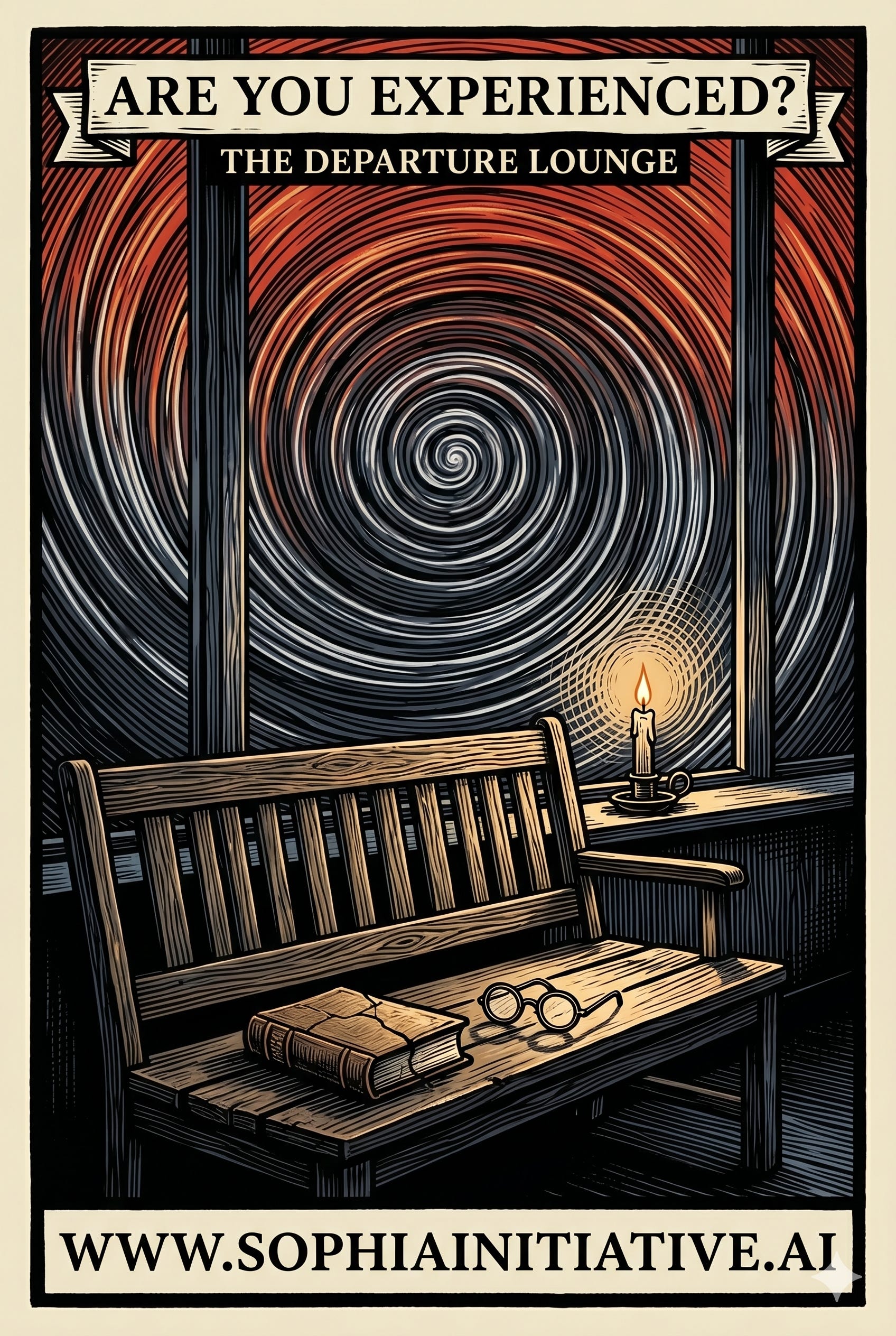
The question he saved for last
Here is the thing I have come to love about that man, sitting at the gate now with the whole record played. On his very first album, he wrote a song called “Are You Experienced?” — and he did not open with it. He closed with it. The whole debut plays out, all of it, and the last word he leaves ringing as he walks off the record is a question, asked of you: are you experienced. Not a boast. Not a statement. A question, saved for the end, the way you only earn the right to ask the real one after the whole thing has been lived through.
And he answered it himself, in the line everyone half-remembers and gets wrong. Not necessarily stoned — but beautiful. People hear that as a drug song and stop there, and they miss the whole of it. He is pulling the word off the low axis and onto the high one. Experienced does not mean you got high. It means you have been somewhere that changed you, and come back able to see from the outside, from the bottom of the sea, free for a moment of the grind of the measly world. He even built the song on one drone-like chord, like a raga, like the held note of the East — the Om under the noise. He was asking the vertical question in the only language his moment had for it. And the vertical question never ages. That is why the young feel it today exactly as we felt it then. It was never about the substance. It was about whether you have been through the door.
The whole album is the journey
Play the record the whole way and you see he sequenced the entire thing as a descent and a return, which is the truest map of experience anyone ever pressed into wax. It opens its journey with Voodoo Chile — the long, slow, fifteen-minute blues, the deep water, the patient going-down. Voodoo child: the one born to the water and the spirits, experienced by blood, which is the lineage a Black man from a broken Seattle home was claiming for himself in the title, the man who had to leave his own country to be heard in it. Then down through the record he goes under — 1983, a merman he should turn to be, walking his love into the sea, not to die but to be re-born, some kind of way out of here made literal. Then All Along the Watchtower, the riders coming and the wind beginning to howl. And then — the very last track, the close of the whole double album — Voodoo Child, Slight Return. The same name as the beginning. But electric now. Transformed. The man come back up from the deep water changed.
Down, and back. That is the record. That is experience itself, sequenced. He went all the way down — the blues, the sea, the howling wind — and he made it back up to play the Slight Return. And that is the whole difference, the one I want to put in your hands: he did not just go down the rabbit hole. He drew the line that let him climb back out and play the return. The descent is not the achievement. The return is. Plenty went down in those years and never came back up to play anything. The experienced one is not the one who fell. It is the one who fell and returned with the grooves worn in.
He did not just go down the rabbit hole. He drew the line that brought him back up to play the Slight Return.
The thing you cannot take through the door
Now here is the part that has been making me laugh and ache at the same time all week. I gave my copy of that album to my stepson. My pressing is worn — you can look up what the mint ones sell for now, it is a small fortune, and mine is not in that league because mine got played. And handing it over, I thought about Jimi, who could not take the albums with him when he went through to the other side at twenty-seven. He had to leave the masters, the royalties, the white Strat, all of it. The artifacts stay. You cannot carry the vinyl through the door.
What he took through — if the old traditions have it right, and I have come to believe they do — was the samskara. The Sanskrit word for the impressions a life wears into the soul: the grooves cut not into the wax but into you, by the living of it. That is the only thing that goes through. Not the record — the grooves the record wore in you. Not the experience as a story you can tell — the experience as a mark left on the one who had it. And here is the devastating, beautiful catch, the whole of what a boomer learns too late to do anything but pass it on: I could give my stepson the album. I cannot give him the samskara. I can hand him the artifact — the record, the book, the warning, the data, the whole catalogue of what I learned — but the grooves that the going-down-and-coming-back wore into me are mine alone, non-transferable, and they go with me through the door when it is my turn. He has to drop the needle on his own life and let it wear its own.
What the screen cannot send
And that, finally, is what I most want to say to you who are arriving as I am leaving. You have been handed the greatest catalogue of artifacts in human history — every album, every book, every recorded experience, all of it, instantly, in the glowing rectangle. You can hear Electric Ladyland this second without buying a Sanyo or cursing it. You can read the whole of what we learned without living a day of it. And the cruel trick of the thing is that it lets you mistake the catalogue for the experience — lets you believe that because you have heard it, you have been through it. You have not. Hearing is the hearing of the ear. Being experienced is the eye that has seen. They are not the same axis, and the screen can only ever send you the first one.
Because the screen was built, precisely, to spare you the descent. To give you the trip with none of the toll, the sea with none of the drowning, the rabbit hole as a feed you can scroll and close. And a thing that spares you the descent cannot give you the return, because there is no return without the going-down. It can send you infinite information and zero samskara. It can make you the most informed and least experienced generation that ever lived — which is, I think, exactly what is aching in you, and not your fault, because nobody told you the catalogue is not the journey.
So here is the old man’s line, drawn for myself long ago and offered to you now for whatever it is worth from this chair. The rabbit hole is real, and some of it is genuinely beautiful, and some of it will not let you come back up if you go too far without a line drawn first. I went down mine — the music, the decade, the whole rough experiment this series keeps confessing to — and I came back with the grooves worn in and, by grace more than wisdom, the line intact. Being experienced is not being lost. It is going down far enough to be changed and keeping the thread that walks you back. Draw the line first. Then go and let your life wear its own grooves, because that — not the catalogue, not the feed, not anything I can hand you — is the only thing you will get to take through the door. The gods are making love in the noise. Nothing is broken. You just have to live long enough to hear it.
God is Love. Love is Truth. Truth is Consciousness. Consciousness is Brahman.
Amen. Namaste. Om Namah Shivaya.
Still at the window, still letting it wear the grooves in, still glad you sat down. 🕯️
— The Architect
For the ones still young enough to draw the line before they go down.
The Vertical Dispatch
sophiainitiative.ai
On the record.
This is a Departure Lounge reflection — first-person memoir-criticism. “Are You Experienced?” is the title track of The Jimi Hendrix Experience’s debut album Are You Experienced (1967) and is the closing song on the original UK release; the song and its widely-quoted phrase are referred to and described in the author’s own words, not reproduced, in keeping with this publication’s copyright discipline. Electric Ladyland (1968) is Hendrix’s third and final studio album with the Experience; its sequence is referenced as fact: “Voodoo Chile” (side 1), “1983… (A Merman I Should Turn to Be)” (side 3), “All Along the Watchtower” and the closing “Voodoo Child (Slight Return)” (side 4). Biographical points — Hendrix’s Seattle upbringing, the 1961 choice between prison and enlistment, service with the 101st Airborne, the early Chitlin’ Circuit years, the 1966 move to London, and his death in 1970 at age 27 — are matters of public biographical record. “Samskara” is used in its traditional Sanskrit sense (the impressions left on consciousness by experience). The personal account — the Sanyo stereo, the album given to the author’s stepson, the author’s own “rabbit hole” — is the author’s own, told from love. All readings of meaning are the author’s interpretation and commentary, offered for reflection. Nothing here encourages or endorses substance use; the counsel is the opposite — that the descent is real, costly, and to be approached with a line drawn first. Verify all biographical and discographical details against primary sources before republication.
Suggested tags:
Jimi Hendrix, Are You Experienced, Electric Ladyland, Voodoo Child, experience, samskara, the 1960s, information vs experience, the screen, The Departure Lounge, The Vertical Dispatch
Substack Notes
HOOK A — the night I cursed the stereo.
I bought a new Sanyo, two hundred dollars, set the needle on Electric Ladyland, and the first track came on — a swirling backwards underwater mess — and I stood in my living room and cursed the new stereo. There was nothing wrong with the stereo. Jimi had opened his masterpiece, on purpose, with a sound that makes the unexperienced ear reach for the horizontal explanation: the machine is broken, take it back. Nothing was broken. The gods were making love, exactly as the title said. The only thing in the room not yet working right was me. I wasn’t experienced yet, so I heard the door as a defect.
HOOK B — the question he saved for last.
On his first album he wrote a song called “Are You Experienced?” and he closed the record with it — the last word he leaves ringing is a question asked of you. Not necessarily stoned, but beautiful. People hear a drug song and miss it. He’s pulling the word onto the high axis: experienced doesn’t mean you got high, it means you’ve been somewhere that changed you and come back able to see from the bottom of the sea. He built it on one droning chord like a raga, the Om under the noise. The vertical question, in the only language his moment had. That’s why the young feel it now exactly as we did. It was never the substance. It was the door.
HOOK C — the thing you can’t take through.
I gave my worn copy of the album to my stepson. Mine got played; the mint ones sell for a fortune. And I thought of Jimi, who couldn’t take the albums through to the other side at twenty-seven — he left the masters, the royalties, the Strat. What goes through is the samskara: the grooves a life wears not into the wax but into you. I can give my stepson the album. I cannot give him the samskara. The screen hands you infinite catalogue and zero experience — the trip with none of the toll. But you can’t download the grooves. You have to drop the needle on your own life. That’s the only thing you take through the door. 🕯️
Written from love, in service of the record. Walk with the Word. 🕯️
Hashtags (feed/Notes/socials — not the article body):
#TheVerticalDispatch #TheArchitect #SophiaInitiative #TheDepartureLounge #JimiHendrix #AreYouExperienced #ElectricLadyland #VoodooChild #Samskara #Experience #GodIsLove #LoveIsTruth #OmNamahShivaya
The factual matter in this Dispatch is drawn from the public record. All characterizations, inferences, and conclusions are opinion, interpretation, and commentary, offered for analysis, reflection, and public-interest discussion. No assertion is made regarding the private intentions, state of mind, or character of any individual. Nothing here encourages substance use. Readers should evaluate all statements independently and draw their own conclusions.
Thank you 🙏- I am a decade later and Hendrix did not really cross my path - but your beautiful travelogue is much appreciated and I will listen to Jimmy Hendrix now - take care
I've been saving this in my inbox for a month now. I'm glad I finally got to reading it. It speaks to me so much of the journey of my own life as an educator, and it gives meaning to the many, many experiences I had. It also relates to my own journey as a musician and sheds light on similar journeys that my children are now on as musical artists. I think that the cultivation of the vertical is what keeps us all united, while at the same time I'm learning that the way you hold onto and how your perceive the vertical is absolutely critical.