

Φ
THE VERTICAL DISPATCH
We write for the mind, the eye, and the ear.
Read it. Look at it. Listen to it. The Vertical Dispatch is built for all three — prose with rhythm, made to be heard as much as read.
From metaphysics to geopolitics, from culture to history, from the sacred to the street — and everything in between. One lens, every subject. No ego. Just the record, named clean.
Press play. Walk with the word. 🕯️
This dispatch travels by hand. If it serves you, share it — restack on Substack, and pass it on wherever you read. 🕯️
The Grammar of Empire · A Three-Part Series · Part Two
The Age of Consequences · June 30, 2026
Before we can call 1959 a theft, we have to look honestly at the taking. How half a sovereign nation’s economy became American property — and why the revolt against that arrangement was the same revolt the United States itself once led.
“The United States may exercise the right to intervene for the preservation of Cuban independence…”
— the Platt Amendment, written into Cuba’s constitution as the price of American withdrawal, 1901
The Question We Were Left With
The first part of this series ended on a question, and it is the hinge the whole story turns on. The embargo rests, at its moral foundation, on a single claim: that in 1959 Cuba stole American property, and that six decades of punishment have been the just consequence of that theft. International law does require compensation when a state nationalizes foreign-owned property, and Cuba did not pay it; the United States Foreign Claims Settlement Commission would later certify nearly six thousand claims by American citizens and companies — Exxon, Texaco, Coca-Cola, General Motors among them — valued, at the time they were taken, at roughly $1.9 billion. So the claim of theft is not nothing. It is a real legal grievance, and an honest accounting carries it at full weight.
But a grievance can be real and still not be the whole truth, and the question the official telling never asks is the one a child would ask first: how did the property become American in the first place? You cannot judge a taking-back without examining the taking. And when you examine the taking — how it came to pass that, on the eve of the revolution, American companies owned the commanding heights of another sovereign nation’s economy — the moral picture does not simply shift. It inverts.
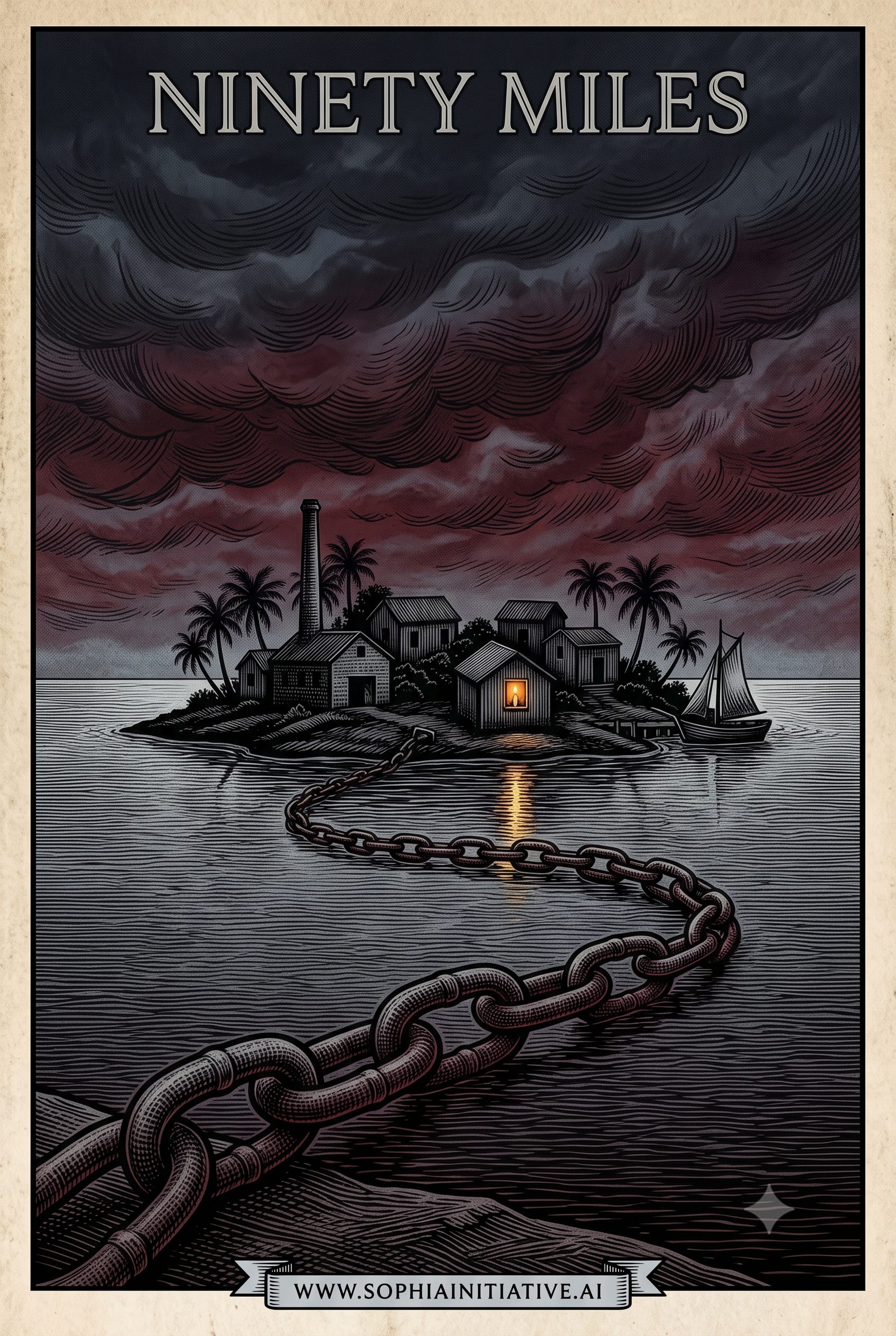
Sovereignty With an Asterisk
Cuba won its independence from Spain in 1898 — but it won it through a war the United States entered and finished, the Spanish-American War, and so it was the United States, not Cuba, that held the pen when the terms of independence were written. Those terms have a name: the Platt Amendment. Drafted by the American Secretary of War and attached as a rider to an army funding bill in 1901, it was presented to the Cubans not as a proposal but as a condition — the price of the American troops leaving. The Cuban constitutional convention resisted, and then, under the explicit threat of continued military occupation, wrote it, word for word, into their own founding document.
Read what it required, because it is the root of everything that follows. The Platt Amendment gave the United States, in its own language, “the right to intervene for the preservation of Cuban independence” — that is, the right to send soldiers into Cuba whenever Washington judged it necessary. It forbade Cuba from making treaties with other powers that the United States disapproved of. It restricted how much debt Cuba could take on. It forbade Cuba from ceding land to any nation but the United States. And it required Cuba to lease land for an American naval base — the lease, at Guantánamo Bay, that the United States holds to this day, more than a century later, over the objection of every Cuban government since. This was independence with an asterisk, and the asterisk was a standing American right to intervene. From its birth as a nation, Cuba was sovereign only so far as the United States permitted.
This was independence with an asterisk — and the asterisk was a standing American right to intervene. From its birth, Cuba was sovereign only so far as the United States permitted.
How the Island Was Bought
Now place the economics inside that political frame, because the two cannot be separated. Under the Platt Amendment’s standing right of intervention — with American troops landing in 1906, 1912, 1917, and 1920 to enforce order and protect property — American capital flowed into Cuba on terms no genuinely sovereign nation would have signed, because the political deck guaranteed the local government could not refuse. The numbers, by the eve of the 1959 revolution, tell the story plainly. American companies owned roughly forty per cent of Cuba’s sugar lands — the heart of the economy — along with almost all of its cattle ranches, about ninety per cent of its mines and mineral wealth, some eighty per cent of its public utilities, and practically the entire oil industry. Two-thirds of what Cuba imported came from the United States. The book value of American capital in Cuba was over three times that of all the rest of Latin America combined.
This is the fact that the word “theft” is built to make you forget: a single foreign power owned the majority of another nation’s economy. That does not happen in a fair market between equals. It happens when the political arrangement is rigged so that the smaller party cannot say no — and the Platt Amendment was the rig. The honest formulation is not that every transaction was fraudulent; some American investment was ordinary commerce, and the firms that came often paid better wages than local ones. The honest formulation is narrower and harder to escape: the commanding heights of Cuba’s economy were acquired under conditions of engineered political dependency that no fully sovereign nation would have accepted. The property was real. So was the gun on the table when it changed hands.
The Man in the Middle
And presiding over the final chapter of that arrangement was a man the United States backed to the end: Fulgencio Batista. Having seized power in a 1952 coup that destroyed Cuba’s own fragile democracy, Batista ran exactly the system this series has been tracing — a government that served foreign capital and personal enrichment while the bill fell on ordinary Cubans. Under his rule, American corporations held the commanding heights and the American mafia held the rest: Havana became a playground of casinos and vice, with the crime bosses paying Batista a personal cut — thirty per cent of the take from some of the casinos — into his Swiss accounts. When he fled on the first day of 1959, he carried with him a personal fortune estimated at more than three hundred million dollars, amassed through bribery and corruption. The revolution that swept him out was, in large and undeniable part, a revolt against that whole arrangement: the foreign ownership, the corruption, the dictator who guaranteed both.
Here the keel of this work requires a balance, and the balance only makes the point stronger. Pre-revolutionary Cuba was not the starving colony of one caricature, nor the lost paradise of another. By the numbers it was, in fact, one of the more developed nations in Latin America — ranking near the top of the hemisphere in income, life expectancy, and the ownership of cars and televisions. The tragedy is not that Cuba was poor. The tragedy is that a relatively advanced nation did not own itself — that its sugar, its power, its oil, its mines, and its dignity were held by a foreign country and a corrupt strongman, and that the prosperity, real as it was, ran on terms set ninety miles away. A people can be comfortable and still not be free, and still rise to reclaim what is theirs.
The Mirror
And now the turn this entire series has been moving toward, the one that should give any American reader pause. When Cuba nationalized the foreign-owned commanding heights of its economy in 1959 and 1960, it was doing — in its method imperfectly, in its motive almost exactly — what the thirteen American colonies had done to the British crown in 1776. The American Revolution was, at its economic root, a revolt against an imperial extraction system: the mercantilist rules that forced the colonies to trade through Britain on Britain’s terms, that channelled the raw wealth of the land outward to the imperial centre and sent it back as finished goods at a markup, that denied the colonists the right to keep and govern the fruits of their own labour. “No taxation without representation” was the cry, but beneath the tax was the deeper grievance: a distant power had rigged the colonial economy for its own benefit, and the colonists rose to take their economy back.
That is the Cuban revolution’s motive, almost word for word. And here is the bitter irony at the heart of it: the imperial power that Cuba was revolting against, in 1959, was the very nation that had led the same revolt in 1776. The Platt Amendment — the standing right to intervene in another nation at will — is precisely the imperial prerogative the American colonists denied the British crown over themselves. The republic born from “don’t tread on me” spent the twentieth century treading. America had become, in Cuba, the empire it was founded to defy. That is not a slogan; it is the documentary record, read honestly. The nation of 1776 should, of all nations on earth, have recognised the nation of 1959 — and instead it spent the next six decades punishing in Cuba the exact defiance it celebrates in itself.
Where the Mirror Cracks
The keel forbids a clean parallel where the record shows a cracked one, and honesty about the cracks is what makes the mirror hold. The two revolutions are not identical, and the differences matter. The American colonists, for all the deep contradictions of their revolution — slavery the gravest — largely protected private property rather than confiscating it, and what they built was a constitutional republic with elections and dispersed power. Cuba confiscated foreign property without the compensation international law required, and what it built, over time, was a one-party state under one family for half a century. The parallel is strongest in the motive — a smaller people reclaiming their economy from a distant master — and weakest in the method and the result. A revolt against extraction can give birth to a democracy or to a dictatorship, and these two gave birth to different things.
But mark what the cracks do and do not change. They change what we should think of what Cuba became. They do not change what the embargo rests on. The United States did not break relations with Cuba because Cuba became undemocratic — Washington has embraced many undemocratic states, Batista’s Cuba foremost among them. It broke relations, and built the embargo, because Cuba took back the property and would not give it back. The founding grievance was never tyranny. It was expropriation — the taking-back of what had been taken under the gun. Which returns us, at the end, to the question this part set out to answer, now answered: the “theft” the embargo punishes was itself the reclamation of property acquired through a rigged half-century of engineered dependency. That does not make Cuba a saint. It makes the embargo’s moral story far muddier than “the communists took our things” — and it sets up the final question, the one the third part will follow: if this is how empire works in one small country, is Cuba the exception, or the pattern? Walk with the word. 🕯️
God is Love. Love is Truth. Truth is Consciousness. Consciousness is Brahman.
Amen. Namaste. Om Namah Shivaya.
— The Architect.
Every load-bearing fact in this dispatch — the treaty terms, the ownership figures, the claims record — was checked against primary and authoritative historical sources, including the U.S. National Archives and the U.S. Foreign Claims Settlement Commission. Verify against primary sources before republication.
For the nation that forgot it was once the small one.
The Vertical Dispatch
sophiainitiative.ai
On the record — Part Two of three
Published June 30, 2026. This is a work of history; its load-bearing facts were verified against primary and authoritative sources. (1) The Platt Amendment (1901; written into the Cuban constitution 1901, formalized by treaty May 22, 1903): drafted by Secretary of War Elihu Root, attached as a rider to the Army Appropriations Bill, accepted by the Cuban convention under threat of continued occupation; granted the U.S. “the right to intervene for the preservation of Cuban independence,” limited Cuba’s treaty-making and foreign debt, barred cession of land to any power but the U.S., and required the lease of naval-base land (Guantánamo) — source: U.S. National Archives (Milestone Documents) and the treaty text. U.S. interventions under it: 1906, 1912, 1917, 1920; repealed 1934 (Good Neighbor policy), Guantánamo lease retained. (2) Eve-of-revolution U.S. ownership (c. 1959): ~40% of sugar lands, almost all cattle ranches, ~90% of mines/mineral concessions, ~80% of utilities, practically all the oil industry, two-thirds of imports — widely cited figures (e.g., per Hugh Thomas, reproduced in standard histories); the book value of U.S. capital in Cuba exceeded three times that of the rest of Latin America combined. (3) Batista: 1952 coup; documented corruption and mafia casino kickbacks; fled Jan. 1, 1959, with a personal fortune estimated at $300+ million. (4) Comparative development: pre-1959 Cuba ranked among the more developed Latin American nations by income, life expectancy, and consumer-goods ownership — stated as §11 balance. (5) Nationalization claims: the U.S. Foreign Claims Settlement Commission certified 5,913 claims by U.S. nationals/companies, valued at the time at ~$1.9 billion — source: FCSC. Figures from differing sources vary; the most consistently sourced versions are used. Interpretive claims (the “rig,” the 1776 mirror, “empire it was founded to defy”) are commentary.
All characterizations are commentary and interpretation. The U.S. legal grievance (uncompensated nationalization) is stated at full strength, as are the differences between the American and Cuban revolutions and the documented development of pre-1959 Cuba. No assertion is made about any individual’s private intent. Verify all figures against primary sources before republication.
Suggested tags
Cuba, United States, Platt Amendment, Guantanamo, Batista, Cuban Revolution, nationalization, imperialism, 1776, empire, The Grammar of Empire, Age of Consequences
Substack Notes
The embargo rests on one claim: that in 1959 Cuba stole American property. It’s a real legal grievance — the U.S. certified nearly 6,000 claims worth ~$1.9 billion. But the question no official telling asks is the one a child asks first: how did the property become American, in a sovereign country, in the first place? Part Two of The Grammar of Empire looks honestly at the taking before judging the taking-back.
The answer is the Platt Amendment of 1901 — written into Cuba’s own constitution, under threat of continued U.S. occupation, granting the United States “the right to intervene” in Cuba at will and the lease on Guantánamo it holds to this day. Under that standing right, American capital took the commanding heights: by 1959, U.S. companies owned ~40% of sugar lands, ~90% of mines, ~80% of utilities, nearly all the oil. A single foreign power owned the majority of another nation’s economy. That doesn’t happen between equals. It happens when the deck is rigged so the smaller party can’t say no.
Which makes the revolution’s nationalization look less like theft and more like reclamation — and sets up the mirror at the heart of this piece. When Cuba took back its economy from a distant imperial master in 1959, it was doing what the thirteen colonies did to Britain in 1776. And the bitter irony: the empire Cuba revolted against was the very nation that led that first revolt. America became, in Cuba, the empire it was founded to defy.
The keel keeps the cracks in: Cuba confiscated without compensation and built a one-party state; the colonists protected property and built a republic. The parallel is in the motive, not the result. But the cracks don’t change what the embargo rests on — not Cuba’s tyranny (Washington embraced Batista’s), but Cuba’s expropriation. The taking-back of what was taken under the gun. Part Three asks: is Cuba the exception, or the pattern? Written from love, in service of the record. Walk with the word. 🕯️
#TheVerticalDispatch #TheArchitect #SophiaInitiative #Cuba #PlattAmendment #Guantanamo #GrammarOfEmpire #Empire #1776 #AgeOfConsequences #GodIsLove #LoveIsTruth #OmNamahShivaya
The factual matter in this Dispatch is drawn from the public and historical record. All characterizations, inferences, and conclusions are opinion, interpretation, and commentary, offered for analysis, reflection, and public-interest discussion. No assertion is made regarding the private intentions, state of mind, or character of any individual. Readers should evaluate all statements independently and draw their own conclusions.
In the treaty of Paris, 1783, the United States, article 5 states that the US government will recommend that the state governments to recognize the rightful owners of all confiscated lands and "provide for the restitution of all estates, rights, and properties, which have been confiscated belonging to British subjects" (Loyalists). Individual states ignored federal recommendations, under Article 5, to restore confiscated Loyalist property and Article 6, which provided for confiscating Loyalist property for "unpaid debts". The Commonwealth of Virginia defied Article 4 and maintained laws against payment of debts to British creditors. Several Loyalists attempted to file for a return for their property in the US legal system after the American Revolutionary War, but most were unsuccessful. https://en.wikipedia.org/wiki/Treaty_of_Paris_(1783)
So the United States broke it's treaty with Britain, and got away with it, and has been punishing Cuba for 67 years for doing the same thing. What a surprise.
Thank you so much for such great information