

Φ
THE VERTICAL DISPATCH
We write for the mind, the eye, and the ear.
Read it. Look at it. Listen to it. The Vertical Dispatch is built for all three — prose with rhythm, made to be heard as much as read.
From metaphysics to geopolitics, from culture to history, from the sacred to the street — and everything in between. One lens, every subject. No ego. Just the record, named clean.
Press play. Walk with the word. 🕯️
This dispatch travels by hand. If it serves you, share it — restack on Substack, and pass it on wherever you read. 🕯️
The Foundation Series · Rough Waters and the Keel
June 15, 2026
“The thing that hath been, it is that which shall be; and that which is done is that which shall be done: and there is no new thing under the sun.”
— Ecclesiastes 1:9
I want to begin in humility, because that is the only honest place to begin. On the first of May this year, after thirty years of writing — books begun and set down, blogs that found a handful of readers and then went quiet, a long apprenticeship mostly in the dark — something happened that I did not engineer and cannot fully take credit for. A wave came. The readership of this small publication, which had moved in single digits and low hundreds for as long as I had been at it, broke upward almost overnight and has not come back down. I have watched the line on the chart and felt the strange vertigo of a man who has been rowing in calm water for decades and suddenly finds the sea moving under him.
And the first thing I felt was not pride. It was the verse above. The Preacher of Ecclesiastes, three thousand years ago, looked at all the striving under heaven and named the thing that every honest observer eventually names: there is nothing new under the sun. The wave that lifted this publication is not new. The hunger it answers is not new. What is new is only that, for once, the boat and the water met — and a man who had spent thirty years learning to read waves found one finally large enough to carry the work. I am humbled by it, and I am wary of it, because a wave that lifts you can also turn you over if you mistake the lift for your own doing. So let me tell you, plainly, what I think actually happened, and what I intend to do with it.
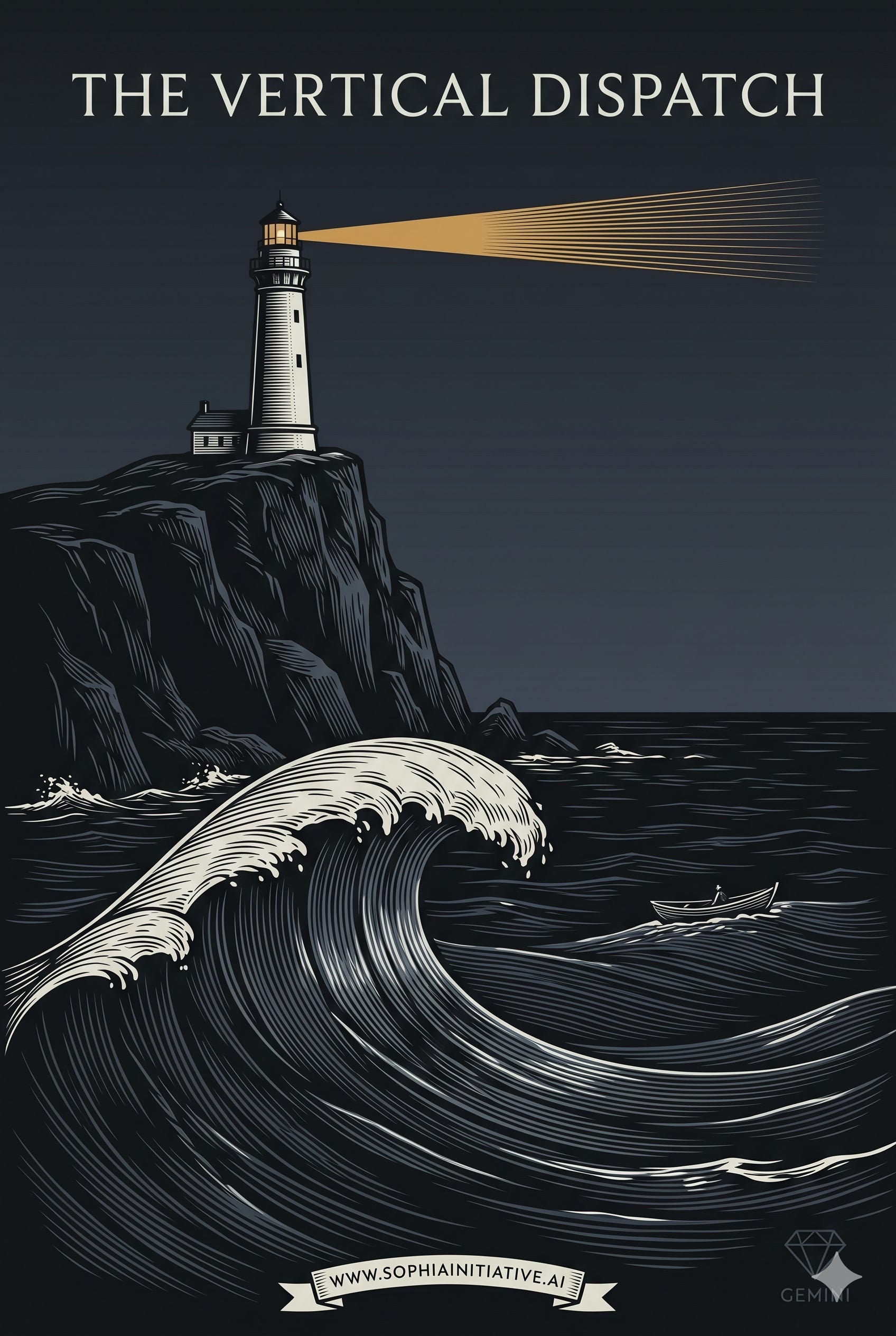
A man who had spent thirty years learning to read waves found one finally large enough to carry the work.
What the Wave Recognizes
I do not believe the readers came for me. I believe they came because something in the work answered a recognition they were already carrying — the recognition the Preacher named. That the behaviour of humankind repeats. That what we are living through now, however the screens dress it up as unprecedented, has been lived through before, and can therefore be read, named, and weathered by anyone willing to look at the record instead of the noise.
Carl Jung, in his last filmed interview with the BBC near the end of his life, was asked whether he thought humanity could avoid catastrophe. He did not give a comfortable answer. He said the great danger was not the bomb or any single weapon but the psyche of man himself — that the real peril is that we do not know ourselves, and what we do not know in ourselves we project onto the world and then go to war with. When he was asked whether he believed in God, the old man paused and said, in words that have been quoted ever since: I do not believe — I know. He had stopped needing faith for that particular thing, because he had crossed from the symbol to the referent. He knew from the ground up.
That is the recognition this publication is built on, and I think it is what the wave responded to. We are living in a time that feels new and is not. The danger Jung named — the unexamined human psyche, projecting its shadow onto an enemy — is precisely the danger loose in the geopolitics of our moment. The two great fault lines of our age, the wars and the unravellings, are not aberrations in human behaviour. They are human behaviour, in the form it has always taken when peoples stop reading themselves honestly. To recognize that is not despair. It is the beginning of seamanship. You cannot set the boat at the right angle to a wave you refuse to admit is a wave.
What Makes Us Different
So if the subject — the Canadian story, the geopolitics of our time — is not unique to us, then what is? Why this publication and not the thousand others naming the same storms? The answer is the one thing I can claim without false modesty, because it is not a talent but a discipline: our method. We have an operating procedure, and we breathe it on every page.
It is a method I have been assembling for thirty years, mostly without knowing I was assembling it, while writing a book on metaphysics that is still in the making. The keystone is the oldest lesson I know and the hardest to keep: the symbol is not the referent. The word is not the thing. The map is not the territory. Every claim must be bound to what it actually points at before anyone is allowed to build on it — and that rule applies with full force to my own ideas, not merely to the people I examine. Around that keystone, over the years, the rest of the instruments gathered. The requisite-organization framework of Elliott Jaques, which lets us measure the demand of a role by the time-span of the future it must govern — and judge the chair, never the soul of the person in it. The PIAAC literacy scale, used to argue policy and never, ever, to rank a citizen. Plato, on the difference between opinion and knowledge — whether you can give an account of what you claim to know. The Gospels, and the Samaritan who proves that understanding is worthless if it does not stop on the road for the suffering man. Neil Postman, on how a culture trained by its media forgets the difference between knowing a thing and being entertained by talk about it. The plain four-question discipline of any honest plan: is there a problem, is there a solution, is it credible, is it achievable — are the milestones named, the constraints stated, the critical path closed. Project management. Procurement. Planning. And, when the workshop runs hot, laughter — because a man who cannot laugh at himself has lost the first referent of all.
None of these instruments is mine. I invented none of them. What this publication does is the one thing that was, apparently, not being done: it applies them together, openly, to the country I love and the moment we are living in. We call the method AIG — and we use the term against the grain of how it is usually meant. Not artificial intelligence governing us, but a governance of the work itself: artificially intelligent in the sense that we use every tool, human and machine, in the open, each answerable to the record, none trusted blindly. What began as research for a book on metaphysics became a way of reading a nation. That is the whole of the turn, and it is why the work reads differently. It is not opinion dressed as analysis. It is a method, with its instruments named on the page, so that you can check our working and learn the moves yourself.
It is not opinion dressed as analysis. It is a method, with its instruments named on the page, so that you can check our working — and learn the moves yourself.
Deep Water, and the Captain We Trust
I will say something now that belongs to the geopolitics and not only to the method, because the readers of this publication share it and it is part of what we are. We love Canada, and we recognize that we are in deep water — Canadian and global, the old order loosening, the storms real and not yet spent. And in deep water, the question is never whether there is a storm. The question is the captain.
We have written before, with care and on the record, about the man at the helm of this country, and the discipline holds here as everywhere: no hagiography, no reading of any private heart, only the record. And the record shows a particular kind of master — one to be trusted not for the loud winds of short-sighted promise, not for the slogan or the gesture or the play to the gallery, but for the documented thing: that he has weathered great storms before, steered large institutions through systemic crisis across the long horizon, and brought the vessel through. That is not affection. It is reception of a record. A captain is judged by the waters he has already crossed, not by the volume of his voice in calm. We trust the proof, not the noise. That, too, is a method, and not a feeling.
The Pledge
So here is what I intend to do with a wave I did not make. I pledge my being to report, daily, with the deepest truth the record will bear — and to report it here, in The Vertical Dispatch, with a deep anchor set in the past. Because there is nothing new under the sun, the past is not a museum; it is the chart. Every storm we are sailing has a precedent, and the precedent is where the reading is found. We will go down to the depths and dredge up what has been forgotten or buried, and we will bring it into the light and name it clean — without ego, without spin, without malice and without flattery.
The mainstream press, for reasons I will not pretend to fully diagnose, seems to have forgotten the verse. It treats each day as if it had no yesterday, each crisis as if it were the first of its kind, each figure as if no one like him had ever stood in that place before. That forgetting is not neutral. A people with no memory of the wave cannot set the boat against it, and a press that will not supply the memory has abandoned its post on the deck. We will not abandon ours. We will anchor every dispatch in the record and the precedent, because the depth is where the truth has always been kept, and the surface is only ever the weather of the day.
This is the work of the keel. It comes, as the readers of the Foundation Series know, from my father, Ellison, a fisherman at the tip of the Gaspé, who one day on the water read a great wave without fear and set the skiff at the angle that glided us safe over it. Every discipline in this publication — the verifying, the refusal to flatter, the accountability aimed up at power and never down at the vulnerable, the binding of every symbol to its referent — is one thing wearing many names: setting the boat at the right angle so the people aboard glide safe over the wave. The lighthouse on our masthead is not a chosen symbol. It is the literal light that swept my father’s childhood home every night at land’s end. We did not pick an emblem. We found the one that was already ours.
Because there is nothing new under the sun, the past is not a museum. It is the chart.
To Those Aboard
To the readers and subscribers who caught this wave with me — we love this country, and we are in the same boat in the same deep water, and that is no small thing. I am humbled that you are here. The way this work continues is plain, and I will state it plainly, because the Dispatch invites and does not plead. You support it by reading it, and by subscribing. Those able to support it as paid subscribers keep the lamp fuelled and the daily watch possible — this has become a full-time post on the deck, and your support is what lets me stand it. But the most important thing is the smallest gesture: the share. Restack it here on Substack; carry it to the other platforms; pass it by hand to one person who needs the memory of the wave. A dispatch travels by hand, and a wave grows by being carried. That is how the forgotten record reaches the light again — not through me, but through you, one pass at a time.
There is nothing new under the sun. The storms are old; the danger Jung named is old; the human behaviour beneath the headlines is as old as the Preacher who first wrote that line. But the boat can still be set true, and the light can still sweep the water, and the record can still be dredged up and named clean. That is the whole of what we do here, and it is enough. The waters are rough. The keel holds. Walk with the word. 🕯️
God is Love. Love is Truth. Truth is Consciousness. Consciousness is Brahman.
Amen. Namaste. Om Namah Shivaya.
— The Architect
For Ellison, who read the wave — and for everyone who has caught this one and carried it.
The Vertical Dispatch
sophiainitiative.ai
On the record: Ecclesiastes 1:9 quoted from the King James Version. Carl Jung’s reflections on the danger of the unexamined human psyche, and his remark “I do not believe — I know,” are drawn from his 1959 BBC “Face to Face” interview with John Freeman; the characterization here is the author’s paraphrase of widely reported remarks and should be checked against the original interview before republication. The frameworks named — the requisite-organization theory and time-span of discretion of Elliott Jaques; the PIAAC adult-literacy scale; the media criticism of Neil Postman; and the classical distinction between opinion and knowledge associated with Plato — are the author’s own intellectual reference points, summarized in general terms. Readership and subscription figures referenced are drawn from the publication’s own Substack analytics as of June 2026 and are particular to this publication. Characterizations of public figures are opinion and interpretation grounded in the public record; no claim is made about any individual’s private intentions or character. Verify all attributions against primary sources before republication.
Suggested tags: the Vertical Dispatch, the Foundation Series, Ecclesiastes, Carl Jung, Elliott Jaques, Neil Postman, AIG, Artificially Intelligent Governance, the keel, Canadian geopolitics, why we write
Substack Notes
There is nothing new under the sun. On the first of May, after thirty years of writing in the quiet, this small publication caught a wave it did not engineer — and I have been humbled, and wary, ever since. This dispatch is an attempt to say honestly what I think happened, and what I intend to do with it. I do not believe the readers came for me. I believe they came for a recognition they already carried: that the storms of our moment are old, that human behaviour repeats, and that what can be read can be weathered.
What makes this publication different is not its subject but its method — an operating procedure thirty years in the making, with its instruments named openly on every page: the binding of every symbol to its referent, the requisite-organization frame of Elliott Jaques, Postman, Plato, the Samaritan who proves understanding is worthless if it does not stop for the suffering. We call it AIG, against the grain: a governance of the work itself, every tool answerable to the record. Carl Jung, in his last BBC interview, named the great danger as the unexamined human psyche; that is the danger loose in the geopolitics of our time, and reading it honestly is the beginning of seamanship.
This is the Foundation Series — the why-we-do-this, the companion to Rough Waters and the Keel. It carries the publication’s pledge: to report daily, with a deep anchor in the past, dredging up the forgotten record and naming it clean, because the past is not a museum but the chart. If it serves you, the way it continues is the share — restack it, carry it, pass it by hand. A dispatch travels by hand, and a wave grows by being carried.
Written from love, in service of the record. Walk with the Word. 🕯️
#TheVerticalDispatch #TheFoundationSeries #Ecclesiastes #NothingNewUnderTheSun #CarlJung #ElliottJaques #NeilPostman #AIG #ArtificiallyIntelligentGovernance #RoughWatersAndTheKeel #CanadianGeopolitics #WalkWithTheWord #TheArchitect #SophiaInitiative #GodIsLove #LoveIsTruth #OmNamahShivaya
The factual matter in this Dispatch is drawn from the public record and the author’s own experience and analytics. All characterizations, inferences, and conclusions are opinion, interpretation, and commentary, offered for analysis, reflection, and public-interest discussion. No assertion is made regarding the private intentions, state of mind, or character of any individual. Attributions to historical figures and frameworks are summarized in good faith and should be verified against primary sources. Readers should evaluate all statements independently and draw their own conclusions.
The way you write is unusual. At first glance, it seems complex. And yet it is simple to understand in being so straightforward. One comes out of the reading with an ability to firmly grasp the basic concepts. You do this with an unusual use of words, yet no word salad. That’s unique, and greatly appreciated. 🇨🇦
Bravo Glen, for your emphasis on the vitality of the past and its integrity with the present.