


Φ
THE VERTICAL DISPATCH
We write for the mind, the eye, and the ear.
Read it. Look at it. Listen to it. The Vertical Dispatch is built for all three — prose with rhythm, made to be heard as much as read.
From metaphysics to geopolitics, from culture to history, from the sacred to the street — and everything in between. One lens, every subject. No ego. Just the record, named clean.
Press play. Walk with the word. 🕯️
This dispatch travels by hand. If it serves you, share it — restack on Substack, and pass it on wherever you read. 🕯️
The Age of Consequences · The Universal Shadow Series
Sacred Metaphysics · The Universal Grammar of Non-Duality
The Metaphysics of Zero and the Physics of One
Coming September 1,2026
sacredmetaphysics.org
“The sad truth is that most evil is done by people who never make up their minds to be good or evil.”
— Hannah Arendt
We have spent this Series reading the shadow — the disowned darkness a person, or a nation, casts onto whatever it will not face in itself. We have read it in tyrants and premiers and trade wars. But there is a larger shadow, quieter and closer, and we have not yet named it, because it is the water we swim in and the water is the hardest thing to see. It is the construct itself. It is capitalism — not as an economic argument, which is not our trade, but as a shadow, which is.
Let us be careful and fair from the first line, because a piece that is not fair is not worth writing. Capitalism is the most productive engine any human society has ever built. It has lifted more people out of absolute poverty than any system in history, funded the science that mends the very hearts our surgeons repair, and rewarded the invention that has, on the whole, lengthened and eased human life. None of what follows denies that, and any honest reckoning must hold it at full strength. The question is not whether the engine is powerful. It plainly is. The question is what the engine runs on — and what it asks the rest of us to not look at while it runs.
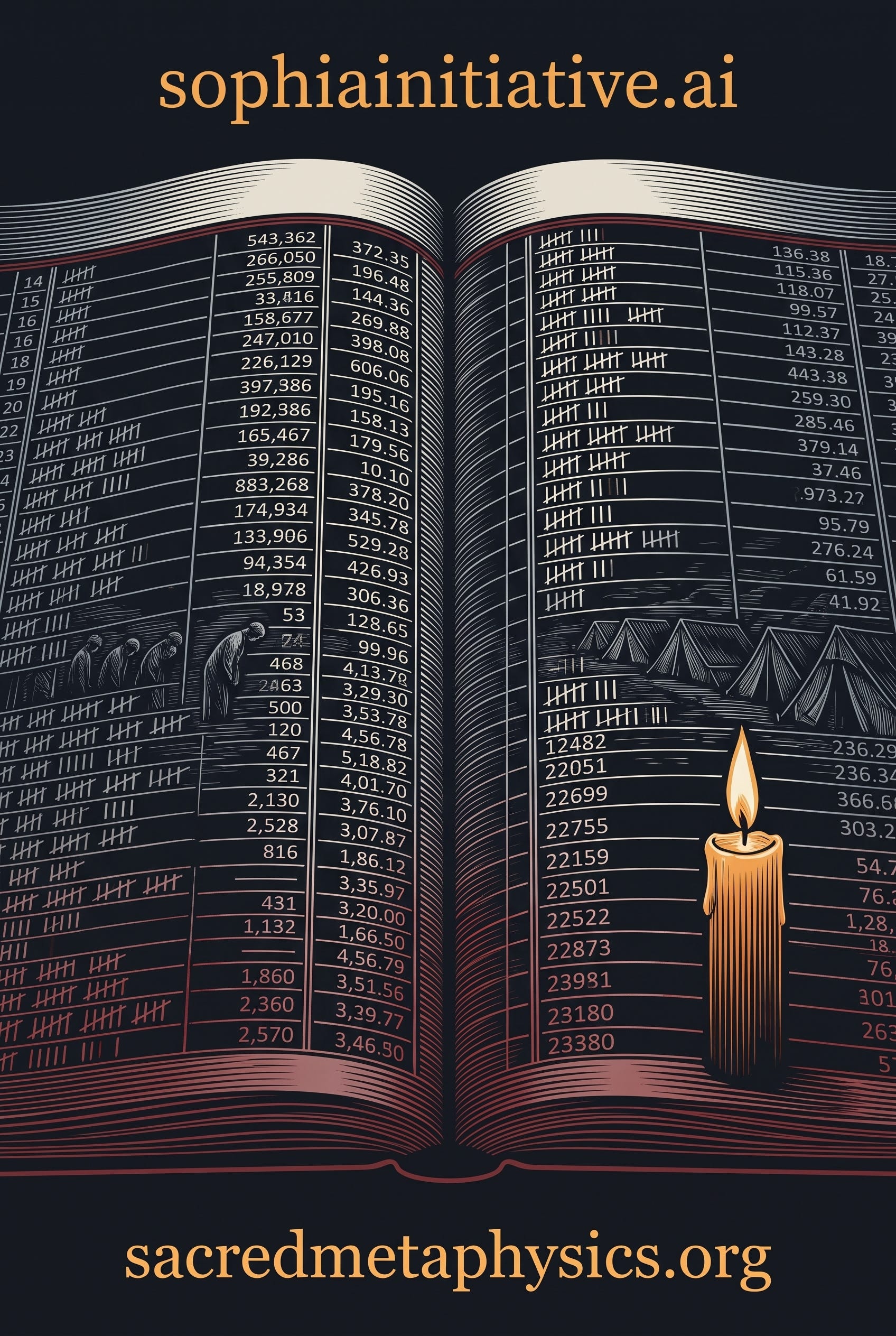
The Engine Is the Ego
Here is the reading this publication can offer that an economist cannot: capitalism runs on the ego. It is duality made into a machine. Its entire logic is the separate self — mine against yours, my margin against your wage, my gain measured precisely by the distance between what I extract and what I pay. It does not merely permit the drawing of a border between me and not-me; it requires it, rewards it, and calls the reward success. The dollar is divided at someone’s expense not by accident but by design, because the division is where the profit lives. This is not a flaw in the system. It is the system, working exactly as built.
And because the engine is the ego, its cruelty rarely needs a cruel man. That is the part worth sitting with. The restaurant owner who pays the dishwasher the legal minimum while building his own worth is not, in the main, a monster; he is a decent man doing what the construct allows and rewards. The vast fortune assembled at the top of a modern logistics empire is not, in the main, the work of a villain twirling a moustache; it is the work of a system that measures a warehouse worker’s trip to the bathroom as “time off task” and disciplines the body for its own needs. These are not slanders. They are, in the second case, a matter of record: documents filed with the United States labour board show a productivity-tracking regime under which time away from the assigned task, bathroom time included, is logged and can lead to discipline and dismissal, and under which workers have reported skipping water and skipping the bathroom out of fear — until a state had to pass a law compelling the simple decency of a break. No single person there is a beast. That is precisely the horror.
The Banality of the Ledger
There is a word for this, and it was hard-won. In 1963, watching an ordinary bureaucrat stand trial for administering a genocide, Hannah Arendt reached for a phrase that scandalized the world: the banality of evil. Her point was not that the crime was small. Her point was that the man was ordinary — not a frothing monster but a dull functionary, a joiner, a man who wanted to do his job well and be promoted, and who managed the machinery of horror without ever letting himself think about the human beings at the far end of it. The evil, she saw, did not require monstrousness. It required thoughtlessness — the failure to stop and ask whether “allowed” and “right” were the same word. Evil, in her terrible formulation, is banal: ordinary, commonplace, within the reach of anyone who stops thinking.
We invoke this carefully, and not to equate a wage with a genocide, which would be false and cheap, and which we refuse. We invoke it because the mechanism is the same at every scale, and the small version of it runs the ledger of ordinary economic life. The sentence that does the work is always the same: I am only doing what the system allows. It is the sentence that lets a decent person take part in a cruelty he would never author with his own hands. It is the great clean-handed evasion of the modern age, and the twentieth century taught us, in blood, where it leads when a whole nation learns to speak it. The lesson was never that those people were a separate species of monster. The lesson was that ordinary people, doing their jobs, following the rules, declining to look too hard at the cost, are how the worst things get done. The horror was the ordinariness. And the ordinariness is not behind us and it is not elsewhere.
You can see it on the sidewalk. The United States is the richest country in the history of the world — richer than any empire that ever assembled a fortune — and in the shadow of its glass towers people sleep in tents, in tent cities, in a poverty as absolute as any in the poor nations it pities. The wealth and the destitution stand on the same block, in plain sight, and the system’s only answer is that this is how it works. That is the banality made visible: the cost is not hidden in a warehouse this time, and not buried in an archipelago — it is right there on the pavement, and we have trained ourselves to step around it on the way to work. Not out of cruelty. Out of the ordinary, practised, clean-handed refusal to see the tent we walk past every morning.
Are We All Guilty of Banality?
So we must ask the question honestly, and turn it on ourselves before anyone else, because a mirror that only faces outward is a weapon and not a mirror. Are we all guilty of banality? The answer is yes. We are guilty of it every time we buy the cheap thing and decline to ask whose skipped break paid for the price. Every time we say “that is just how it works” and let the sentence close the question. Every time we do our own function well and leave the cost to someone we will never have to see. The whole machinery of a comfortable life is built to keep the cost invisible to the one who benefits from it — and we are, most of us, most days, not thinking about something it would cost us something to think about. Nobody swims dry. The writer of these words does not, and does not claim to.
But here is the mercy folded into the diagnosis, and it is the whole of the hope. Banality is not a sentence you are condemned to serve. It is a default you can interrupt. What Arendt’s bureaucrat lacked was not a halo; it was thinking — the simple, world-changing act of stopping to feel the cost, to see the human at the other end of the transaction, to ask whether allowed and right had quietly come apart. The moment you actually think, you step out of the banal, right there, in that moment. The guilt is not a verdict. It is an invitation to wake up.
Every System Manages the One and the Many
And here we must resist the easy exit, the one that would make this a partisan tract, because it is the exit that has drowned this argument a hundred times. If capitalism runs on the ego, the tempting reply is: then choose its opposite. But look closely at what the alternatives actually are, and a deeper pattern shows. Capitalism, socialism, communism — in the end, each is a management system for the one and the many. Each is a proposed answer to the single question every society faces: how do the many live as one, without crushing either the many or the one?
Capitalism answers by freeing the many — the individual, the incentive, the separate self — and trusts that the one, the common good, will emerge from the sum. Its shadow is the freed self become the ego unbound: the border-drawer, the cost-hider, the fortune built on the invisible break. Communism, in the state forms the twentieth century actually produced, answered by asserting the one — the collective, the whole — and its shadow was the asserted one become the tyrant: the many crushed into a false uniformity, and the cost hidden not in a warehouse but in an archipelago of camps, corpses counted in the millions in the name of unity. Both are answers to the one and the many. Both fail at the very same seam — the seam where the ego, whether wearing the mask of the individual or the mask of the collective, grabs one pole against the other and calls its grab a virtue. The ego is the ego at any scale. It hid the cost under one system and hid the bodies under the other, and the mechanism was identical: the border drawn, the cost made invisible, the hands kept clean.
A necessary word of fairness before we go on, because the record demands it and a careless line here would be its own banality. There is a third thing that the worn word socialism can mean, and it is not the archipelago — the democratic and ethical socialism that thinkers as sober as Einstein advocated, whose aim was not the enslavement of the individual but responsibility for the fellow-man built into the structure itself, and who warned in the same breath that a planned economy alone is not yet socialism and can enslave as surely as any tyranny. That is a different referent from the state terror that stole its name, and it deserves its own honest reckoning rather than to be lumped with what betrayed it. This Series will give it that reckoning on its own. Here we only mark the distinction, and refuse the lazy equation.
And the fairness must cut homeward too, or it is not fairness at all. It is easy to point at the gulag and shudder; it is harder to see that the richest of the free societies built its own version of the same structure and simply declined to look at it. The amendment that abolished slavery in America abolished it with an exception written into its own text — slavery and forced labour are forbidden, it says, except as a punishment for crime. That exception is not a relic; it is a live clause, and behind it stands a prison population held, on the documented record, in numbers grossly out of proportion to the share of the population its most-imprisoned group represents — a disproportion that generations of research have traced not to any fact about the people, but to the structure that selected them. Their labour, extracted for little or nothing under that constitutional exception, is a cost hidden the way all such costs are hidden: behind a rule, in faithful compliance, with clean hands. This is not the gulag, and to call it the same would be to lose the argument by overreaching it. It is the structural rhyme of the gulag — the state extracting forced labour from a despised and disproportionately chosen population, the whole of it legal, the whole of it unlooked-at — and it stands in the country that condemns the gulag, unseen at home for exactly the reason banality predicts: because it is ours, and we were trained not to look.
The Cure Was Never a System
This is why this dispatch cannot end by handing you a better construct, and will not. There is no management of the one and the many that the ego cannot corrupt, because the disease was never the construct. The disease is the ego running the construct — and banality is how the ego runs every construct while keeping its hands clean. Change the system and leave the consciousness untouched, and you have only changed which pole the ego grabs and where it hides the cost. The twentieth century ran that experiment at civilizational scale and wrote the result in graves.
So the cure, if there is one, is not political. It is the one thing this publication has pointed at from the beginning: the dissolving of the border. Banality is simply duality with its eyes closed — the separate self, minding its own margin, refusing to feel the one body it is part of. And to think, in Arendt’s sense — to feel the cost, to see the human at the far end of the ledger — is nothing other than to dissolve, for a moment, the border between me and not-me. It is nonduality, practised at the cash register. The person who cannot be banal is the person who has stopped drawing the line, who sees the dishwasher and the warehouse worker as himself, one body, and therefore cannot not-think about the cost. Banality is the ego asleep. To wake is to recognize the one.
There was a man who understood this at the root, and paid for the understanding with the most extraordinary renunciation of the last century. Jiddu Krishnamurti was a boy in India when a religious society took him up and groomed him to be the World Teacher, the messiah of a coming age, and built an entire organization of thousands around his person. And in 1929, standing before three thousand of his own followers, he dissolved it — gave back the money, gave back the properties, resigned the role itself — with the words, “I maintain that Truth is a pathless land, and you cannot approach it by any path whatsoever, by any religion, by any sect.” He had been handed the ultimate position, the summit made into a self, and he saw the trap and refused it. And for the next half-century he taught one thing above all others: that the crisis of the world is not finally a crisis of politics or economics but a crisis in human consciousness — that no outer system, however reformed, can heal what remains unhealed within, and that a revolution that changes the structure and leaves the consciousness untouched only pours the old violence into new vessels. That is the whole of this dispatch, said by a man who gave away a kingdom to say it. The revolution is in consciousness, or it is nowhere.
The tradition has an old name for the waking, and it asks nothing of the system at all. Karma yoga: the work done with an open hand, the fruit released, the task performed for its own sake and not for the clutching of its reward. It is system-independent. The field surgeon who could command a fortune and instead gives the work away in a war zone, expecting nothing, is doing karma yoga whether or not she has ever heard the words — living the open hand inside the machine of the ego, and redeeming it from within. And the comfortable man attached to every dollar of his fruit is failing at karma yoga whether or not he has ever entered a temple. The name is nothing. The act is everything. The renunciation of the fruit is the whole of it — and it can be practised inside any construct, by anyone, tonight.
The Open Hand Inside the Closed System
So this is the shadow of the present construct, named at last and turned, as every shadow must be, back upon the one reading and the one writing. Capitalism is the ego made into an economy, and its evasion is banality, the clean-handed “I am only doing what is allowed,” and its cost is the divided dollar and the disciplined body and the invisible break. We are all guilty of it, daily, in the small ways — and we are all one act of attention away from stepping out of it. The answer is not a better system, because every system is run by egos and every ego draws the border. The answer is to wake up inside the system we are given: to think, to feel the cost, to dissolve the line between our clean hands and another’s invisible suffering, and to work with an open hand.
Do not wait for the perfect construct; it is not coming, because there is no arrangement of the many and the one that the sleeping ego cannot turn to its own margin. Wake up inside the one you have. The dishwasher is you. The warehouse worker is you. The cost you were trained not to see is yours to feel. And the small daily refusal to look away — the open hand, the released fruit, the border let down at the cash register and the ballot box and the kitchen table — is not a lesser thing than the great awakening the sages climbed toward. It is that awakening, in the only economy it was ever available in: this one, ordinary, shared, and waiting to be seen whole.
God is Love. Love is Truth. Truth is Consciousness. Consciousness is Brahman.
Amen. Namaste. Om Namah Shivaya.
— The Architect.
The Vertical Dispatch
sophiainitiative.ai
On the Record
“The banality of evil” is Hannah Arendt’s, from Eichmann in Jerusalem: A Report on the Banality of Evil (1963); the epigraph is widely attributed to her writing. The Amazon “time off task” details are drawn from documents filed with the U.S. National Labor Relations Board in the dispute at the JFK8 (Staten Island) warehouse, as reported by The New York Times, Vice/Motherboard, and others: workers could receive a written warning at 30 minutes of time off task and face termination at higher thresholds, with time off task including time away from the assigned station; multiple investigations and worker testimony describe pressure to skip breaks. California’s AB-701 (2021) was enacted to require disclosure of such quotas and to bar penalties that prevent bathroom and rest breaks. On U.S. wealth and homelessness: the United States has the largest national economy in the world, while federal point-in-time counts record hundreds of thousands of people experiencing homelessness on a given night, including unsheltered encampments in major cities — readers should consult HUD’s Annual Homeless Assessment Report for current figures. On incarceration: the Thirteenth Amendment to the U.S. Constitution abolishes slavery and involuntary servitude ‘except as a punishment for crime whereof the party shall have been duly convicted’; the sharp racial disproportion in U.S. incarceration is extensively documented (see, e.g., U.S. Bureau of Justice Statistics data and scholarship such as Michelle Alexander’s The New Jim Crow); prison labour performed for little or no compensation is documented and ongoing. The reading of these as a ‘structural rhyme’ is the author’s interpretation and is expressly not an equation of distinct historical events. Einstein’s views are from ‘Why Socialism?’ (Monthly Review, 1949). Krishnamurti dissolved the Order of the Star on August 3, 1929, at Ommen, Netherlands, before some 3,000 members, returning donated funds and properties and resigning affiliated roles; ‘Truth is a pathless land’ is quoted from that address (full text at jkrishnamurti.org). The frameworks invoked — the shadow (C. G. Jung), the banality of evil (Arendt), karma yoga and the one and the many (the Bhagavad Gita and the nondual traditions), and the crisis of consciousness (Krishnamurti) — are applied as the author’s interpretation. No assertion is made regarding the private character or intentions of any named or unnamed individual; the critique is of systems and a shared human tendency, and accountability is directed at structures of power, never at any vulnerable population. Figures and legal matters are current only to the date of writing; verify against primary sources before republication. Held for second-eye review. Walk with the word.
Suggested Tags
capitalism, the shadow, banality of evil, Hannah Arendt, karma yoga, the one and the many, Jung, nonduality, the ego, labour, Amazon, the age of consequences.
Substack Notes
We have read the shadow in tyrants and trade wars. But the largest shadow is the quietest: the construct we swim in. This is our first dispatch on capitalism — not as economics, which is not our trade, but as a shadow, which is. And the reading only a metaphysics publication can offer: capitalism runs on the ego. It is duality made into a machine, the dollar divided at someone’s expense by design. Its cruelty rarely needs a cruel man — only a decent one doing what the system allows.
Hannah Arendt gave us the word, watching an ordinary bureaucrat administer a genocide: the banality of evil. Not monstrousness — thoughtlessness, the failure to ask whether “allowed” and “right” are the same word. The great evasion is the sentence “I am only doing what the system allows.” And the honest question turns on us: are we all guilty of banality? Yes — every time we buy the cheap thing and decline to ask whose skipped break paid for it. Nobody swims dry. But banality is a default you can interrupt: the moment you actually think, you step out of it.
And there is no exit into a better system, because capitalism, socialism, communism are each only a management of the one and the many — and each fails at the same seam, where the ego grabs one pole and hides the cost. Capitalism hid it in a warehouse; communism hid it in an archipelago. The disease was never the construct; it is the ego running the construct. So the cure is not political. It is the dissolving of the border — nonduality practised at the cash register — and karma yoga, the open hand, the released fruit, which can be lived inside any system by anyone tonight. Wake up inside the one you have. The dishwasher is you.
Written from love, in service of the record. Walk with the word. 🕯️
#TheVerticalDispatch #TheArchitect #SophiaInitiative #Capitalism #TheShadow #BanalityOfEvil #Arendt #KarmaYoga #Nonduality #TheOneAndTheMany #TheAgeOfConsequences #GodIsLove #LoveIsTruth #OmNamahShivaya
The factual matter in this Dispatch is drawn from the public record and is current only to the date of writing. All characterizations, inferences, and conclusions are opinion, interpretation, and philosophical commentary, offered for reflection and public-interest discussion. The critique is directed at economic systems and a shared human tendency, not at the private character or intentions of any individual. Readers should evaluate all statements independently and draw their own conclusions.