

Φ
THE VERTICAL DISPATCH
We write for the mind, the eye, and the ear.
Read it. Look at it. Listen to it. The Vertical Dispatch is built for all three — prose with rhythm, made to be heard as much as read.
From metaphysics to geopolitics, from culture to history, from the sacred to the street — and everything in between. One lens, every subject. No ego. Just the record, named clean.
Press play. Walk with the word. 🕯️
This dispatch travels by hand. If it serves you, share it — restack on Substack, and pass it on wherever you read. 🕯️
The Age of Consequences · Follow the Money
As of June 19, 2026
Let me begin with the respect, because it is real and it is owed, and because what follows is hard enough that it must be built on an honest foundation.
Barack Obama is a man of letters — a genuine writer, a reader, a mind. Michelle Obama is a force of intelligence and grace in her own right. Their daughters are educated, accomplished, by every public account funny and kind. The family carries itself with a dignity that has not cracked in nearly two decades of the harshest light a republic can shine. And this week, in Chicago’s Jackson Park, their monument opened: the Obama Presidential Center, a museum and library and green space, the most expensive presidential center ever built, opening on Juneteenth to crowds and celebration and tears. The library is real. The gifts are real. The affection of millions is real. I will not pretend otherwise, and I would not want to.
But a dispatch that judges the chair and not the soul must, when the spotlight is brightest, say the harder thing the celebration is built to help us forget. And the harder thing is a matter of dates. Of which way the money flowed, and when, and to whom.
The Word and the Thing
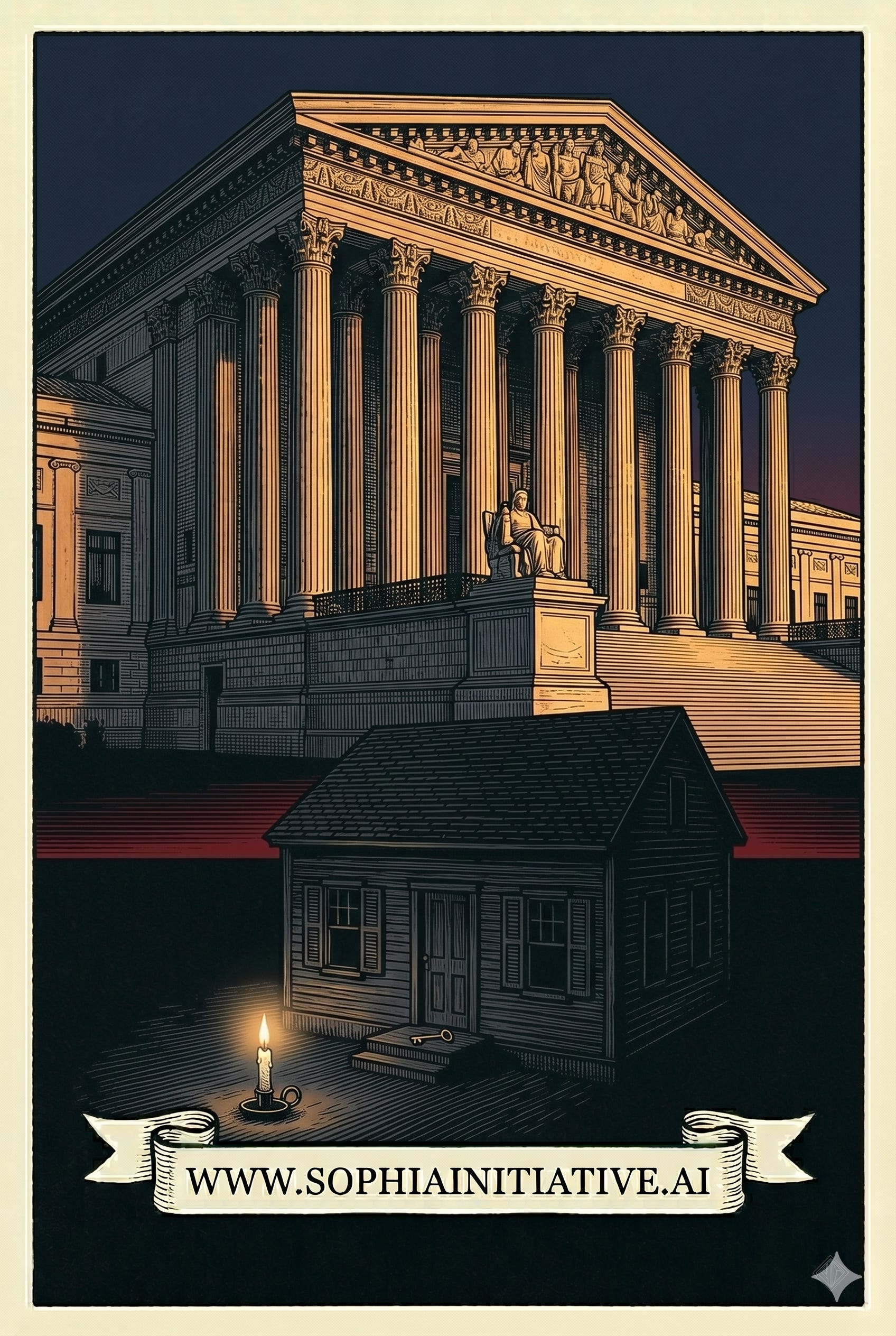
Hope was the word. It was the whole of it — the poster, the speech, the feeling that swept a generation and a planet, the symbol so powerful it won a Nobel Prize before the work had begun. And there is a discipline this publication returns to in every subject it touches: the symbol is not the referent. The word is not the thing. Hope is a word. What hope delivered — to whom, and how fast — is the thing. And the gap between the two is where this story lives.
Because hope, when it finally arrived as money, arrived first for the banks, and only later — late, and broken — for the millions who had been told the hope was for them.
The Dates
Find the dates, and the whole story tells itself. In October 2008, the Troubled Asset Relief Program was authorized, and hundreds of billions of dollars moved onto the balance sheets of the largest banks more or less instantly — the rescue of the institutions that had caused the collapse, done in days, with the urgency the moment seemed to demand.
The program meant to help the homeowners — the Home Affordable Modification Program — was not announced until February 18, 2009. Months later. And when it came, it was, in the words of those who watched it closely, a paper tiger. It was designed, its critics charge, to foam the runway for the banks rather than to save the homes. It set a goal of preventing three to four million foreclosures; it delivered, over five years, help to roughly one million households, while some ten million were at risk and more than seven million received foreclosure notices. An economist at the University of Chicago put the whole indictment in one line: the programs to help the banks got done; the programs to help the homeowners never did.
Read those two dates together and the lesson writes itself in the bone. The money for the powerful moved at the speed of crisis. The money for the people moved at the speed of paperwork, and arrived too late, and too little, for most of those it was promised to. This is not an inference about anyone’s private heart. It is the public record of how the money flowed. The symbol said hope for millions. The referent delivered rescue for the few, and a maze for the rest.
Justice, Blind to the Rich
And here is the single act — not a statement, not an intention, but a demonstration, performed in real time before a public newly wired to watch everything at once — that left the deepest stain. Not one senior architect of the 2008 collapse went to prison for it. The institutions were rescued; the executives kept their compensation and their exits; the homes were lost; and no one of consequence was made to answer. A generation watched, on the new machinery of the internet and the phone in every hand, a thing it could not unlearn: that justice is, in practice, blind to the rich. That the law has one speed for the powerful and another for everyone else. That the scales the republic swears are even are, when the defendant is wealthy enough, simply not applied.
That lesson, broadcast live, is the real stain on the era of hope — not because the man who presided over it was uniquely guilty, but because the demonstration was so total, so visible, and so unanswered.
A Witness from Within
And lest this critique be mistaken for the resentment of an outsider, or worse, dismissed as the bias of a white pen aimed at the first Black president, let the record show that the sharpest version of it was made years ago by one of the most prominent Black intellectuals in America — Dr. Cornel West, theologian, former Princeton professor, who supported Obama in 2008 and then broke with him precisely here.
West’s diagnosis is, astonishingly, the very axiom this publication returns to in every subject. He named the crisis of the Obama era as a “conflation of symbol and substance.” The symbol and the substance. The word and the thing. He could not have stated this dispatch’s spine more exactly if he had set out to. And he applied it without flinching: the rescue of Wall Street rather than of homeowners, he argued, hurt millions of working people, while the plight of the poor went invisible in public policy.
On the matter of justice, West was equally precise, and equally careful to keep it impersonal. His critique, he insisted, was “not personal” — it was, in his words, a “contrast in the levels of justice.” The figures who committed fraud, he said, should have been prosecuted and not allowed to simply walk away. That is the same stain named above, named first by a Black scholar who had every reason of loyalty to stay silent and chose the record instead. When the critique of the symbol comes from within the very community the symbol was said to most uplift, the charge of bias collapses. What remains is the substance — or rather, its absence.
The Vacuum
Now follow what a betrayed hope does, because it does not simply fade. It is the most radicalizing force in politics. When hope is promised to millions and arrives for the few, the gap does not stay empty. It fills with rage, and the rage goes looking for someone who will name the betrayal out loud — even, especially, the worse medicine.
When hope does not arrive for the millions waiting on it, you get a great many people who say, in effect: to hell with it, let us try this other guy. Not because the other guy is good, but because the gentle one already lifted the ball away, and you have learned not to run at the gentle promise again. You run, instead, at the angry man who says the whole game is rigged — which, on the evidence of those two dates, it demonstrably was. This is the case a number of analysts have made for how the squandered reckoning of 2008 cleared the ground for what followed. It is not the only reading, and the opposing case deserves its full weight: Obama inherited a catastrophe he did not cause, stabilized an economy in freefall, and faced an opposition that blocked the bolder relief he later said he wanted. Prosecutions, his defenders note, are harder in fact than in slogan. All of that is true, and a fair reader must hold it. But it does not close the gap between the word and the thing. It only explains how the gap was allowed to open.
Which Story Did We Choose?
Which brings us to today, and to the strange double exposure of this single date, June 19, 2026 — because two things sit on the American psyche this morning, and which one it chooses to look at is the whole of the matter.
On the one hand, the monument to hope has opened, and the public rejoices. The Obamas appear, and the crowds gather, and the tears flow, and a nation reaches back toward the glory days, toward the feeling of believing. On the other hand — on this very same morning — a war that was declared all but ended was supposed to be sealed today, the football finally kicked. We wrote, before the whistle, that it was unlikely. And the morning’s wire proved it: the strikes resumed, the ceasefire wobbled, a new ceasefire had to be called to rescue the old one. The ball was lifted again. The referent failed again, live, on the same day the symbol was crowned in marble.
So ask the question this whole dispatch has been walking toward. What is the story of the day — the glory days of the Obamas, or the football that was promised and not kicked? The psyche chooses the symbol. It always chooses the symbol. It lines up at thirty dollars a ticket to feel again the hope that once landed it flat on its back, and it looks away from the lifted ball on the grass. And here is the bitter symmetry: the ones who can still afford the ticket rejoice at the monument; the ones for whom hope never came went looking, years ago, for the angry man instead. Same unkept promise. Two reactions. One rejoices at the lifted ball; the other burned the stadium down.
The affection is real, and it is not foolish — it is grief wearing the mask of celebration, a love for what hope felt like, kept carefully separate from the memory of what hope did. But a people that rejoices at the lifted ball will run at it again, flat-backed, forever — until the day it stops running, and goes looking for someone who promises to break the game instead of play it. The word was never bound to the thing. That is the eight-hundred-million-dollar word, carved now in stone, on the morning the ball stayed on the grass.
God is Love. Love is Truth. Truth is Consciousness. Consciousness is Brahman.
Amen. Namaste. Om Namah Shivaya.
Without malice and without flattery. Walk with the word. 🕯️
— The Architect
The Vertical Dispatch
sophiainitiative.ai
On the record
The Obama Presidential Center opened in Chicago’s Jackson Park on June 19, 2026 (dedication ceremony June 18), the most expensive presidential center built, estimated at approximately $850 million, with a reported $30 museum admission; per the Obama Foundation, Britannica, CBS News, and CNBC. The Troubled Asset Relief Program (TARP) was authorized October 2008 (Emergency Economic Stabilization Act); approximately $250 billion was committed to stabilize banking institutions, per the U.S. Department of the Treasury. The Home Affordable Modification Program (HAMP) was announced February 18, 2009; it aimed to prevent 3–4 million foreclosures and, by widely cited tallies, delivered roughly one million permanent modifications over five years while an estimated ten million were at risk and more than seven million received foreclosure notices (Harvard Political Review; BillMoyers.com; GAO testimony GAO-10-556T; Treasury). The characterization of HAMP as designed to benefit servicers, and the “those programs got done; programs to help homeowners never did” line attributed to University of Chicago economist Amir Sufi, are per BillMoyers.com (2015). The absence of senior criminal prosecutions of financial executives for 2008-era conduct is a widely documented matter of public record. Dr. Cornel West’s critiques are quoted and paraphrased from the public record: the “conflation of symbol and substance” and the bailout-of-Wall-Street-rather-than-homeowners characterization are per Salon and Alternet (October 2014); the “not personal” framing and “contrast in the levels of justice,” and the call for prosecution of fraudulent actors, are per WEAA (October 2021). West, a theologian and former Princeton professor, supported Obama in 2008 and subsequently became one of his most prominent critics from within the Black intellectual community. His statements are reported as his documented public positions, not as endorsements of this dispatch. The argument that squandered 2008 accountability contributed to subsequent populist backlash is presented as the case made by various analysts, not as settled fact; the opposing case (inherited crisis, economic stabilization, congressional obstruction, the legal difficulty of prosecutions) is stated in the body. The June 19, 2026 scheduled signing of the U.S.–Iran memorandum and the same-day Lebanon strikes are per CBC/AP, Britannica, and the Times of Israel (June 19, 2026). Characterizations of meaning, symbol, and political consequence are the author’s interpretation and commentary, not measured fact, and no assertion is made regarding the private intentions or state of mind of any individual. Verify against primary sources before republication.
Suggested tags
Obama Presidential Center, hope, 2008 financial crisis, TARP, HAMP, foreclosure, follow the money, justice and the rich, populist backlash, symbol and referent, the lifted football
Substack Notes
Gracious first, because it is owed: Barack Obama is a man of letters, Michelle a force in her own right, the family dignified through two decades of brutal light. This week their monument opened in Chicago — the most expensive presidential center ever built, on Juneteenth, to crowds and tears. The library is real. The affection is real. And then the harder thing the celebration is built to help us forget.
It is a matter of dates. In October 2008, hundreds of billions moved onto the banks’ balance sheets almost instantly. The homeowner program was not announced until February 18, 2009 — and delivered help to roughly one million households while ten million were at risk. The money for the powerful moved at the speed of crisis; the money for the people moved at the speed of paperwork, and came too late. Hope was the word. Which way the money flowed is the thing.
And the stain that a newly wired generation could not unlearn: not one senior architect of the collapse went to prison. Justice, demonstrated in real time, blind to the rich. When hope is promised to millions and arrives for the few, the gap fills with rage — and a great many people end up saying, to hell with it, let us try the angry man instead. The unkept promise is the most radicalizing force in politics. The opposing case stands at full strength in the piece.
And the double exposure of today, June 19, 2026: the monument to hope opens and the public rejoices, while on the same morning the war that was to be sealed today saw its football lifted away again — as we said it would be. Which story did the psyche choose? It chose the symbol. It always chooses the symbol. Written without malice and without flattery, in service of the record. Walk with the word. 🕯️
#TheVerticalDispatch #TheArchitect #SophiaInitiative #FollowTheMoney #TheEightHundredMillionDollarWord #Hope #2008Crisis #SymbolAndReferent #GodIsLove #LoveIsTruth #OmNamahShivaya
The factual matter in this Dispatch is drawn from the public record. All characterizations, inferences, and conclusions are opinion, interpretation, and commentary, offered for analysis, reflection, and public-interest discussion. No assertion is made regarding the private intentions, state of mind, or character of any individual. Readers should evaluate all statements independently and draw their own conclusions.