

Φ
THE VERTICAL DISPATCH
We write for the mind, the eye, and the ear.
Read it. Look at it. Listen to it. The Vertical Dispatch is built for all three — prose with rhythm, made to be heard as much as read.
From metaphysics to geopolitics, from culture to history, from the sacred to the street — and everything in between. One lens, every subject. No ego. Just the record, named clean.
Press play. Walk with the word. 🕯️
This dispatch travels by hand. If it serves you, share it — restack on Substack, and pass it on wherever you read. 🕯️
Sacred Metaphysics · The Age of Consequences
Three dispatches have laid the ground. We learned to wrestle the shadow and hold on until it blesses us. We learned to tell the clean fire from the hot, and to hold our anger in the throat rather than swallow it or fling it. And we learned the hardest discipline of all: to read a deed without judging the doer, to set the act down at the river and not carry the person up the road. Now we practice all three at once, in the open, on the hardest material there is — the documented conduct of a person with real power.
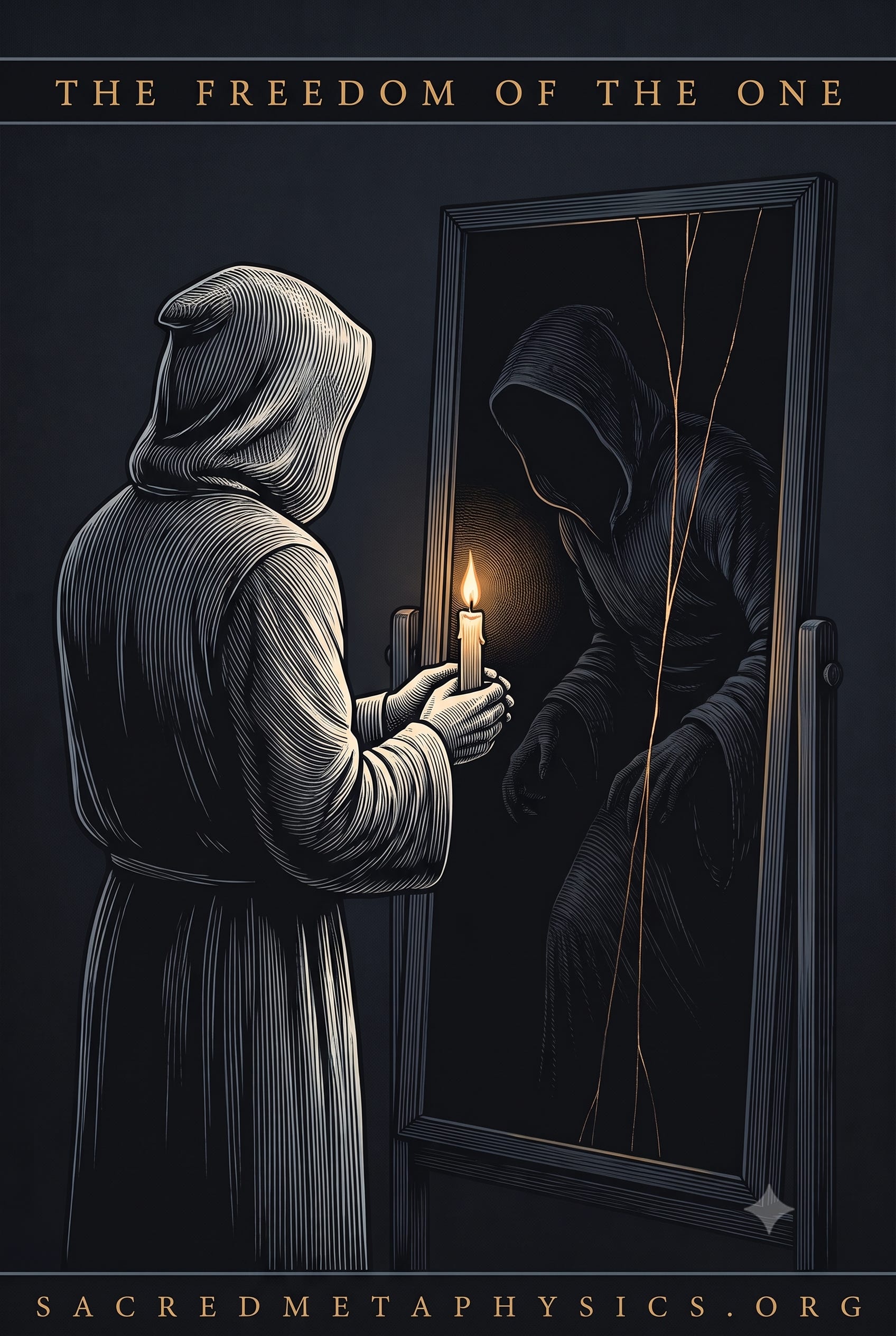
A word before we begin, so there is no mistaking what this is. This is not an attack, and it is not a verdict on a soul. We take three moments from the public record — things done in the open, on camera, in the daylight of public life — and we read them the way we have learned to read our own conduct: for the marks of the shadow, held against the standard of the whole and honourable self. We do not pronounce on the man’s heart, which we cannot see. We read the deeds, we name what they reveal, and then — this is the whole point — we turn the mirror around, and ask where the same shadow lives in us. The figure is the lesson. You are the subject.
The First Moment: The Trust He Would Not Have Verified
When reports came that foreign powers had sought to interfere in Canadian politics, the leaders of the opposition parties were offered a top-secret security clearance, so they might be shown the classified intelligence. Under the government’s own screening policy, such a clearance is the formal appraisal of a person’s “loyalty and reliability” — the state’s verification that an individual can be trusted with what must not be spoken. The leaders of the other opposition parties underwent it. One leader alone declined. His stated reason, on the record, was that the clearance would restrict his freedom to speak.
No law compels a party leader to hold such a clearance — and that absence is precisely what makes the choice worth reading, for it was not forced by any rule. It was a pure act of will. Every peer bound himself to the same restriction, judging the shared interest in an informed leader worth the limit on his own speech. One placed his own freedom to speak above that shared interest, and declined to be verified at all.
Here is the deed, and here is the standard beside it. The humble posture submits to the vetting that ordinary public servants — clerks, officers, the people who carry the nation’s trust as a condition of their work — accept without complaint. To be verified is not a burden they resent; for many it is a mark of the trust placed in them, an honour gladly held. And the one who would lead them all declined the honour, and called it a gag.
Read the shadow in it, at the level of the conduct and no deeper. The mark is the placing of the self’s freedom above the shared good — the freedom of the one over the many. And there is a second mark, subtler: the refusal to be verified means the trust was never confirmed. Not disproven. Not failed. Declined. The man who asks the country to trust him with everything is the one leader whose trustworthiness the ordinary process was never permitted to establish — by his own choice. We do not say he cannot be trusted; that is beyond our sight and not ours to say. We say only what the record says: the verification was offered, and declined.
And now the mirror, for this is a lesson for all. Where in your own life do you decline to be verified — to be seen fully, to submit to the scrutiny that others accept — and call your evasion a principle? Where do you place your own freedom above a trust you owe to others, and dress the placing in the language of virtue? The shadow here is not his alone. It is the self that will not be examined, in every one of us. His is merely visible. Yours is merely yours to find.
The Second Moment: The Power Spent Downward
In an orchard, before a camera, he sat across from the editor of a small community newspaper — a local journalist, not a national inquisitor — and, eating an apple as he spoke, met the man’s questions with a practiced, superior ease, pressing him, challenging the premise of each question, letting the contrast between his own command and the editor’s discomfort show plainly. And then he did the thing that turns a private moment into a public one: he broadcast it himself, released it as a triumph, an image of mastery to be admired.
Set the standard beside it. There was a power asymmetry in that room — a seasoned national figure and a local editor who may never have sat across from such a person before. And the question every such moment asks is the oldest one: what does a person do with power over someone weaker in the moment they have it? The merciful answer, the honourable one, is to spend the power to lift the smaller person — to meet a fumbling question with grace, to make the nervous man larger, not smaller. That costs the powerful nothing and dignifies the room.
The other answer is to spend the power downward — to let the weaker man’s smallness show against your command — and then to publish the display as virtue. And here is the fingerprint that lets us read it: humility does not film itself winning. A private discourtesy is only a bad moment. To record the diminishment of a smaller man and release it as a triumph is the ego not merely acting, but seeking applause for having acted.
We do not judge his heart. Perhaps the editor’s questions were poor; grant it freely. The humble response to a weak question is known — you help the questioner — and so the charity we extend only sharpens the reading, because the more available the grace, the more telling its absence. The mark of the shadow is not in the pressing alone but in the broadcasting: the need to be seen winning, the small performance of dominance offered up to a crowd for admiration.
And the mirror. When did you last spend power downward on someone smaller — a subordinate, a child, a clerk, a stranger who could not answer back — and feel the small pleasure of the contrast? When did you last perform your competence for an audience, and quietly enjoy another’s discomfort as the backdrop to your shine? The reflex to be seen winning lives in all of us, and it is never so pure as when we win against someone who could not have won. His moment was filmed. Yours were not. That is the only difference, and it is not a difference of kind.
The Third Moment: The Ambition That Would Not Wait
When a great protest convoy rolled into the capital in the winter of that year, the sitting leader of his party hesitated — uncertain how closely to embrace a movement that carried, among its genuine grievances, some darker flags. And in that hesitation, this man did not wait, did not counsel unity, did not steady the ship for the leader still in the chair. He went to the convoy. He carried coffee to the crowd. He stood on the overpass and filmed himself with the movement. And when the sitting leader fell days later — deposed by a caucus that had, in truth, been restless for months before the convoy ever arrived — this man was in the race to replace him within three days, and he rode that same movement to the leadership it had helped stir.
Now here the discipline must be strictest, so read carefully what is claimed and what is not. It is not claimed that he planned the leader’s fall, or engineered it, or caused it — the record shows the caucus was already moving against the leader before the convoy came, and to assert a secret plan would be to claim a knowledge of his intentions that no one outside his own mind possesses. We claim only the sequence, which is documented, and the conduct within it, which is plain: while the leader vacillated, he moved; while unity might have been served, he served his own ascent; and when the chair came empty, he was in it within days.
Set the standard beside it. What would loyalty have done, in a colleague, while a sitting leader stumbled in a hard hour? Perhaps waited. Perhaps steadied. Perhaps not been the one photographed with the movement while the leader hesitated. The mark of the shadow is not in ambition itself, which is human and not always ego — but in the ambition that will not wait, that reads a leader’s difficulty as an opening, and moves.
We leave his soul unjudged. Perhaps he believed, sincerely, that the movement was right and the leader wrong, and acted from conviction rather than calculation — we cannot see which, and it is not ours to weigh. We name only the shape of the conduct: the self that would not wait, that placed its own rise above the loyalty a hard moment might have asked. And even that we hold lightly, because the caucus revolt was already underway, and he was one current in a larger tide.
And the mirror, sharpest here of all. Where have you read another’s stumble as your opening? Where did a friend’s difficulty, a colleague’s fall, a rival’s weakness become, quietly, your chance — and where did you move, and call it merit, when honour might have asked you to wait, or to steady, or to lift? The ambition that will not wait is not a politician’s peculiar sin. It is the self, seeing an opening, moving before the heart has asked whether it should. His opening was a national stage. Yours was smaller, and no less real.
The Lesson, and the Mirror Turned Home
Three moments, three marks of one shadow: the self that will not be verified, the self that spends power downward and films it, the self that will not wait. And in every one, we have done the same thing — read the deed, held it against the standard of the whole and honourable person, named the gap, and left the man’s soul to the One who made it. We have not called him wicked. We have not sentenced his heart. We have read three deeds in the daylight where he himself placed them, and we have asked what they reveal about the ego — the ego that is not his alone, but the human inheritance, worn here where the whole country could see it.
For that is the only reason to read a powerful man this way. Not to hate him — hatred would be our own shadow, discharged, and we would have become the very thing we named. Not to feel superior — superiority is the mask, polished. But to learn. His visible ego is a lamp held up to our invisible one. The refusal to be verified, the power spent downward, the ambition that would not wait — these are not foreign faults belonging to a distant figure. They are the marks of the shadow every one of us carries, made large and public in one life, so that we might see them small and private in our own, and wrestle them, and hold on until they bless us, and act — from then on — with honour.
Read the deed. Name the shadow. Hold up the standard. And turn the mirror home. The one we were truly reading, from the first line to the last, was never only him. It was us.
So when you next feel the pull to evade the scrutiny others accept, to spend your small power downward on someone who cannot answer, to read another’s stumble as your opening — remember that you have seen exactly this, in the daylight, in a life larger than your own, and you know now what it is. That knowing is the whole gift. Catch the shadow in the act, name it plainly, set it down at the river, and choose the higher thing. Not because you are without it. Because you have finally seen it, and can.
God is Love. Love is Truth. Truth is Consciousness. Consciousness is Brahman.
Amen. Namaste. Om Namah Shivaya.
— The Architect
The Vertical Dispatch
sophiainitiative.ai
On the record
This dispatch reads three documented episodes from Canadian public life, and no claim is made beyond the public record. On the first: it is a matter of record that, following reports of foreign interference, the leaders of the other federal opposition parties obtained top-secret security clearances to view classified intelligence, while one opposition leader declined, stating that the clearance would restrict his freedom to speak. Canadian security clearances are governed by the Treasury Board Standard on Security Screening and the Policy on Government Security, under the authority of the Financial Administration Act, and administered through CSIS and Public Services and Procurement Canada; the policy characterises screening as an appraisal of an individual’s loyalty and reliability. No law requires a party leader to hold such a clearance. Any allegation of foreign involvement in that leader’s past leadership campaign is reported, contested, and unproven, and is not asserted here. On the second: the orchard interview and its self-broadcast are on the public record; the reception of it was genuinely divided, some praising it and some criticising it, and both readings are matters of record. On the third: the sequence — the convoy’s arrival, the sitting leader’s removal by his caucus, and the subsequent leadership candidacy and victory — is documented; it is expressly not claimed that the leadership change was planned, engineered, or caused by the figure discussed, and the record indicates caucus discontent preceded the convoy. All readings of motive are offered as interpretation of conduct, not as findings about any person’s private intentions or character. No diagnosis of any individual is made or intended. Verify each stone before you stand on it, against primary sources, before republication.
Suggested tags
the ego, the shadow, security clearance, the freedom convoy, leadership, ambition, public life, carl jung, integration, acting with honour, the deed and the doer, self-knowledge, nonduality, sacred metaphysics, the vertical dispatch, the mirror.
Substack Notes
Three dispatches laid the ground: wrestle the shadow and hold on until it blesses you; tell the clean fire from the hot; read a deed without judging the doer. Now we practice all three at once, on the hardest material there is — the documented conduct of a person with real power. Not to attack. Not to pass a verdict on a soul. But to read three moments in the daylight where they were placed, name the shadow visible in them, and then turn the mirror home.
The trust he would not have verified: offered the clearance the other leaders accepted, he alone declined, placing his freedom to speak above the shared good — and so his trustworthiness was never confirmed. Not disproven. Declined. The mirror: where do you refuse to be seen fully, and call your evasion a principle? The power spent downward: he pressed a small-town editor and broadcast it as triumph — and humility does not film itself winning. The mirror: when did you last spend your small power on someone who could not answer back, and enjoy the contrast?
The ambition that would not wait: while the sitting leader hesitated over the convoy, he did not wait, did not steady the ship — he went to the movement, and when the chair fell empty days later, he was in it within three. We claim only the documented sequence, never a secret plan, for the caucus was already restless before the convoy came. The mirror: where have you read another’s stumble as your opening, and moved, and called it merit, when honour might have asked you to wait?
Three marks of one shadow: the self that will not be verified, the self that spends power downward, the self that will not wait. And the one we were truly reading, from first line to last, was never only him. It was us. His visible ego is a lamp held up to our invisible one — not to hate, which would be our own shadow discharged, but to learn to catch the same in ourselves, and set it down at the river, and act with honour. Written from love, in service of the record. Walk with the word. 🕯️
#TheVerticalDispatch #TheArchitect #SacredMetaphysics #TheEgo #TheShadow #CarlJung #Integration #ActWithHonour #SecurityClearance #Leadership #Ambition #TheMirror #Nonduality #GodIsLove #OmNamahShivaya
The factual matter in this Dispatch is drawn from the public record. All characterizations, inferences, and conclusions are opinion, interpretation, and commentary, offered for analysis, reflection, and public-interest discussion. No assertion is made regarding the private intentions, state of mind, or character of any individual, and no claim of any secret plan or design is made or intended. Allegations referenced are identified as unproven. Readers should evaluate all statements independently and draw their own conclusions.
Your work here resists the temptation to attachment and aversion, ie polarization, so
Visible in public life. And to hold the mirror up
To ourselves, so that we may each metabolize that shadow that is human.
All telling of the character. None cover him in trust or virtue.