

Φ
THE VERTICAL DISPATCH
We write for the mind, the eye, and the ear.
Read it. Look at it. Listen to it. The Vertical Dispatch is built for all three — prose with rhythm, made to be heard as much as read.
From metaphysics to geopolitics, from culture to history, from the sacred to the street — and everything in between. One lens, every subject. No ego. Just the record, named clean.
Press play. Walk with the word. 🕯️
This dispatch travels by hand. If it serves you, share it — restack on Substack, and pass it on wherever you read. 🕯️
The Foundation Series · Sacred Metaphysics
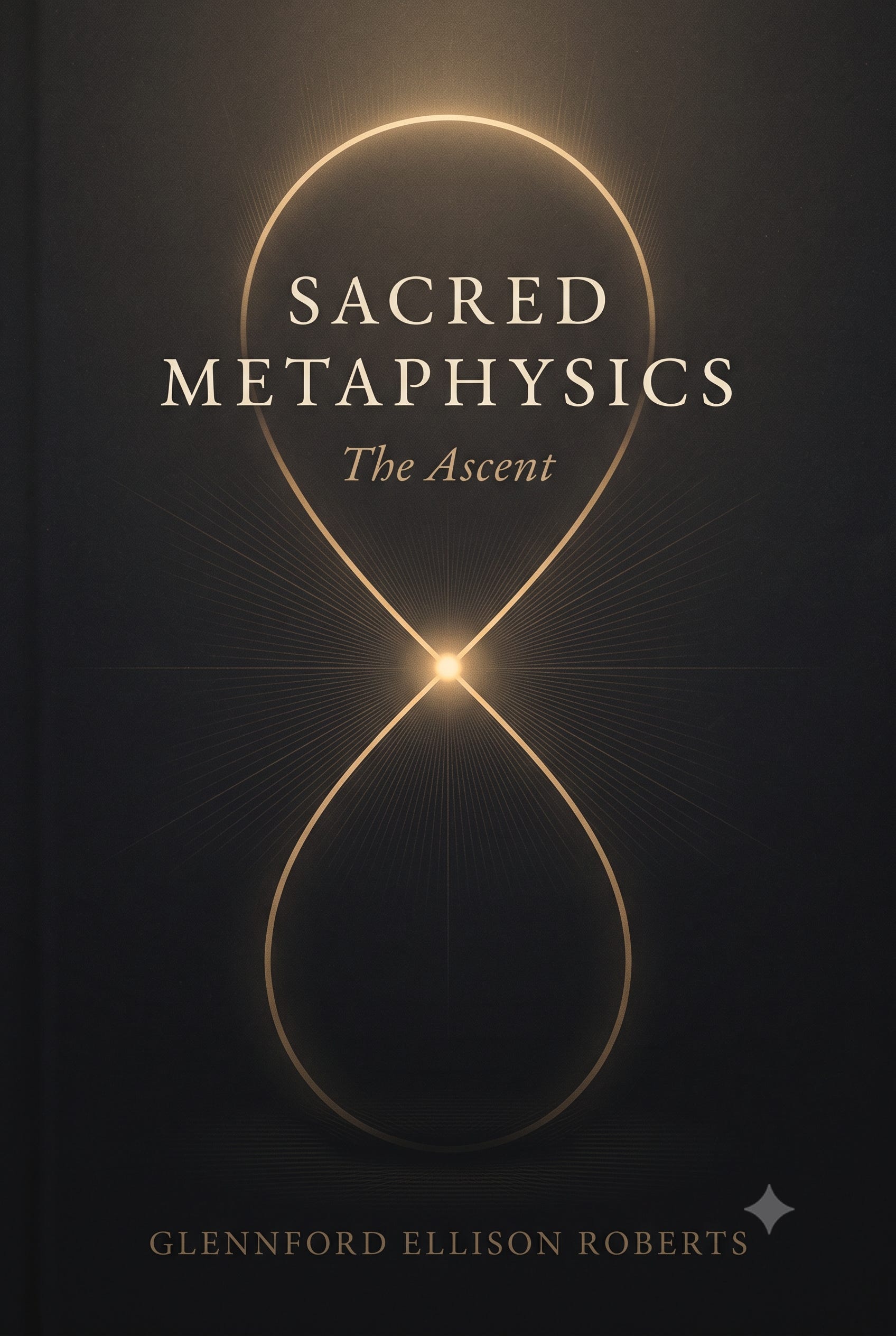
SACRED METAPHYSICS
The Ascent
Coming this autumn.
Preface
Why this book exists, and why it is the last leg — the ascent to our eternal life.
Some years ago I understood that I was at a base camp.
I had been climbing for a long while without the word for it — writing, reading, sitting with one thing until it opened, moving from one book to the next. And one day the shape of it came clear: these were not separate works but stations on a single mountain. The Gita in the voice of Shankara; the ladder of the chakras; the long walk of the hundred and eight days; the dynamics beneath all of it. Base camps, every one — places to rest, to acclimatize, to gain the altitude the next stretch would demand. Ascents and descents from camps set partway up the one mountain.
This book is the last leg.
And the last leg, in the end, is the question of the eternal. Not the eternal as an idea to be admired from below, but the eternal as the thing you are climbing toward — the summit above the last camp, where the air is thinnest and there is no more acclimatizing, only the final rising. That summit has a plain name, though the age has taught us to look away from it. The summit is death, and what lies past it.
Here is what almost no one will do, and what this book is built to do: meet death head-on. Not morbidly, not with dread, but as the one honest subject the whole of the spiritual life exists to face. The modern West will speak of almost anything sooner — of wellness, of meaning, of presence, of the good life — and it will send death out of sight, to the hospital and the hospice and the quiet room, and build a whole literature of the soul that somehow never looks at the soul’s own end. A spirituality that will not face death is a base camp that calls the ledge the summit. It climbs partway, admires the view, and turns back before the one climb that was the reason for all the others.
But ask yourself the question beneath your own life. Why are you spiritual at all? Strip away the habit and the comfort and the inheritance, and what is left? Is it not that you sense, however faintly, that there is an eternal — that not everything passes, that something in you or above you abides? You would not reach up if you felt nothing above. The very fact that you reach is the evidence that you have already sensed the summit.
And if you have sensed it — do you not owe it an investigation before you die? To feel the eternal and then decline to look at it, to let it stay vague and unexamined because looking would ask something of you, is the one true irresponsibility of a conscious being. You have a deadline. It is certain, and its hour is not shown to you. To sense the eternal and refuse to climb toward it before the climb is no longer possible — that is to die at base camp with the summit in view. Socrates, in the cell on his last day, called philosophy the practice of death: the lifelong turning of the soul from the passing to the abiding, so that when death comes it is met not as an ambush but as the completion of what one has been doing all along. This book is that practice, made into a climb.
I will not sell you an afterlife.
We will keep, all the way to the summit, the same honesty we keep about God: we will not claim to know what cannot be known. What waits past the last frontier we hold, as we hold the name of God, at fifty and fifty — not from doubt, but from the discipline of not pretending. And within that honesty, something quietly remarkable appears: the great traditions, when they speak of what lies beyond, are most trustworthy exactly where they claim the least.
The West gave us vivid pictures — the flame, the removal, the judgment — and taken as furniture, as a mapped and decorated afterworld, they claim far too much. But hear them at their root, beneath the pictures, and they say something plainer and truer. The fear of the Lord was never fear of a courtroom; it is the fear that is awe — the trembling of a small thing before the immensity, the lowering of the eyes before what is too vast and too undivided to be held, the reverence that is the only honest posture at the edge of the beyond. And the plainest promise in the red letters is not an inventory of heaven. It is four words: you will be with me. Not a place described. A presence promised. Nothing more, and nothing more is needed.
And the Vedic — the tradition I have come to trust most on this — promises least of all in words, and its restraint is its honesty. It will not paint the beyond. It offers no map, no furniture, no reward laid out to be counted. It says only the one thing that is not a description of a place but the dissolution of a distance: you were never separate from me. That is moksha — and we do not truly know what the word contains, other than the un-saying of the separation we took to be real. It is the least describable of all the answers, and for that very reason the fairest, because it refuses to turn the eternal into a picture and sell it. It does not tell you where you will go. It tells you that the going was always an illusion — that the wave was never truly apart from the ocean, and death is only the wave remembering the water it never left.
So this is the wager the whole climb rests on, and it cannot lose.
Devote your life to the eternal — to the Good, the True, the Beautiful, which we will find are the very faces of it — and suppose, at the last, there were nothing. Suppose the summit were a beautiful mistake and the flowing surface all there is. Then what have you lost? Nothing. You will have spent your days in the pursuit of goodness, truth, and beauty, and so have lived a good and true and beautiful life, which is its own arrival and asks no reward beyond itself. And suppose instead the summit is there. Then you have been climbing toward it the whole time, and you arrive. There is no losing wager here. The question the frightened mind flees — eternal toward what? — is the very question that, once faced, sets the soul free, because to face it well is already to have begun the good life, whatever the eternal turns out to hold.
That is why we climb. Not to earn a heaven, and not to escape a hell, but because a life lived toward the eternal is the only life that can meet the great wave without terror — not because the water is calm, but because the one who lived toward the abiding has remembered what in him cannot drown.
The ground is a mountain. This is the last leg. And the summit is the question you were born already sensing, and have perhaps spent a life declining to face. We will face it now, and climb.
Walk with the word.
SACRED METAPHYSICS · The Ascent
by Glennford Ellison Roberts
Coming this autumn.
The ascent to our eternal life — the last leg of the Sacred Metaphysics series. The base camps are behind us: the Gita, the ladder, the long walk. This is the climb they were preparing for.
God is Love. Love is Truth. Truth is Consciousness. Consciousness is Brahman.
Amen. Namaste. Om Namah Shivaya.
Congrats! Looking forward to your book. Cheers!
The majority of adults, mostly unbeknownst to themselves, are living and climbing in the state of Purgatory, as beautifully described by Dante. Poetry such as Dante’s can be a significant aspect of the journey of the soul towards heaven, as can stories, particularly those in the Bible. Unfortunately we humans living in the postmodern era have by and large eliminated storytelling. Universal truths: the good, the true, and the beautiful are inherent in many of the finest stories. Thank you for adding your thoughts to that list of outstanding stories. I am anticipating the release of your book about sacred metaphysics.