

Φ
THE VERTICAL DISPATCH
We write for the mind, the eye, and the ear.
Read it. Look at it. Listen to it. The Vertical Dispatch is built for all three — prose with rhythm, made to be heard as much as read.
From metaphysics to geopolitics, from culture to history, from the sacred to the street — and everything in between. One lens, every subject. No ego. Just the record, named clean.
Press play. Walk with the Word. 🕯️
The Departure Lounge
A dispatch for the worn-out, the twice-married, the still-curious, and the terminally human.
“Though my breakfast will be somewhat sharp, my supper will be more pleasant and sweet.”
— Nicholas Ridley, Bishop of London, the morning of his burning, 16 October 1555
This dispatch travels by hand. If it serves you, share it — restack on Substack, pass it on wherever you read. 🕯️
I should confess something, because the lounge is the room where I stop dressing it up. I don’t always finish books. Sometimes I do — cover to cover, the long ones, the hard ones; I read Anna Karenina end to end and carried the weight of it in both hands. But many times I don’t finish, and for years I carried that like a small debt nobody was calling in but I knew was on the ledger. I’ve got the library behind me, thirty years of spines, the cracked ones and the ones I’ve never opened, and I’d have told you the unread ones were a failing.
Here’s what I finally understood, somewhere back in the years. When I don’t finish a book, it’s usually not that I couldn’t get through it. It’s that somewhere early — sometimes by page four — the book has already handed me the thing. The essence. The one true line the whole four hundred pages were built to deliver, and the book, being honest, often puts it near the front because it can’t help itself. And once I’ve got it, I can stop. Not from laziness. Because I’ve been handed something, still warm, and to read on would be to set it down again and go looking for the next thing, when the thing is already in my hands.
So I close the book and I carry the line out of the room with me. And here is the gift, the real one, the thing I want to hand across the plastic chairs: I don’t carry it for a week, or even a year. I carry it for a lifetime. A universal that catches me — from a book, or a lecture I stumbled on, it doesn’t matter the source — I bind with it, and once I’ve bound with it, it becomes my breath. It becomes my being. It doesn’t pass like weather; it is taken up into the way I see, the way you’d take up a sentence somebody said to you at exactly the right moment and never once go asking them to keep talking. You go quiet and let the one thing work you, for good. That’s not failing to read. It might be the only finishing that matters. A book is a doorway. The line you stop on is the room. Most readers walk through the doorway over and over, every page a new doorway, and never once stop long enough to be in the room. I get to the room early, and I stay — and I take the room with me when I go.
Walk the Shelf With Me
It’s right behind me as I write this, and I can tell you the story of myself faster by the spines than by anything I’d say out loud. The Stoics, the whole row — Plato through Aristotle, the Meditations worn soft. Copleston’s history of philosophy, the Jesuit, nine volumes of it — and here’s a thing I love about that man: he sat down to write three. Ancient, medieval, modern. Clean. Three and done. And the work outran him. It grew to nine because three couldn’t hold what he’d started to see. Behind me the Britannica, the 1980 set, a fossil the day I shelved it. Robertson Davies, the whole run. Tyler Volk’s Metapatterns — a man who went looking for the functional universals that repeat across space, time, and mind, which is to say he wrote a whole book about the exact thing I read for. Isaiah Berlin — Concepts and Categories, the history of ideas. Bertrand Russell. Orwell. Neil Postman, who told us exactly what the television was doing to us while we kept watching. Stuart Chase, The Tyranny of Words — a title that is itself the whole book, which is the point I keep circling. Steinbeck. To Kill a Mockingbird. Dostoevsky. Anna Karenina, which I read cover to cover and which damn near broke my arm to carry.
Some of these I read end to end. I won’t pretend otherwise — I did the work on a good number of them. And some I stopped on page four and carry as if I read them yesterday. Both true. No shame in either, not anymore. When a title is strong — when the title is the universal itself, when it says the whole thing whole — the message comes off the spine like heat off a stone. You don’t always need the three hundred pages under it. The three hundred pages are the author proving what the few words already told you. Sometimes I read the proof. Sometimes the few words were enough, and I went and meditated on them for a year, and the book did its entire job from the shelf.
The Book That Came From a Dying Man
One of those volumes I can’t look at without the whole scene coming back — a heavy red book, six titles bound into the one big spine, Slaughterhouse-Five among them. It was given to me by a dying man, an Irishman, a palliative patient near the end of it. And in his dying days he told me the thing he’d decided was the trouble with the whole world: ignorance and apathy. Not cruelty, not even evil. The not-knowing, and the not-caring to know. A man at the edge of his life handing me the diagnosis and the book in the same breath.
I was reading it in the hall outside his room when his son came by and saw the cover and said, with a kind of startle, that he had the same book. He didn’t know. He didn’t know his own father had just put it in my hands. The father was the link between the son and the stranger, and the book was the thread, and none of us had arranged a word of it. So it goes.
That’s when I started to understand what a library actually is. It isn’t shelves. It’s the people who handed you the books, and the dead who wrote them, still talking. A man’s library is a room full of the living and the dead, and the ones I stopped on at page four are talking just as loud as the ones I finished. And the Irishman was right, which is the whole reason I’m still at this: the trouble is ignorance and apathy — and a book, met right, is the cure for both at once. It ends the not-knowing, and it makes you care that you didn’t know.
The Book That Stopped at the Door
Let me give you the cleanest example I have, fresh. I bought Nexus — Yuval Noah Harari, his book on information and AI — expecting to be taught something about the machine. I had his Sapiens too, a gift, sitting unread on the shelf for years. And somewhere in the first twenty-five pages of Harari, maybe sooner, he gets to consciousness. He walks its long history, tens of thousands of years of the sapiens mind, back to the cognitive leap that made us what we are — and then he sets down the honest sentence: we don’t actually know what consciousness is. And I closed the book. Not in disappointment. In recognition. Because I’d spent the last two years in the Vedas, and the place where Harari arrives as his conclusion — the not-knowing, the mystery at the centre — is the exact place the Vedas begin. He stops at the wall. The Vedas knew it was a door. If the frontier of the AI conversation ends where the oldest books start, I already knew what I’d find by reading on, and I knew I’d gone deeper into that one question than the book could carry me. That’s not arrogance. It’s the universal already living in you, recognizing its own face on the page.
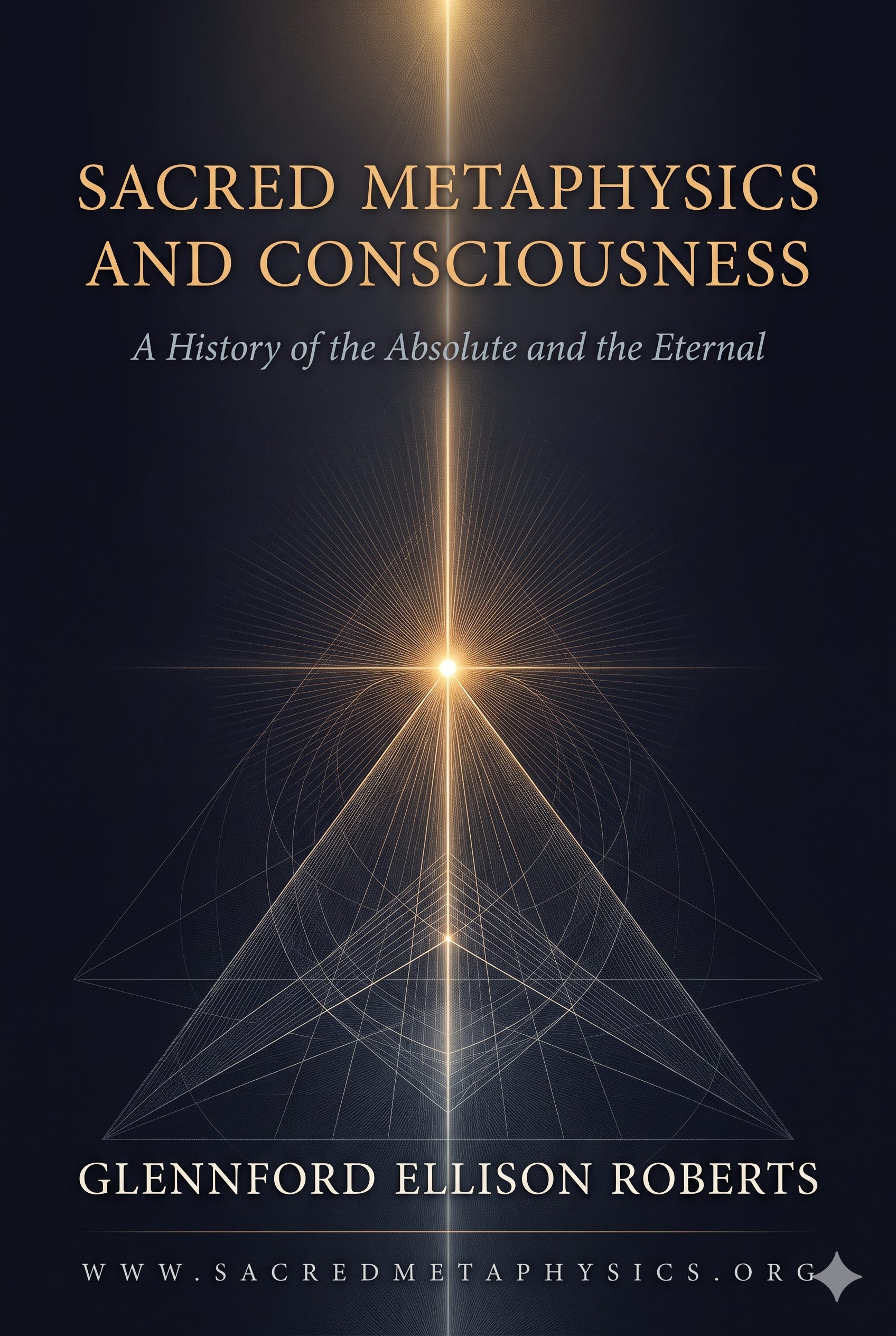
And here is the thing I’ll say plainly, because the lounge lets me: that recognition is the whole reason for the book I’ve been writing. Sacred Metaphysics and Consciousness — a history of the Absolute and the Eternal — carries nearly every reference on the shelf behind me, ninety percent of the library if not all of it. Not because I finished every one of those books. Because I bound with the one true line in each, and let it become breath, and the breath became the book. Harari closes his map at the mystery. Mine opens there. It’ll be in your hands before the fall of 2026.
Breakfast Sharp, Supper Sweet
Which brings me to the oldest voice on my shelf, and the one that finally taught me what I owe the books. There’s a history of the English Bible — Benson Bobrick’s telling of it — and in it are the men who died to put the Word into plain English. Tyndale strangled and burned. Others who came to bitter ends. They are the reason a boy from the Gaspé who started reading late can hold any of this in his own tongue at all.
One of them was Nicholas Ridley, Bishop of London, burned at the stake at Oxford under Mary Tudor on the sixteenth of October, 1555. The night before, the record says, he was almost merry — he had himself shaved, and he called his last supper a marriage feast. And on the morning of the fire, seeing his keeper’s wife weeping for him, he told her: “Though my breakfast will be somewhat sharp, my supper will be more pleasant and sweet.”
He was executed that same day. Breakfast was the fire. Supper was with God, the same night. And at that very stake, his companion Latimer turned to him and said the thing this whole publication has been signing its name with and never knew the hand that struck it — that they would that day light such a candle, by God’s grace, as would never be put out. The candle. The one warmth, ember-gold, that closes every dispatch I write. It was lit at Ridley and Latimer’s burning in 1555. I’ve been carrying their fire the whole time.
That’s the secret of the library laid all the way bare. The dead wrote the books. Some of them died for the right to. And you honour them not by grinding through every page but by letting the one true line work you — the way Ridley ate his sharp breakfast so the Word could be carried at all, and a man centuries on gets to stop early in a book and keep the line for the rest of his life.
The Night I Ran Out of Books
There was a night — I was writing Windows for Thinkers, the first real writing I ever did. The opening was a history of computers running up to the fifteen nouns and ten verbs that became the early bones of what I now call Universal Dynamics, back when I was still calling it ObjectDynamics. And I hit a wall mid-thought. Not the block — the opposite. The thing was moving and I didn’t have enough under me to hold it. I stood up and said it out loud, to the empty room: I’ve run out of books. I have to go get more books.
I didn’t understand, that night, what I’d just told myself. I do now. The man who leaves books unfinished and the man who ran out of them are the same man. Once the titles are alive in you — once you’ve stopped reading for the finish line and started reading to feed the thing you’re building — completion stops being the point. You’re not climbing through a book to reach the end. You’re mining it for the one live line, and the second you have it you’re back at your own desk putting it to work, until one night the whole shelf can’t keep up and you have to go get more. That’s what Copleston did. Three volumes couldn’t hold it, so he went and got six more. I keep him on the shelf, and then I went and lived his exact gesture at my own desk, thirty years later, rhyming with a dead Jesuit and not knowing it.
How a Late Reader Is Made
I should tell you why I started late, because that’s the real message and I don’t want it lost in the cleverness. I came to reading late. I think part of it is that I’m dyslexic — the letters didn’t sit still for me the way they sit still for other people. And part of it is the plain shape of a house where the parents don’t read; there’s no current in the room pulling you toward the page. But I was always curious. Especially about history. I was hungry for it before I could comfortably read it.
Here’s the proof, and it still makes me laugh and ache at once. In grade five I was failing almost everything. And I got an excellent in history — and they wanted to take the mark away, because it didn’t make sense to them that a boy could be failing across the board and stand that high in one subject. They couldn’t believe it. But that’s the whole thing, isn’t it. The universal that captures your imagination is the one that lights the entire machine. History caught me at nine the way a strong title catches me now — same faculty, the same stopping in the one true room. They tried to erase the proof of it. I spent the next sixty years showing they were wrong to doubt.
And the reading proper came late, and it came through a man. My mentor. What he gave me was not a reading list. He showed me my own ignorance — and he did it in love, which is the only way it can be done without making a man defend his wall harder. He caught me being opinionated, sure of things I had not earned, and he didn’t shame me for it. He loved me into putting the opinions down and picking the books up. Ignorance named in scorn just builds the wall higher. Ignorance named in love is a door.
Ignorance, Ego, Silence
So here is the method, as plain as I can set it down, the thing I’ll leave at the gate. It comes in three turns, and they go in order. First you acknowledge your ignorance — you let someone you trust show you the edge of what you do not know, and you don’t flinch from it. Then you acknowledge your ego — the part of you that argues, that defends, that stays opinionated precisely so it never has to learn anything. You set it down. And then you acknowledge the silence.
Because the silence is where the knowing finally gets in, and the silence is in the reading. Not in finishing — in reading. In the quiet of the held page, and then in the longer quiet after, the meditation on the universal that caught your imagination and will not let it go — the one you bind with until it becomes your breath. That’s why I can stop early. The silence has arrived, and the line is working me in it, and to read on would be to break it.
So if you came late, like me — if the letters never sat still, if the house had no books, if you spent your first decades being sure instead of being taught — hear this from a man at the window with his bags checked. It is not too late. It was never about finishing. Start late if you must, but start. Let a friend name your ignorance in love. Set the ego down. And then go find the silence that lives in the reading, and let the one true thing work you all the way through. That’s the whole of it. That’s what I learned, and I learned it late, and I would not trade the lateness for anything, because the lateness is what taught me to stop and stay in the room.
God is Love. Love is Truth. Truth is Consciousness. Consciousness is Brahman.
Amen. Namaste. Om Namah Shivaya.
— The Architect.
Still curious, still at the window, still glad you sat down. 🕯️
The Vertical Dispatch
sophiainitiative.ai
On the record.
Nicholas Ridley, Bishop of London, and Hugh Latimer were burned at the stake at Oxford on 16 October 1555 under Mary I. The words attributed to Ridley on the morning of his execution — “Though my breakfast will be somewhat sharp, my supper will be more pleasant and sweet” — together with the detail that he called his last supper a marriage feast, are as recorded in John Foxe’s Acts and Monuments (the Book of Martyrs) and retold in Benson Bobrick, Wide as the Waters: The Story of the English Bible and the Revolution It Inspired (2001). Latimer’s companion words at the stake — that they would that day light a candle, by God’s grace, that would never be put out — are from the same source. Frederick Copleston’s A History of Philosophy was conceived as three volumes and grew to nine (1946–1975). Tyler Volk’s Metapatterns: Across Space, Time, and Mind (Columbia University Press, 1995) develops the idea of functional universals recurring across nature, time, and thought. The personal account — the mentor, the dyslexia, the grade-five history mark, the writing of Windows for Thinkers, and the deathbed gift of Slaughterhouse-Five — is the author’s own, told from love. Verify against primary sources before republication.
Written from love, for a sacred humanity, in the full light of consciousness, toward the greater good. 🕯️
Thanks for this story of your reading life. Unlike yourself I have been reading, often avidly, since age four. However, I have never wanted to stop at page four. In these, my later years, I search more and more for the guidance some books offer me, and usually make notes that are relevant to my desire to learn about my psyche. Thanks again for sharing. I will keep it in my blogs to re-read section.
Thank you so much for sharing these inspiring thoughts...