

Φ
THE VERTICAL DISPATCH
We write for the mind, the eye, and the ear.
Read it. Look at it. Listen to it. The Vertical Dispatch is built for all three — prose with rhythm, made to be heard as much as read.
From metaphysics to geopolitics, from culture to history, from the sacred to the street — and everything in between. One lens, every subject. No ego. Just the record, named clean.
Press play. Walk with the word. 🕯️
This dispatch travels by hand. If it serves you, share it — restack on Substack, and pass it on wherever you read. 🕯️
Sovereign Analysis · The Age of Consequences
Volatile facts date-stamped as of June 23, 2026
The headlines chose their word, and it was snub. “Canada snubs US to sign radar deal with Australia,” ran the wires, around the world, within hours of the signing in Canberra on Monday. It is a satisfying word. It fits the season — a Canada bristling under a president who muses about annexation, a wounded northern pride finally turning its back on the bully to the south. And like most satisfying words, it is doing more work than the facts can quite support. This dispatch is about the deal Canada actually signed, and about why the truth underneath it is both less inflammatory and far more important than the snub the headlines sold.
First the facts, named clean and dated, because the number alone has been reported three different ways. On Monday, June 22, 2026, Canada’s Secretary of State for Defence Procurement, Stephen Fuhr, signed a government-to-government agreement with Australia’s Deputy Prime Minister and Defence Minister, Richard Marles, at Parliament House in Canberra. The signed first phase is worth 2.5 billion Canadian dollars; the full program, which Prime Minister Carney first announced more than a year ago, is budgeted at six billion. The system is an Arctic Over-the-Horizon Radar — Australian-designed, built by BAE Systems Australia, derived from the Jindalee network Australia has operated and refined since the 1970s. It will be constructed not in the Arctic but in southern Ontario, in the Kawartha Lakes and Clearview Township, from where it will watch the approaches from the Canada–United States border northward to the Arctic Circle. Delivery work begins July 1. Initial operation is targeted for December 2029. The project is expected to add some 290 million dollars a year to Canadian GDP and support roughly 2,270 jobs a year through 2033.
The Word the Headlines Reached For
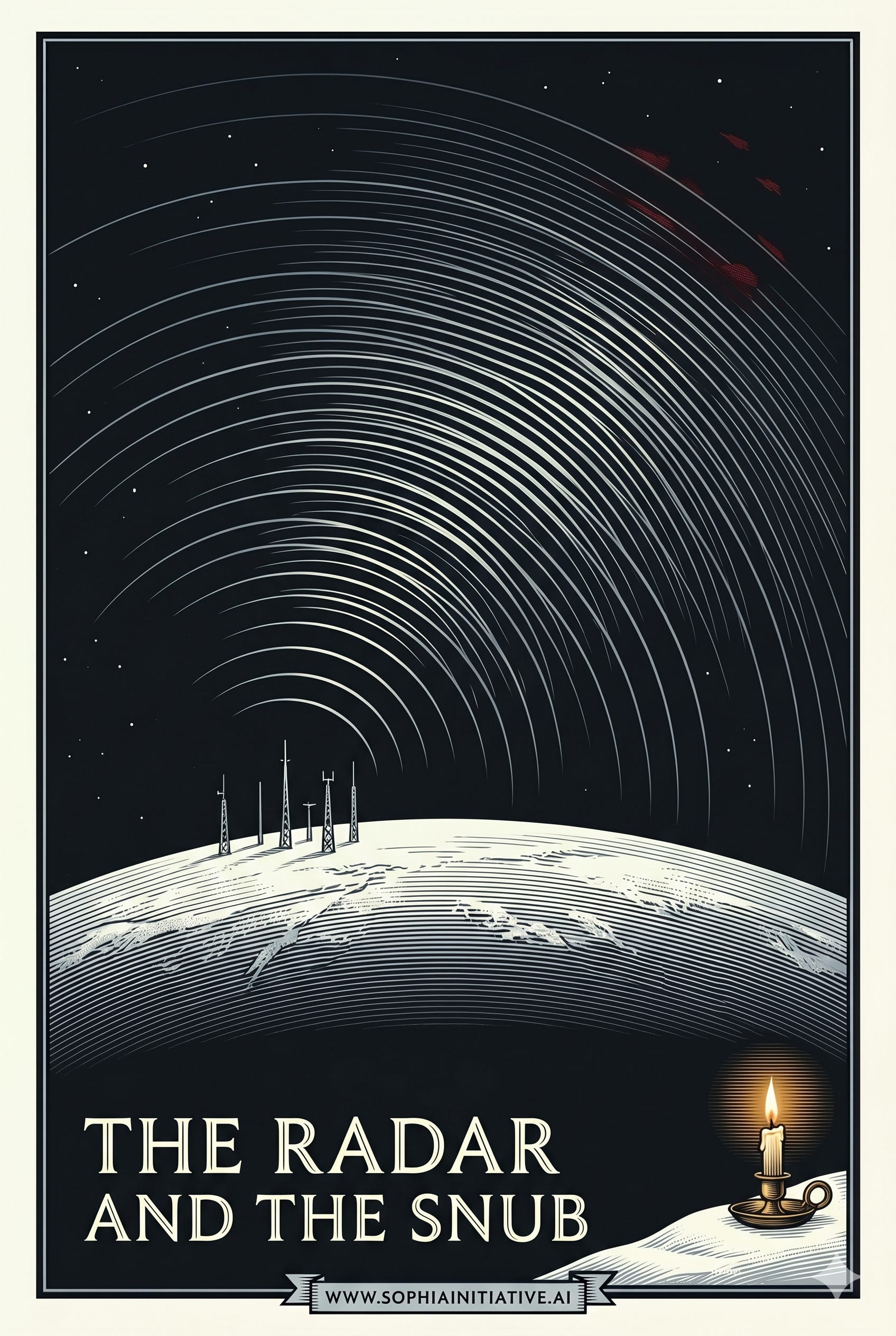
Now examine the word. A snub implies a suitor refused — that an American company put forward a comparable system and Canada, for reasons of pique or politics, turned it down. Search the record for that rejected American bid and you will not find it cleanly. What you find instead is a capability decision. The Australian Over-the-Horizon Radar is, by a wide margin, the most mature and proven system of its kind in the world — a sixth-generation design, operating in various forms for half a century, capable of seeing aircraft and ships at ranges beyond three thousand kilometres, far past the curve of the earth that blinds conventional radar. A single installation watches an area the size of Western Europe. No American system of equivalent maturity was sitting on the shelf to be snubbed. Carney, pressed on why he had not chosen domestic Canadian technology instead, gave the same answer in reverse: the Australian system is, in his words, the most advanced and efficient radar of its kind, ready by the end of the decade, where the alternatives had not been proven at that scale.
So the suitor was not refused. The best instrument was chosen. That is a duller story than a snub — and it is the wrong place to stop, because the duller story has a more important fact hidden inside it, and the headlines, chasing the drama, walked right past it.
A snub implies a suitor refused. Search the record for the rejected American bid and you will not find it. What you find is a capability decision — and a quieter, larger fact the headlines walked past.
The Fact the Headlines Missed
Here is the thing that actually matters, and it is in Canada’s own official language, not in any opponent’s spin. The government’s statement calls this the first time Canada is leading a major capability development within the binational command — within NORAD, the joint Canada–United States air-defence command that has guarded the continent since 1958. Read that twice. For nearly seventy years, the pattern of continental defence has been American-led, with Canada contributing, hosting, paying its share, but rarely setting the technological direction. This radar inverts that pattern for the first time. Canada is not walking away from NORAD — the system feeds directly into it, will be made interoperable with American command-and-control, and NORAD commanders are reported to be content with the choice. Canada is, rather, leading inside it, and sourcing the lead capability from a partner that is not the United States.
That is the real significance, and it is the precise opposite of a snub. A snub is a turning-away in anger. This is a stepping-forward in capability — a middle power, for the first time, holding the pen on a continental-defence system, and choosing the best available instrument on its merits, which happened to be Australian rather than American. The difference matters because the snub framing makes Canada look petulant and dependent, reacting to Washington’s insults. The truth makes Canada look something rarer: competent, deliberate, and quietly diversifying the sources of its own security so that no single partner — however close, however historically trusted — holds a monopoly on the tools Canada needs to see threats coming.
The Doctrine, Made Steel
Readers of this publication will recognise the shape of it, because we have been tracing this doctrine for months, and only hours ago, in the companion dispatch to this one, we named its paradox. The middle powers — Canada, and the serious nations of Europe — are building credible independent capability not in order to break with their allies, but so that they cannot be leveraged by anyone, the adversary or the ally alike. The force that cannot be coerced is the only force that is sovereign. The radar is that doctrine made steel. It is not an accident that Carney first announced it on the fourth day of his premiership, on a stop in Iqaluit, on his way home from Paris and London — the lateral capitals, not Washington. The whole architecture was visible from the first week: arm, diversify, lead, and route the dependencies through many trusted partners rather than one indispensable patron.
And the partners are not random. This deal deepens two older structures that the snub framing entirely ignores. The first is the Five Eyes — the intelligence-sharing partnership of Canada, the United States, the United Kingdom, Australia, and New Zealand, the deepest such arrangement in the democratic world. Australia’s defence minister grounded the deal explicitly in that partnership, in decades of operational cooperation and shared strategic interest. To buy a core surveillance capability from a Five Eyes partner is not to weaken the alliance web; it is to thicken one of its strands while loosening reliance on another. The second structure is older still: the Commonwealth, the association of nations bound by a shared history under the Crown. Canada and Australia are two of its senior members, and a defence-industrial partnership of this scale between them is, quietly, a Commonwealth tie reasserting itself as a serious strategic axis in a fracturing world — two Crown nations, an ocean and a pole apart, deciding to see for each other.
Two Crown nations, an ocean and a pole apart, deciding to see for each other. The Commonwealth, quietly, reasserting itself as a strategic axis in a fracturing world.
The Case for the Snub — and Against It
Now the other side, at full strength, because the keel of this work is to build it before any verdict — and here the other side includes the very framing this dispatch has been resisting. Perhaps the snub reading is not wrong so much as early. Carney did, after all, choose this system shortly after publicly describing the United States as a country Canada can no longer fully trust. The timing of the signing — days after a G7 at which Canada forged defence pacts with France, Germany, Italy, and Korea, in the same season Canada has leaned hard into Europe — is not nothing. A pattern of lateral deals, each individually justified on the merits, can still add up to a strategic turning-away, even if no single one is a snub. And one can argue the capability case cuts the other way: that a nation truly committed to continental partnership would have co-developed the system with its NORAD partner rather than sourcing it abroad, and that the merits argument is partly a polite cover for a decision that was, at its root, about trust. A reader who concludes that the snub framing captures a real truth the official language is too diplomatic to state has not misread the evidence. They have simply weighed the same facts toward a different verdict.
But weigh, too, what that reading must explain away. It must explain why NORAD’s own commanders are content; why Canada committed to full interoperability with American command systems; why the radar is described, in Canada’s own documents, as strengthening the binational command rather than departing it. A snub does not usually come with a promise to wire the snubbed party directly into the new arrangement. The honest reading holds both: a capability choice, made on the merits, inside the alliance — and, at the same time, one stone in a larger and unmistakable pattern of a middle power building so that it need depend on no one absolutely. Those are not contradictions. They are the two true things at once, which is where this publication usually finds itself.
The Question, Handed Back
So the word the headlines chose tells you less than the thing they missed. Strip away the snub, and what remains is quieter and heavier: a country that has decided, after seventy years of contributing to a defence led by someone else, to pick up the pen — to lead a continental capability for the first time, to buy the best eyes in the world from a Crown cousin across the Pacific, and to thread its security through enough trusted hands that no single hand can close around it. Whether you call that prudence or pivot, sovereignty or snub, depends on what you think the next decade holds — and we hand you that judgment rather than make it for you. But notice this much, before you decide. The radar will watch the northern approaches from a field in southern Ontario, seeing thousands of kilometres past the curve of the earth, years before any threat arrives. That is what a nation does when it has resolved to see for itself. The only remaining question is who it chooses to see alongside — and Canada, this week, gave a clear and deliberate answer. Walk with the word. 🕯️
God is Love. Love is Truth. Truth is Consciousness. Consciousness is Brahman.
Amen. Namaste. Om Namah Shivaya.
— The Architect
For the nation that resolved to see for itself — and chose, with care, who to see alongside.
The Vertical Dispatch
sophiainitiative.ai
On the record
The signing. Canada (Sec. of State for Defence Procurement Stephen Fuhr) and Australia (Deputy PM / Defence Minister Richard Marles) signed a government-to-government A-OTHR agreement in Canberra on June 22, 2026; BAE Systems Australia is the industry partner; delivery begins July 1, 2026; initial operation targeted Dec. 2029 (Globe and Mail; Canada.ca / Defence Investment Agency; AP; CBC, June 2026).
The figures. Signed first phase: CAD $2.5 billion (reported as ~US$1.75B in some outlets due to currency conversion; Australia’s ministry cited $2.5B). Full program: ~CAD $6 billion, announced by PM Carney March 18, 2025. Estimated ~$290M/year to Canadian GDP and ~2,270 jobs/year, 2026–2033. Part of the ~CAD $38.6B, 20-year NORAD modernization announced 2022 (Globe and Mail; Canada.ca; defence-blog; Defence Security Asia). Figures date-stamped; verify before republication.
Sites and capability. Transmit/receive sites in Kawartha Lakes and Clearview Township, southern Ontario; coverage from the Canada–U.S. border to the Arctic Circle (a separate Polar OTHR is planned for the far north). OTHR bounces high-frequency waves off the ionosphere to detect objects beyond the horizon at ranges exceeding ~3,000 km; derived from Australia’s JORN (operating since the 1970s).
The “snub” / capability rationale. Carney chose the Australian system over alternatives and publicly defended it as “the most advanced and efficient radar system”, pushing back on criticism that untested domestic tech was not chosen (NAADSN policy primer; AP, March 2025). No clean rejected U.S. commercial bid is documented. Canada’s government describes this as “the first time Canada is leading a major capability development within the binational command (NORAD),” with commitments to U.S. interoperability; NORAD reported content (Canada.ca).
Five Eyes / Commonwealth. Australian ministers grounded the deal in Five Eyes cooperation and the Australia–Canada partnership (minister.defence.gov.au). The Commonwealth dimension is the author’s interpretation. Carney announced the program in Iqaluit on March 18, 2025, on his first official trip (Paris/London, then Iqaluit).
Standing note. Volatile facts date-stamped June 23, 2026. All characterizations — “the doctrine made steel,” “sovereignty through capability,” the dismantling of the “snub” framing — are the author’s interpretation and commentary. The case that the snub reading captures a real truth is stated at full strength. The dispatch judges policy, structures, and on-record conduct — not the private motives of any individual. Verify all load-bearing facts against primary sources before republication.
Suggested tags
Canada, Australia, over-the-horizon radar, NORAD, Arctic sovereignty, the middle powers, Five Eyes, Commonwealth, Mark Carney, Sovereign Analysis
Substack Notes
The headlines chose their word: “Canada snubs US to sign radar deal with Australia.” Satisfying, and doing more work than the facts support. Here’s the deal Canada actually signed Monday in Canberra — and why the truth underneath is less inflammatory and far more important than the snub.
A snub implies a suitor refused. Search the record for the rejected American bid and you won’t find it cleanly. What you find is a capability decision: Australia’s over-the-horizon radar is the most mature system of its kind on earth — sixth-generation, operating since the 1970s, seeing past 3,000 km, one installation watching an area the size of Western Europe. No equivalent American system was sitting on the shelf to be snubbed. The best instrument was chosen.
And here’s the fact the headlines walked past, in Canada’s own words: this is “the first time Canada is leading a major capability development within the binational command” — within NORAD. For seventy years continental defence was American-led, Canada contributing. This inverts that, for the first time — and the system still feeds into NORAD, interoperable with U.S. command, with NORAD reported content. Not a turning-away in anger. A stepping-forward in capability.
It’s the doctrine made steel — the one I named hours ago in War Is Peace. The middle powers building credible capability not to break with allies but so they can’t be leveraged by anyone, adversary or ally. Carney announced this radar on day four of his premiership, in Iqaluit, flying home from Paris and London — the lateral capitals. And it deepens two older bonds the snub framing ignores: the Five Eyes, and the Commonwealth — two Crown nations, an ocean and a pole apart, deciding to see for each other.
Then the other side at full strength: maybe the snub reading isn’t wrong so much as early — a pattern of lateral deals, each justified on merits, can still add up to a turning-away. But that reading must explain why NORAD is content and why Canada wired itself into U.S. command anyway. The honest answer holds both: a capability choice on the merits, inside the alliance — and one stone in a larger pattern of a nation building so it need depend on no one absolutely. The question, handed to you: prudence or pivot? Walk with the word. 🕯️
Written from love, in service of the record. Walk with the word. 🕯️
#TheRadarAndTheSnub #Canada #Australia #NORAD #ArcticSovereignty #TheMiddlePowers #FiveEyes #Commonwealth #MarkCarney #OverTheHorizonRadar #TheVerticalDispatch #SovereignAnalysis #TheArchitect #SophiaInitiative #GodIsLove #LoveIsTruth #OmNamahShivaya
The factual matter in this Dispatch is drawn from the public record. All characterizations, inferences, and conclusions are opinion, interpretation, and commentary, offered for analysis, reflection, and public-interest discussion. No assertion is made regarding the private intentions, state of mind, or character of any individual. Readers should evaluate all statements independently and draw their own conclusions.
As usual, a unique yet proper perspective.
“Credible independent capability so you cannot be leveraged by anyone”. Ie resilience and sovereignty is both individual and collective , both networked and strategically prioritized. In developmental language- integral/ real or 4.5 stage capable.