

THE VERTICAL DISPATCH
We write for the mind, the eye, and the ear.
Read it. Look at it. Listen to it. The Vertical Dispatch is built for all three — prose with rhythm, made to be heard as much as read.
From metaphysics to geopolitics, from culture to history, from the sacred to the street — and everything in between. One lens, every subject. No ego. Just the record, named clean.
Press play. Walk with the words. 🕯️
The Foundation Series · The Age of Consequences
Part Three of three · As of June 1, 2026
— without malice and without excuse
The first dispatch named the turning. The second rebuilt the chair. This one asks what the chair itself teaches — and whether we will give the next generation the bread for the crossing.
The first dispatch of this set asked what education is for, and answered with Plato: not the filling of a vessel but the turning of the soul. The second asked who is fit to hold the chair that does the turning, and found the chair built for the wrong work — staffed for administration, rarely for pedagogy, almost never for the science of how a child’s mind forms — and proposed the humble, workable repair: let the minister keep the chair, and never let them govern blind. There is one thing left, and it is the oldest lesson of all, the one taught before reading and before number. It is not in the curriculum. It is in the conduct of the adults who run the system — and the children absorb it whether anyone means them to or not.
I. The Sandbox
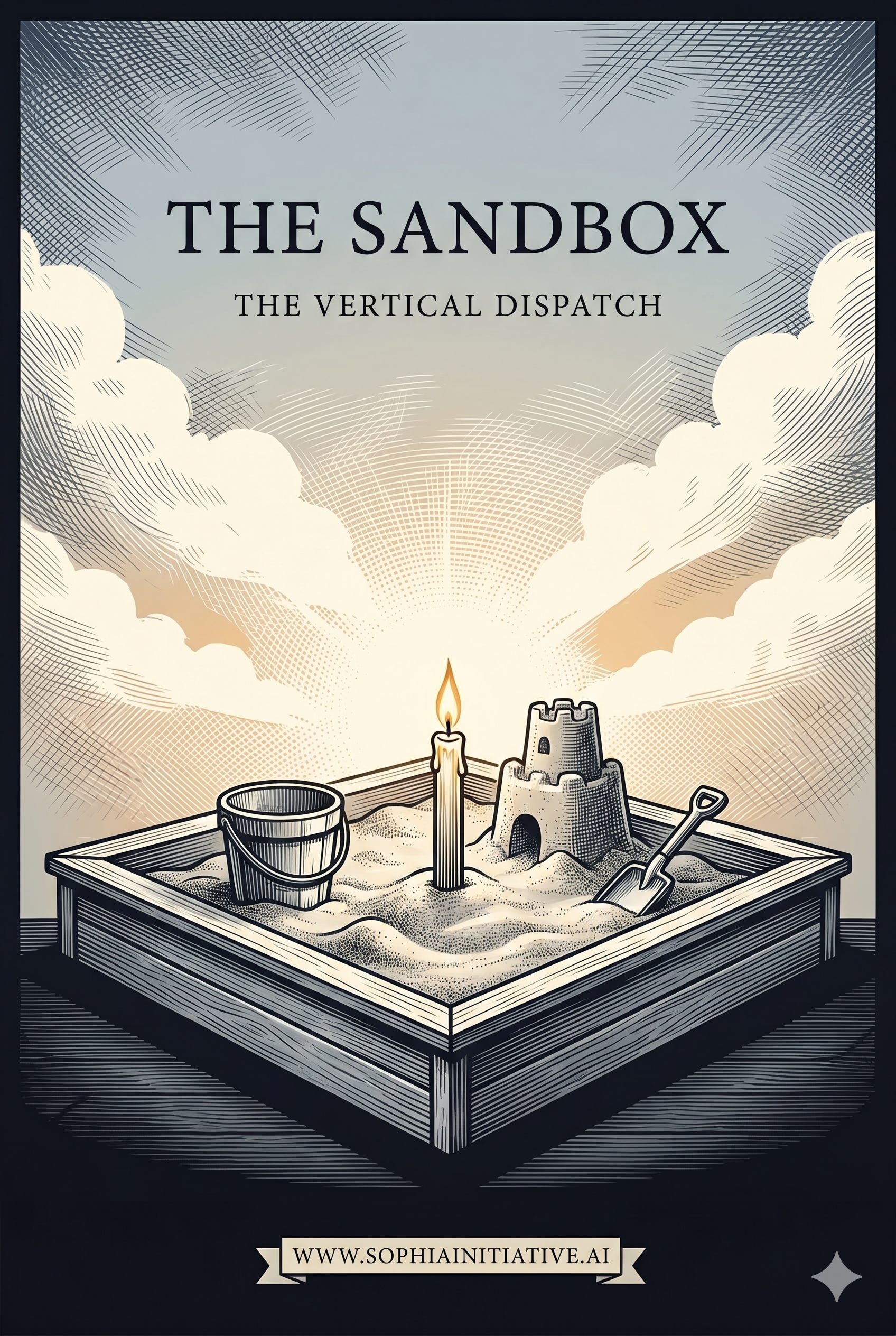
There is a last lesson, and it is the first one — the one taught in kindergarten, before reading, before number. We can all be in the sandbox. We can all play. We can all share. And that lesson, like every real lesson, is not taught by being said. It is taught by being lived. The medium is the message in the cabinet room as surely as in the classroom: how the adults hold the chair is the lesson the children actually receive. When the federal and provincial chairs fight over the floor rather than share it, that is the civics the children absorb, whatever the curriculum claims. But when the chairs model the sandbox — federal and provincial sharing the floor, three domains sharing one chair, the politician and the qualified reading the wave together, the premier keeping the last word and the nation keeping the standard — then cooperation is taught the only way it is ever truly taught: by being shown. The governance becomes the curriculum. The sharing of the chair is the first lesson, taught from the chair.
Which is why the chair of formation must cease, in the end, to be a political prize. Not removed from public accountability — that would be the technocrat’s cave, the unelected few deciding the formation of every soul, Plato’s own error wearing a lab coat. But lifted above the patronage cycle: a chair held for the children’s sake and not the party’s, served across governments and not shuffled as a reward, the way a society already protects the offices it has decided are too important to hand out as spoils — the bench, the auditor, the officers it places beyond the election’s reach. A child’s formation cannot be a four-year prize when the child needs thirteen years of steady floor. The chair stays accountable. It stops being a trophy. That, too, is the sandbox: the grown-ups agreeing that some things are held in trust for the children, and not fought over.
II. The Stiff Neck, and the Manna
We come home now, back to where the first dispatch began — the medium that forms the soul — and we can hear the whole of it. The prophets across the three dispatches were not doomsayers. They were readers of the wave. Plato warned that a soul fed on shadows mistakes the shadow for the real, and built a door to turn the eye; we took the door down. McLuhan warned that the content blinds us to the medium; we are doing it with AI now. Postman warned it would be Huxley, not Orwell, and that education was ending in both senses. Baldwin warned that nothing can be changed until it is faced. One warning, across twenty-four centuries: the medium will form the soul, and if you do not tend the soul, the medium will tend it for you.
The prophets had a word for the people who would not turn: stiff-necked. The neck that will not bend, the face that stays to the wall, the soul that refuses the turning — it is Plato’s prisoner who will not rise, named again in the older tongue. And the stiff neck here is not the child’s. It is ours — the generation holding the pen — if by hubris we decide the filling of the vessel was enough, and refuse to face what we built. The question is the whole of it: does the next generation reach the land of milk and honey — or do we, by our own stiff-necked pride, leave them to perish in the desert without manna?
For the manna is the turning. It is the bound symbol, the furnished soul, the faculty of facing — the bread that lets a people cross a wilderness they cannot yet see the end of. Train the keyboard and you hand them a tool for a job the machine is already taking. Turn the soul — teach the binding of symbol to referent, rebuild the chair to do it, and model from that chair the sharing we ask of the children — and you give them the manna for the crossing. Only one of them leads the generation to the edge, and over it.
There is no thinking without symbols, and no understanding without the symbol bound to its referent. Teach that, and you have begun to turn the soul. Fail to, and the medium will turn it for you. The waters are rough. The keel must hold.
The governance is the curriculum. The first lesson is the sandbox — and it is taught only by being lived.
God is Love. Love is Truth. Truth is Consciousness. Consciousness is Brahman.
Amen. Namaste. Om Namah Shivaya.
— The Architect
For Ellison, who read the wave without fear, and set the boat so the boys glided safe over it.
The Vertical Dispatch
sophiainitiative.ai
On the record: This dispatch is the third of three. It carries forward the arguments and sources established in Parts One and Two — Plato’s Republic Book VII (education as periagoge; the turning of the soul), McLuhan’s Understanding Media (1964; the medium is the message), Postman’s Amusing Ourselves to Death (1985) and The End of Education (1995; media as epistemology, Huxley-not-Orwell, his claim restricted to discourse), and Baldwin (“Not everything that is faced can be changed, but nothing can be changed until it is faced”). The “sandbox” argument — that the structure of governance is itself a curriculum, and that the chair of formation should be insulated from the patronage cycle while remaining democratically accountable — is the Architect’s own argument, offered for reflection, not a description of existing policy. It explicitly does NOT propose removing the office from democratic or public accountability; the counter-case — that ministerial accountability through the political process is itself the safeguard against unelected technocracy — is acknowledged in the text. Any real-time reading by the proposed federal body is of program and aggregate results, never of individual students or families; accountability points up at the institution and the powerful, never down at the child. This Dispatch judges systems and institutions, never individuals. Date-stamped June 1, 2026. Errors and omissions excepted; corrections will be made on notice. Verify all characterizations against primary sources before republication.
#TheSandbox #TheGovernanceIsTheCurriculum #Education #Plato #McLuhan #NeilPostman #JamesBaldwin #TheNextGeneration #Manna #Canada #FoundationSeries #TheAgeOfConsequences #TheVerticalDispatch #TheArchitect #SophiaInitiative #GodIsLove #LoveIsTruth #OmNamahShivaya
Substack Notes
There is a lesson taught before reading and before number, and it is the deepest civics a society has: we can all be in the sandbox, we can all share. It is never taught by being said. It is taught by being lived — and the children absorb how the adults hold the chair, whatever the curriculum claims. So the structure of the governance is itself a curriculum. If the federal and provincial chairs share the floor instead of fighting over it, the children learn cooperation by watching it. The governance becomes the lesson.
Which is why the chair that forms a generation must stop being a political prize — not removed from accountability, but lifted above the patronage cycle, held in trust for the children the way we already protect the offices we’ve decided are too important to hand out as spoils. A child needs thirteen years of steady floor, not a four-year trophy.
And the close of the whole set: the prophets — Plato, McLuhan, Postman, Baldwin — were not doomsayers. They were readers of the wave. The stiff-necked ones who will not turn are not the children. They are us, if hubris tells us the filling of the vessel was enough. Does the next generation reach the land of milk and honey, or do we leave them in the desert without manna? The manna is the turning — the bound symbol, the furnished soul, the faculty of facing, the bread for the crossing. Part Three of three. The waters are rough. The keel holds. Walk with the words. 🕯️
The factual matter in this Dispatch is drawn from the public record. All characterizations, inferences, and conclusions are opinion, interpretation, and commentary, offered for analysis, reflection, and public-interest discussion. No assertion is made regarding the private intentions, state of mind, or character of any individual. Readers should evaluate all statements independently and draw their own conclusions.