


Φ
THE VERTICAL DISPATCH
We write for the mind, the eye, and the ear.
Read it. Look at it. Listen to it. The Vertical Dispatch is built for all three — prose with rhythm, made to be heard as much as read.
From metaphysics to geopolitics, from culture to history, from the sacred to the street — and everything in between. One lens, every subject. No ego. Just the record, named clean.
Press play. Walk with the word. 🕯️
This dispatch travels by hand. If it serves you, share it — restack on Substack, and pass it on wherever you read. 🕯️
The Age of Consequences · June 29, 2026
“The jury found that Mr. Trump in fact did exactly that.”
— U.S. District Judge Lewis A. Kaplan, ruling that the evidence established Trump raped E. Jean Carroll as the word is commonly understood, July 2023
The Pretext
On the twenty-ninth of June, 2026, the Supreme Court of the United States blocked Donald Trump from firing Lisa Cook, a governor of the Federal Reserve, by a vote of five to four. Cook was the first Federal Reserve governor any president had ever tried to remove in the central bank’s one-hundred-and-eleven-year history. The stated grounds for the firing were allegations of mortgage fraud — a claim that Cook had improperly designated two properties as primary residences on mortgage paperwork. She denied it. The Chief Justice, joined by a conservative colleague and the Court’s three liberals, wrote that permitting the removal would let a president fire a member of the Federal Reserve “at any time, for any reason, without any notice.” The Court held the line, narrowly, and Cook kept her seat.
Set that down and hold it, because it is the hinge of everything that follows. The man who sought to remove a central banker over the designation of a primary residence on a mortgage form carries, in the permanent records of the American court system, a body of findings against his own conduct that no mortgage paperwork could approach. This dispatch does not psychoanalyze him; it will not guess at his mind or his motives, which are his own and unknowable. It does something narrower and harder to answer: it lays the public record beside the public accusation, and lets the two stand together. The record is not commentary. It is the docket.
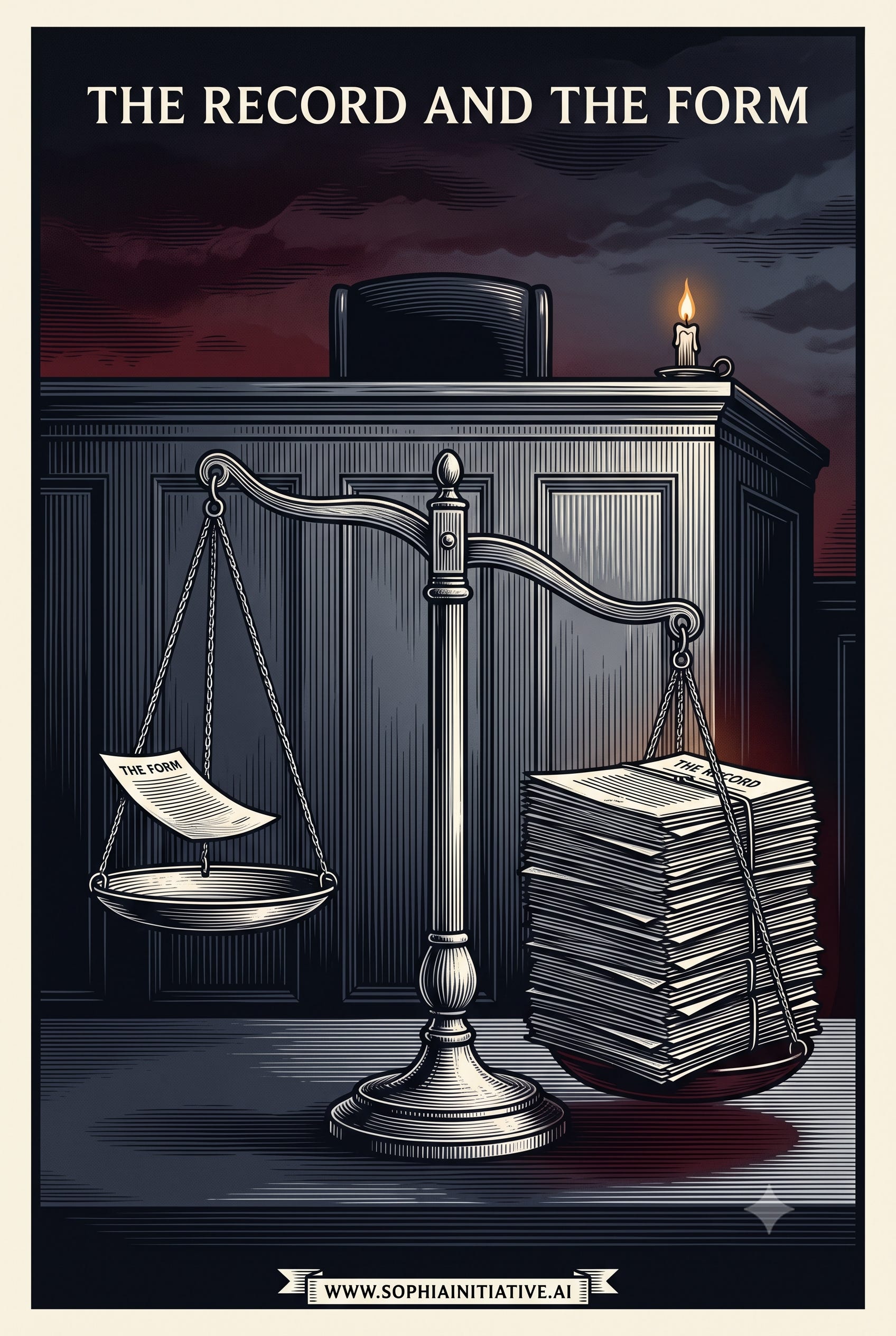
The Record, Count by Count
Begin with the finding the Supreme Court itself let stand on that same day, the twenty-ninth of June, 2026, when it declined to hear Trump’s appeal of the E. Jean Carroll case — making the judgment permanent. In 2023, a federal civil jury found Donald Trump liable for sexually abusing the writer E. Jean Carroll in a department-store dressing room in the mid-1990s, and for defaming her when he denied it. He owes her, as a result, five million dollars, with a separate defamation judgment of $83.3 million also against him. Those are the literal verdicts: sexual abuse, defamation. He has denied the allegations throughout and continues to.
On the question of the word, the record is precise, and it is the presiding judge’s own. The jury declined to find “rape” only under New York’s unusually narrow legal definition, which counts solely penile penetration. Judge Lewis A. Kaplan, who presided, addressed that distinction directly and at length, because Trump’s lawyers had argued the jury “vindicated” him. Kaplan called that argument “entirely unpersuasive,” wrote that it “misinterprets the jury’s verdict,” and ruled that the New York definition is “far narrower than the meaning of ‘rape’ in common modern parlance.” He wrote that the finding “does not mean that she failed to prove that Mr. Trump ‘raped’ her as many people commonly understand the word” — “the jury found that Mr. Trump in fact did exactly that.” In a later ruling he described it as the jury’s “implicit determination that Mr. Trump digitally raped her,” and held that Carroll’s public statement that Trump raped her was “substantially true.” Those are the judge’s words, from the rulings, not this publication’s.
Count two: on the thirtieth of May, 2024, a Manhattan jury found Donald Trump guilty on all thirty-four counts of falsifying business records in the first degree, in the scheme to conceal hush-money payments before the 2016 election. He became the first president in American history, sitting or former, convicted of felony crimes. At sentencing in January 2025 he received an unconditional discharge — no jail, no fine, no probation — the judge calling it the only lawful sentence given the presidency. He is appealing. As of this writing the convictions stand; no court has vacated them, and claims that they have been thrown out are false. He is, on the record, a convicted felon.
Count three: in February 2024, a New York court found Trump and his companies liable for what the trial judge called “repeated and persistent fraud” — a years-long practice of submitting deceptive financial statements to banks and insurers, inflating asset values to secure better terms. One documented example: the size of his own Trump Tower apartment, stated on financial documents at nearly three times its actual square footage. In August 2025 a state appeals court vacated the roughly half-billion-dollar penalty as an “excessive fine” under the Eighth Amendment — but the same court upheld the fraud finding itself, and upheld the bar on Trump serving in corporate leadership in New York. The money was struck. The fraud finding was not.
Count four: from 2005 to 2010, Trump operated Trump University — renamed after New York officials objected to the word “university” — charging students from fifteen hundred to thirty-five thousand dollars for real-estate seminars promising mentors “handpicked” by Trump. In his own deposition, he admitted he was relatively unengaged with what went on inside it. He vowed never to settle. Days after winning the 2016 election, he settled three lawsuits for twenty-five million dollars; New York’s attorney general called it “a major victory for the over 6,000 victims of his fraudulent university.” The settlement specified he admitted no wrongdoing. He paid the twenty-five million all the same.
The man who sought to remove a central banker over a mortgage form carries, in the permanent records of the American court system, a body of findings against his own conduct that no mortgage paperwork could approach.
The Case for the Defence, at Full Strength
The discipline of this publication requires that the other side be put as strongly as its makers put it, and there is a case to make. Several of these findings are under appeal, and an appeal is a real thing, not a formality: the felony convictions could yet be narrowed or reversed; the civil-fraud matter heads to New York’s highest court. On that fraud case, an appellate panel split sharply — one Republican-appointed judge wrote that the Attorney General’s true goal was not “market hygiene” but “political hygiene,” the derailment of a political career, and would have dismissed the suit outright. Trump’s defenders argue, not without force, that his financial statements carried disclaimers, that the banks did their own analysis and were repaid, that no lender claimed harm. On Carroll, they note the jury declined the statutory “rape” count and that the matter was civil, decided on the lower “more likely than not” standard, not the criminal “beyond a reasonable doubt.” On Trump University, they note he admitted no wrongdoing in settling. And throughout, Trump has maintained that every one of these cases is political persecution — “lawfare” — aimed at a man his opponents could not beat at the ballot box. That case deserves to be stated plainly, and it has been.
But weigh what survives it. Strip away the vacated penalty, and the fraud finding still stands, affirmed on appeal. Grant that the felony convictions are under appeal, and they remain, today, convictions — thirty-four of them, unvacated. Grant the civil standard in the Carroll case, and a jury still found sexual abuse, and a federal judge still ruled, in writing, that the evidence showed rape as the word is commonly understood. Grant that he admitted no wrongdoing at Trump University, and he still paid twenty-five million dollars to six thousand people a court process called his victims. The defence narrows each count; it dissolves none of them. What remains, after the strongest case for the defence has been made, is a record. And it is that record — not an accusation, not an opinion — that sat in the Oval Office on the twenty-ninth of June, filing to remove a central banker over a mortgage form.
The Word and the Thing
The mortgage-fraud pretext is the part worth pausing on, because it is so exact a mirror. The charge against Lisa Cook was a paperwork irregularity — a question of how a residence was designated on a financial document. Set beside the man’s own adjudicated record — the inflation of financial documents found to be fraud, the fraudulent university, the felony counts for falsifying business records, the finding of sexual abuse — the smallness of the accusation is the point. It is the lifting of one’s own gravest category of conduct, miniaturized, and aimed at a target who would not comply. The accused becomes the accuser. The record gets buried under the accusation.
But the record does not bury. That is the one thing it reliably does not do. E. Jean Carroll has her judgment, now permanent. Lisa Cook kept her seat. The Court held, five to four — and that four is the number to watch, because it is one appointment from a reversal, one appointment from a president able to remove a Federal Reserve governor at will, which is to say one appointment from the end of independent central banking as the country has known it. That is the stake the paperwork was designed to obscure. The man pointing at the mortgage form has a docket. The docket is public. It does not require interpretation — only the willingness to read it, count by count, and to refuse the inversion that asks us to look at the accusation instead of the record. Walk with the word. 🕯️
God is Love. Love is Truth. Truth is Consciousness. Consciousness is Brahman.
Amen. Namaste. Om Namah Shivaya.
— The Architect.
Every load-bearing fact in this dispatch — each verdict, finding, date, and quotation — was checked against primary sources: the rulings of U.S. District Judge Lewis A. Kaplan, the U.S. Supreme Court, the New York courts, and the New York Attorney General. Where a matter is under appeal, it is said so. No claim is made about any individual’s private mind or motive. Verify against primary sources before republication.
The Vertical Dispatch
sophiainitiative.ai
On the record
Published June 29, 2026. Load-bearing facts verified against primary sources. (1) Supreme Court, June 29, 2026: blocked Trump’s removal of Federal Reserve Governor Lisa Cook, 5–4 (Roberts and Kavanaugh joining the three liberals), over mortgage-fraud allegations Cook denies; Cook the first Fed governor any president attempted to remove in the bank’s 111-year history — source: Supreme Court opinion (Trump v. Cook, 25A312) and reporting (CNN, CBC, Fortune). NOTE for completeness: the same day, in a separate case (Slaughter / FTC), the Court overturned Humphrey’s Executor 6–3, expanding presidential removal power over independent agencies — a structural win for the President even as he lost on Cook. (2) Carroll: 2023 federal civil jury found Trump liable for sexual abuse and defamation ($5 million; a separate defamation verdict of $83.3 million); the Supreme Court declined his appeal June 29, 2026, making the $5M judgment final. Judge Lewis A. Kaplan ruled (July/Aug. 2023) that the jury’s finding established Trump “in fact” raped Carroll as commonly understood, an “implicit determination that Mr. Trump digitally raped her,” and that her statement that he raped her was “substantially true”; he called Trump’s contrary argument “entirely unpersuasive” — source: Kaplan rulings (FindLaw / court record), PBS, CBS, NBC, The Hill. (3) 34 felony convictions (falsifying business records, 1st degree), Manhattan, May 30, 2024; first U.S. president convicted of felonies; unconditional discharge Jan. 2025; under appeal, convictions standing — source: court record, fact-checks confirming convictions not vacated. (4) Civil fraud: NY court (Engoron) found “repeated and persistent fraud,” Feb. 2024; NY Appellate Division (Aug. 2025) vacated the ~$500M penalty as an excessive fine but UPHELD the fraud finding and the corporate-leadership bar — source: Lawfare, NPR, PBS. (5) Trump University: operated 2005–2010; settled three suits for $25 million after the 2016 election; NY AG called it “a major victory for the over 6,000 victims of his fraudulent university”; settlement specified no admission of wrongdoing — source: NPR, ABC, NBC, NY AG. All denials and appeals are noted in the text; the §11 (defence case) is carried at full strength.
All characterizations are commentary and interpretation. The matters under appeal are identified as such; the case for the defence is stated at full strength. No assertion is made regarding any individual’s private intentions, state of mind, or character. The dispatch addresses conduct on the public record only. Verify all facts against primary sources before republication.
Suggested tags
Donald Trump, E. Jean Carroll, Lisa Cook, Federal Reserve, Supreme Court, felony, fraud, Trump University, rule of law, accountability, Age of Consequences
Substack Notes
On June 29, 2026, the Supreme Court blocked Donald Trump from firing Federal Reserve Governor Lisa Cook — over allegations of mortgage fraud, a paperwork irregularity she denies. The same day, the Court let stand the finding that Trump sexually abused E. Jean Carroll. Hold those two facts together, because the contradiction is the whole story.
This dispatch does one disciplined thing: it lays the public record beside the public accusation. No psychoanalysis, no guessing at motive — just the docket. The man who moved to remove a central banker over a mortgage form is, on the record: a convicted felon (34 counts, under appeal but standing); found liable for sexual abuse, with the presiding judge ruling the evidence showed he “in fact” raped Carroll as the word is commonly understood; found liable for “repeated and persistent fraud” (penalty vacated, finding upheld); and the operator of a university he settled for $25 million, called by the New York Attorney General the home of “over 6,000 victims.”
The keel of this publication requires the case for the defence at full strength, and it is here: the appeals are real, the fraud panel split sharply, the Carroll case was civil, Trump calls all of it “lawfare.” That case is stated plainly. And then weighed — because what survives it is still a record. The defence narrows each count; it dissolves none.
The mortgage pretext is the signature move: take your own gravest category of conduct, miniaturize it, aim it at someone who won’t comply. The accused becomes the accuser. But the record does not bury. Carroll has her judgment. Cook kept her seat. The Court held 5–4 — and that four is one appointment from the end of an independent Federal Reserve. That is the stake the paperwork was meant to hide. Written from love, in service of the record. Walk with the word. 🕯️
#TheVerticalDispatch #TheArchitect #SophiaInitiative #DonaldTrump #RuleOfLaw #FederalReserve #Accountability #AgeOfConsequences #GodIsLove #LoveIsTruth #OmNamahShivaya
The factual matter in this Dispatch is drawn from the public record — court rulings, jury verdicts, and Supreme Court actions — and is current as of the date of publication. Matters under appeal are identified as such. All characterizations, inferences, and conclusions are opinion, interpretation, and commentary, offered for analysis, reflection, and public-interest discussion. No assertion is made regarding the private intentions, state of mind, or character of any individual. Readers should evaluate all statements independently and draw their own conclusions.
Thank you for this short and sweet summary of Trump’s undeniablevcriminal record.
How lucky we are that Donald Trump, post-presidency, will again be inadmissible to Canada. On the other hand, he can claim UK citizenship, so that those convictions won't stop him from going there.