

Φ
THE VERTICAL DISPATCH
We write for the mind, the eye, and the ear.
Read it. Look at it. Listen to it. The Vertical Dispatch is built for all three — prose with rhythm, made to be heard as much as read.
From metaphysics to geopolitics, from culture to history, from the sacred to the street — and everything in between. One lens, every subject. No ego. Just the record, named clean.
Press play. Walk with the word. 🕯️
This dispatch travels by hand. If it serves you, share it — restack on Substack, and pass it on wherever you read. 🕯️
The Age of Consequences · Building Canada Strong
June 15, 2026 — the day the trio met at Évian. Volatile facts date-stamped as of this day.
“If we’re not at the table, we’re on the menu.”
— Mark Carney, on middle powers, Davos, January 2026
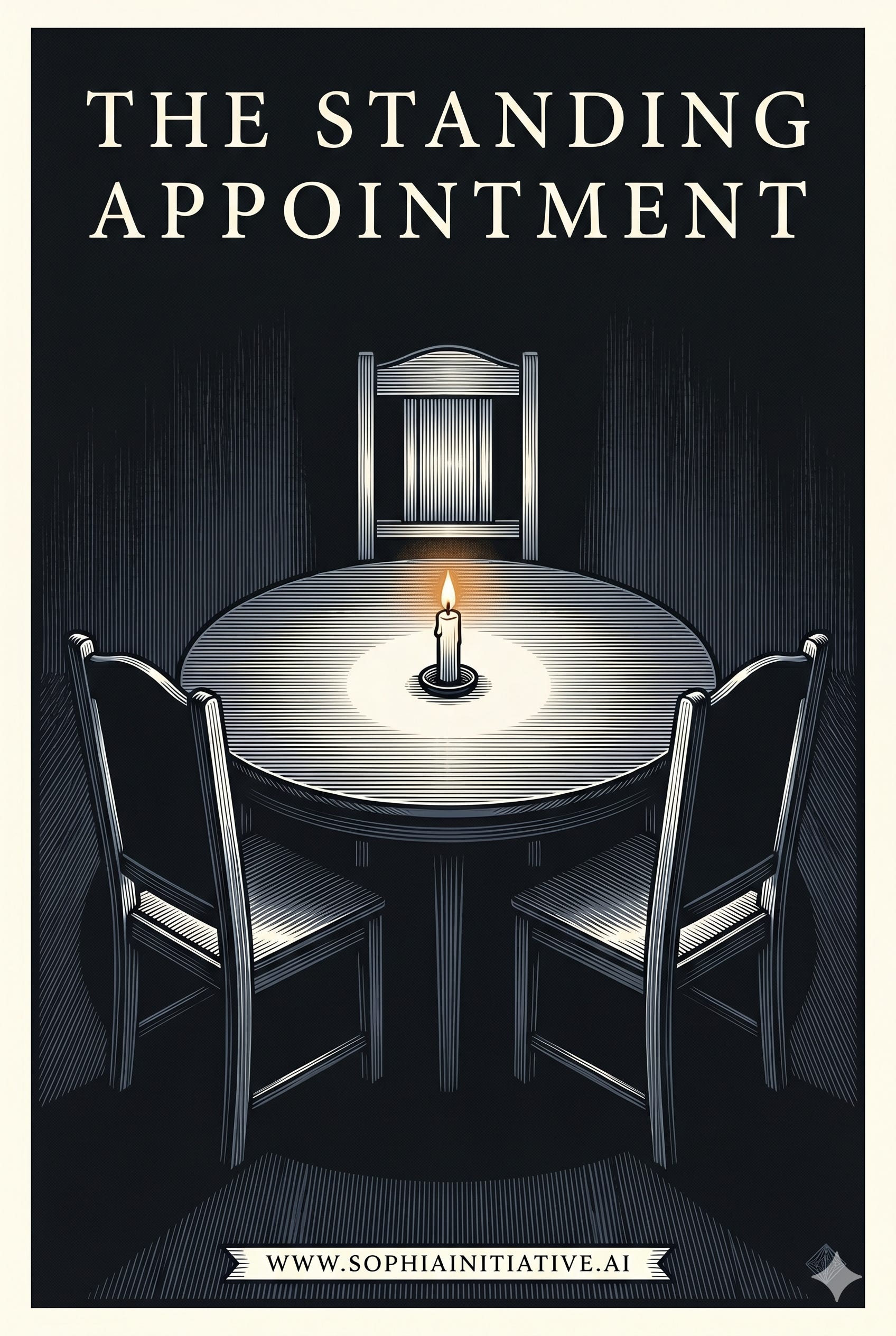
Three times a year now, on the margins of the world’s summits, the same three people sit down together. A Canadian Prime Minister and the two presidents who, between them, are the European Union. Kananaskis last June. Brussels a week later. Yerevan in May. Évian this afternoon, at half past five, while a ceasefire in Iran holds by a thread and the G7 gathers around it. The Canadian press files these as photographs — a handshake, a readout, three names in a caption — and moves on to the war and the tariffs. This dispatch reads them as something else: a standing appointment, kept with discipline, at which a piece of machinery advances every single time the chairs are filled. The meeting is not the story. What gets built between the meetings is the story. And underneath both is a question this publication has learned to ask of every chair of power — not who sits in it, but what the record says the seat requires, and whether the one sitting there has ever carried that weight before.
I. The Standing Appointment
Begin with the count, because the count is the thing the captions miss. Since taking office, Prime Minister Carney has met the European Union’s two presidents — Council President António Costa and Commission President Ursula von der Leyen — as a trio, on the record, at least four times in thirteen months. June 16, 2025, on the margins of the G7 in Kananaskis. June 23, 2025, in Brussels, at the formal 20th Canada–EU Leaders’ Summit. May 4, 2026, in Yerevan, on the margins of the European Political Community Summit. And today, June 15, 2026, at 17:30 in Évian, on the margins of the G7 — the meeting is on Costa’s own published schedule. A phone call between von der Leyen and Carney sits in the record as well, on top of the four face-to-face sittings.
Four meetings in thirteen months is not coincidence and it is not courtesy. It is a rhythm. And the rhythm has a direction: every time the three chairs are filled, the Canada–EU relationship is not merely affirmed but advanced by a concrete instrument. Brussels produced the New EU–Canada Strategic Partnership of the Future and the signature of the EU–Canada Security and Defence Partnership. The months between Brussels and Yerevan produced Canada’s entry into SAFE, the EU’s €150-billion joint defence-procurement instrument — the first non-European country ever admitted. Yerevan was the meeting where the two sides agreed to accelerate. Évian is the G7 with the American President in the room and a fragile Iran ceasefire on the table. The appointments are the visible nodes of one continuous engineering project, and the project has a name the press has not given it: the patient construction of a Canadian door into Europe that does not pass through Washington.
The meeting is not the story. What gets built between the meetings is the story — and what gets built is a Canadian door into Europe that does not pass through Washington.
II. Reading the Chairs, Not the Faces
Now the harder discipline, and the one this publication holds without exception. It is tempting, looking at three figures of obvious weight, to grade the minds behind the eyes — to call this a meeting of brilliant people, or to wave at the aura of command that comes off a head of government. That is precisely the move we refuse. Aura is not a referent. We do not measure the mind in the chair, because no one outside that mind can measure it honestly. We measure the chair — the level of work the seat demands, in the language of Elliott Jaques’s requisite organization — and then we ask the only fair question: does the documented work-record of the person sitting there show they have carried a chair at this altitude before? Has-done, on the record. Not could-do, by impression. The grade rests on the work history, never on the skull.
Apply it to the first chair. The President of the European Council is the seat that chairs twenty-seven heads of government and sets the Union’s multi-year political direction — a role whose work runs in horizons of years and institutional consequence. The record under António Costa: Mayor of Lisbon for nearly eight years, then Prime Minister of Portugal from 2015 to 2024, leading his party to three successive mandates, before being chosen by the twenty-seven to chair them. This is not a record of potential. It is a chair at this altitude held, and then held again at a higher one. Has-done, twice over.
The second chair. The President of the European Commission runs the Union’s permanent executive — tens of thousands of officials, the power to propose law and budget across a continent, ownership of instruments like SAFE that run on decade horizons. The record under Ursula von der Leyen: a state minister in Lower Saxony, then fourteen years in the German federal cabinet across Family Affairs, Labour and Social Affairs, and — the load-bearing one — Defence, the first woman to hold it, through the years when Russia annexed Crimea and NATO’s readiness became the live question. Then two terms running the Commission, confirmed to 2029. Again: the stratum the seat requires has been carried, with the file-output of a career to show for it. Has-done.
The third chair is Canada’s, and here the record reads differently — not weaker, but built by the rarer road. The Prime Minister’s seat is a full sovereign executive at the top political stratum. What is unusual is the work-record underneath it. Before he ever held elected office, Mark Carney carried two chairs of supranational financial consequence: Governor of the Bank of Canada through the 2008 crisis, and Governor of the Bank of England through the Brexit years — crisis-chairs at altitude, documented, carried. The political chair itself is young; he has held it a little over a year. So the honest finding is the one this publication made about Minister Joly and her move into Industry: a record that shows the stratum demonstrated in adjacent crisis-chairs before the present seat, with the present seat now consolidating in real time what those chairs built. The capacity is on the record. The political chair is where the construction completes.
We do not measure the mind in the chair. We measure the chair — and we ask whether the record shows the one sitting there has carried that weight before.
III. Different Roads to the Same Table
Set the three records side by side and the finding writes itself, and it is sharper than any verdict on intelligence could be. These are three chairs at the same requisite altitude, reached by two different documented roads. Costa and von der Leyen arrive by long has-done political tenure — decades of carried office, the stratum proven by the years. Carney arrives by the other road, the rarer one: a record of crisis-chairs at altitude carried before the political seat, the capacity demonstrated and now consolidating. The roads differ. The altitude does not.
This matters because it dissolves the lazy reading of the photograph — the reading in which a national leader from a mid-sized country is received, graciously, by the larger power. That is not what the records show. What the records show is three peers. And the European Union itself has certified the parity, not in words but in instruments: it broke its own rules to seat Canada inside SAFE, opening eligibility conditions written for member states and admitting, for the first time, a non-European country to its flagship defence-financing architecture. You do not rewrite your own procurement rules for a supplicant. You rewrite them for a peer you have decided you need. The chair Canada brings to the table was let in as an equal, and the proof is in the treaty, not the toast.
IV. The Two-Headed Seat
One structural fact has to be named, because it explains why the appointment is always a trio and never a pair. The European Union does not send one president to these tables. It sends two, because it has two, and they are not interchangeable. The Commission — von der Leyen’s seat — is the executive: trade negotiations, regulation, the budget, the proposing of law, the ownership of instruments like SAFE. When the subject is CETA, critical minerals, the free-trade relationship, the defence-financing machinery, that is her side of the house. The Council — Costa’s seat — is the collective political will of the twenty-seven national governments: the direction of the bloc, the invitations, the shared posture on Ukraine and the Middle East. When the subject is whether Europe as a body of states will move, that is his side.
So to meet “the EU” at the level of leaders, you must meet both heads at once, because neither alone is the whole thing. This is why every readout names the trio, and why the discipline of Carney’s rhythm is precisely that he services both heads every time he lands — the executive that holds the instruments and the council that holds the will. It would be an error, and a tempting one, to read this as a personal rapport with one figure. The truer reading is institutional: Canada works the European Union as a structure, and the structure is two-headed by design. The relationship is built to survive the departure of any one of the three people currently sitting in the chairs — which is exactly what a relationship built on the seats, rather than the personalities, is supposed to do.
You do not rewrite your own procurement rules for a supplicant. You rewrite them for a peer you have decided you need.
V. The Empty Chair the Day’s Noise Would Fill
There is a shadow to all of this, and it is worth naming because it is the reason the method matters beyond a single summit. A chair of power is only as good as the record carried into it. The three seats at Évian are filled by records that match their altitude — decades of office, crisis-chairs at stratum, instruments delivered. But the same chairs, in a different decade, can be filled by something else entirely: the day’s noise. There is a rising pattern, across many democracies, of seats of real requisite weight being handed to figures whose only documented record is reach — attention, engagement, the aura of the feed — with no carried work at the altitude the seat demands and no demonstrated curve toward it. The framework does not grow angry at this. It simply returns the finding it would return for anyone: the chair requires a stratum of work this record cannot show was ever carried. The seat is real. The record under it is empty.
This is the symbol-and-referent error in its purest political form — the appearance of capacity mistaken for the thing itself, the reach mistaken for the work. It is named here not to score a point against any individual, but to mark the standard by which the Évian table should be read. The reason three peers at a high table is a thing worth a country’s notice is that it is not guaranteed. A hull filled by aura instead of record has no keel, and you cannot read a wave from a hull that was never built. The discipline that asks “what has this chair-holder carried?” is the same discipline, in the end, as a fisherman setting the boat at the angle the water actually demands — not the angle that looks brave from shore.
VI. The Open Question
An audit that produces only a favourable reading has not been an audit. So the honest complication, handed to the reader rather than settled here. The case for the standing appointment is the case this dispatch has made: a middle power building, with discipline and at peer level, a durable door into Europe that reduces its dependence on a single coercive neighbour. That is the Carney Doctrine made literal — not rhetoric, but a treaty with an eighty-per-cent content rule and a seat inside a €150-billion instrument.
The case others would make runs the other way, and it deserves its full strength. Binding Canada into Europe’s defence-financing architecture, into ReArm Europe’s obligations and a continental procurement system, is not the elimination of dependence but its redirection — trading the leash of a neighbour for the entanglements of a partner an ocean away, for a fee and a set of commitments whose full cost is not yet costed or dated. A hostile reader asks: sovereign over what, precisely, by what date, and at what price, if the price of escaping Washington’s orbit is accession to Brussels’ architecture? The question is fair. The trio has built the door. Whether the room beyond it is freedom or a different dependence is the story of the next several years, and this publication will grade it by the same ruler it holds to everyone — the record, named clean, against the altitude the chairs require. The appointment is standing. The verdict is not yet due.
A hull filled by aura instead of record has no keel — and you cannot read a wave from a hull that was never built.
God is Love. Love is Truth. Truth is Consciousness. Consciousness is Brahman.
Amen. Namaste. Om Namah Shivaya.
— The Architect.
The Vertical Dispatch
sophiainitiative.ai
On the record. The four trio meetings between Prime Minister Carney and the two EU presidents are verified against primary sources: Kananaskis (June 16, 2025) and Yerevan (May 4, 2026) per the Office of the Prime Minister of Canada readouts; the 20th Canada–EU Leaders’ Summit, Brussels (June 23, 2025) per the European Council (Consilium), which produced the New EU–Canada Strategic Partnership of the Future and the signed EU–Canada Security and Defence Partnership; and the Évian meeting (June 15, 2026, 17:30) per the published weekly schedule of European Council President António Costa. The G7 Summit is held at Évian-les-Bains, France, June 15–17, 2026, with Geneva as the arrival and security gateway, per the French Foreign Ministry and Consilium. Canada’s SAFE accession — the first and only non-European country, €150-billion instrument, partnership signed June 2025, negotiations concluded December 2025, member-state endorsement December 19, 2025, signature by Defence Minister David McGuinty at the Munich Security Conference February 14, 2026, and final European Parliament consent May 2026 — per Consilium and European Parliament records; the up-to-80%-Canadian-content term per trade-press reporting, to be reconfirmed against the treaty text before republication. Chair-records: António Costa (Mayor of Lisbon 2007–2015; Prime Minister of Portugal 2015–2024; President of the European Council since December 2024) per Consilium and the European Parliament; Ursula von der Leyen (Lower Saxony state minister 2003–2005; German federal minister 2005–2019, incl. Defence 2013–2019; President of the European Commission since 2019, second term to 2029) per the European Commission and Britannica. Carney’s pre-political record (Governor, Bank of Canada 2008–2013; Governor, Bank of England 2013–2020) per the public record. The Iran ceasefire announced June 14–15, 2026, and the five-leader joint statement welcoming it, per The Canadian Press; status volatile and unstable as of this date. The Stratum and requisite-organization framing follows Elliott Jaques and is applied to the requisite level of the roles and to documented work-records only — not to any individual’s psychology, motives, or inner state. Volatile facts date-stamped June 15, 2026. Errors and omissions excepted; verify against primary sources before republication.
Suggested tags: Mark Carney, European Union, António Costa, Ursula von der Leyen, European Council, European Commission, G7, Évian, Canada-EU relations, SAFE, ReArm Europe, defence procurement, CETA, Elliott Jaques, requisite organization, stratified systems, middle powers, sovereignty, The Carney Doctrine, The Age of Consequences, Building Canada Strong, AIG
Substack Notes
Three times a year now, the same three people sit down together: a Canadian Prime Minister and the two presidents who, between them, are the European Union. Kananaskis. Brussels. Yerevan. Évian this afternoon, while an Iran ceasefire holds by a thread. The press files them as photographs. They are something else — a standing appointment, and every time the chairs are filled, a piece of machinery advances. Brussels signed the defence partnership. The months after put Canada inside SAFE, the EU’s €150-billion procurement instrument — the first non-European country ever admitted.
This dispatch reads the High Table the way the captions do not. Not the faces — the chairs. Using Elliott Jaques’s requisite framework, it asks the only fair question about any seat of power: what stratum of work does the chair demand, and does the record show the one sitting there has carried that weight before? Costa: Mayor of Lisbon, then Prime Minister of Portugal, now chairing twenty-seven governments — has-done, twice. Von der Leyen: fourteen years in the German cabinet, Defence among them, now two terms running the Commission — has-done. Carney: the rarer road — crisis-chairs at altitude, two central-bank governorships, before the political seat now consolidating what they built.
The finding is sharper than any verdict on intelligence: three chairs at the same altitude, reached by different documented roads, meeting as peers. And the EU certified the parity in a treaty, not a toast — it rewrote its own procurement rules to seat Canada inside SAFE. You do not do that for a supplicant. The shadow underneath: a chair of power is only as good as the record carried into it, and a seat filled by the day’s noise instead of carried work is a hull with no keel. The open question, handed to the reader: is the European door freedom from one dependence, or accession to another? The appointment is standing. The verdict is not yet due. Walk with the word. 🕯️
Written from love, in service of the record. Walk with the word. 🕯️
#TheStandingAppointment #TheHighTable #Carney #EuropeanUnion #AntonioCosta #VonDerLeyen #EuropeanCouncil #EuropeanCommission #G7 #Evian #CanadaEU #SAFE #ReArmEurope #CETA #ElliottJaques #RequisiteOrganization #Stratum #MiddlePowers #Sovereignty #TheCarneyDoctrine #TheRequisiteCabinet #TheAgeOfConsequences #BuildingCanadaStrong #AIG #TheVerticalDispatch #TheArchitect #SophiaInitiative #GodIsLove #LoveIsTruth #OmNamahShivaya
The factual matter in this Dispatch is drawn from the public record. All characterizations, inferences, and conclusions are opinion, interpretation, and commentary, offered for analysis, reflection, and public-interest discussion. No assertion is made regarding the private intentions, state of mind, or character of any individual. Readers should evaluate all statements independently and draw their own conclusions.