

ϕ
THE VERTICAL DISPATCH
We write for the mind, the eye, and the ear.
Read it. Look at it. Listen to it. The Vertical Dispatch is built for all three — prose with rhythm, made to be heard as much as read.
From metaphysics to geopolitics, from culture to history, from the sacred to the street — and everything in between. One lens, every subject. No ego. Just the record, named clean.
Press play. Walk with the word. 🕯️
This dispatch travels by hand. If it serves you, share it — restack on Substack, and pass it on wherever you read. 🕯️
Sacred Metaphysics · The Universal Grammar of Non-Duality
The Metaphysics of Zero and the Physics of One
Opening September 1
sacredmetaphysics.org
The dispatch is the lesson. The white paper is the whole ledger — the full Alberta–Norway comparison, free to download below.
DOWNLOAD WHITE PAPER
A personal note before we begin.
Every time I mean to stay up in the metaphysics — the sacred, the still, the eternal — geopolitics does to me what the family did to Michael Corleone: just when I thought I was out, they pull me back in. I have stopped fighting it, because I finally understand why it keeps reaching for my sleeve. The ego is nowhere stronger than in geopolitics. It is the ego at its largest and its most naked — power, tribe, and the endless question of who is up and who is down. So I have made my peace with the pull, on one condition, which I state plainly and hold myself to: I do not come to write about politics. I come to write about the ego, and politics is merely where it stands in the best light for study. The day this publication picks a tribe, it has failed its own standard, and you should put it down. Until then, when the ego pulls me back in, I intend to be facing the right way — reading it from above, not fighting in it from below.
I wrote this one because a fund is the cleanest mirror a people ever holds up to its own appetite — and because there is no purer illustration of what the ego will do than a politician spending the inheritance of the unborn to buy the affection of the living, and calling it prosperity. That is the whole of power in a sentence. The rest is just the arithmetic.
Two farmers are each given the same field, the same seed, and the same good rain. The first eats what he harvests, and when a lean year comes he eats the seed too, telling himself he will plant again when times are easier — and every year he finds a reason the times are not yet easy. The second farmer holds back a portion every single year, plants it, and will not touch it, not even in the lean years, not even when his neighbours call him a miser. Fifty years on, the first farmer is standing in a bare field explaining that the soil was never as good as it looked. The second is standing in a forest. Same field. Same seed. Same rain. The only difference was what each man could not stop himself from eating.
This week the forest posted its numbers, and they are worth standing beneath for a moment, the way you would stand beneath a night sky. On Wednesday, Norway’s sovereign wealth fund — the Government Pension Fund Global, built from North Sea oil — announced a record profit of about one hundred and eighty-four billion US dollars for the first half of this year alone. Not its total value. Its profit. In six months. The fund now holds around two and a third trillion dollars, roughly three hundred and ninety thousand dollars for every Norwegian alive. And Alberta — which struck the same kind of oil, and started saving it earlier than Norway did — has a fund worth about thirty-two billion Canadian dollars. Norway earned, in half a year, close to eight times the entire nest egg Alberta accumulated in half a century.
The two provinces drew from the same well. Alberta reached it first. And Norway now earns more in a single quarter than Alberta managed to save in a lifetime. This is not a story about geology. It is a story about the ego — about what a people can and cannot stop themselves from eating.
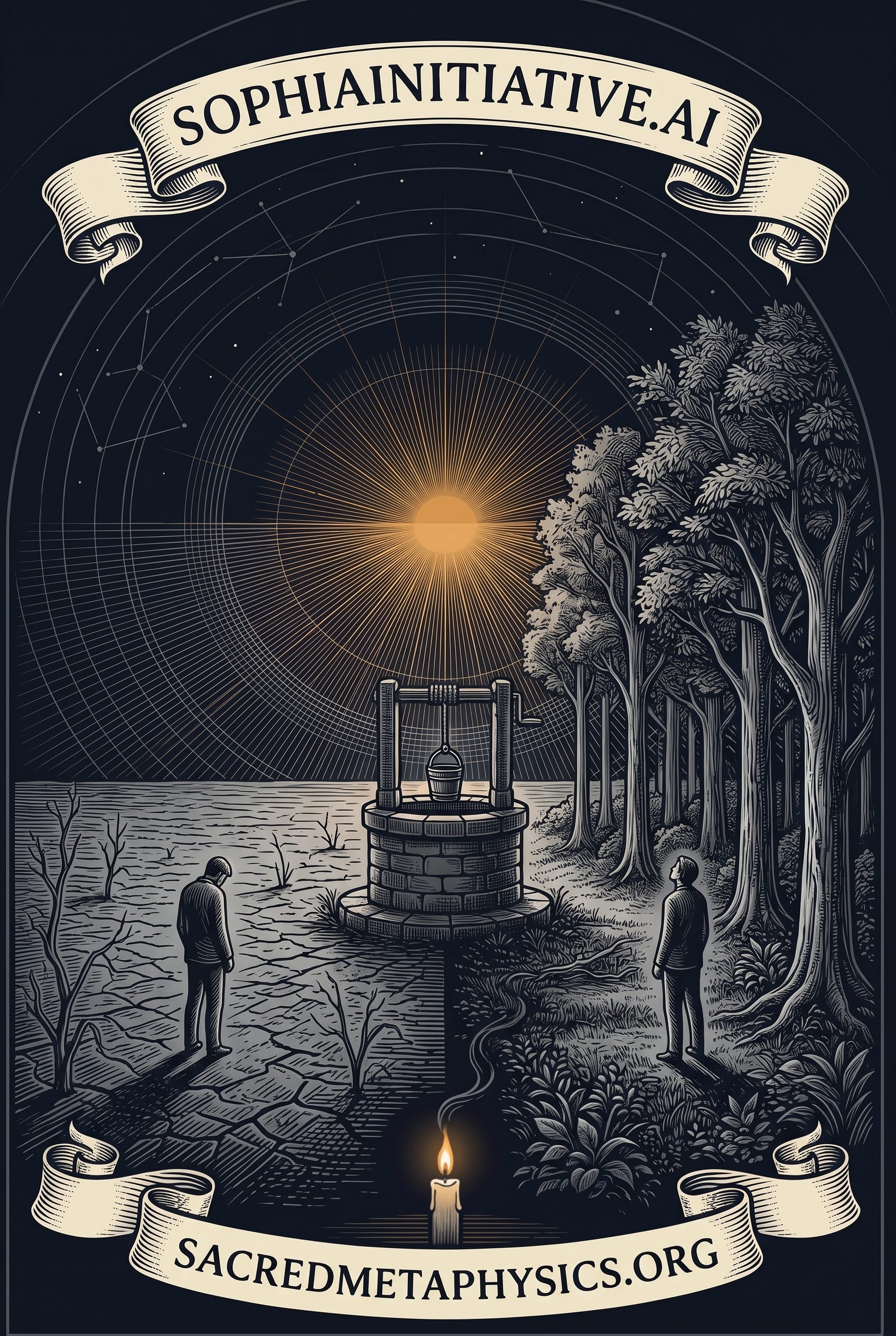
The Same Well, and Who Reached It First
Begin with the fact that undoes the easy excuse. Alberta did not fumble because it lacked the oil, or because it came late. It came early. Premier Peter Lougheed founded the Alberta Heritage Savings Trust Fund in 1976, one of the first sovereign wealth funds in the world, with a clear and honourable idea: take a portion of a finite, one-time inheritance — wealth pulled out of the ground that can never be pulled out twice — and turn it into a permanent endowment for Albertans not yet born. Norway did not legislate its own fund until 1990, fourteen years later, and did not make its first deposit until 1996. Alberta had a two-decade head start, the same resource, and a founder who understood exactly what the fund was for.
Lougheed’s design was disciplined: thirty per cent of non-renewable resource revenue was to flow into the fund. And for a few years it did. By the early 1980s the fund had grown to something like twelve billion dollars, and Alberta looked poised to build exactly the kind of enduring wealth Norway would later become famous for. Then the discipline broke. And it broke not because the oil ran out, but because a people discovered how good it feels to spend a windfall now, and could not stop.
What Alberta Could Not Stop Eating
Here is the documented record, and it is the record of an appetite. In 1983, when oil prices dipped, Alberta cut its contributions to the fund in half. In April 1987, it suspended them indefinitely — and they stayed suspended for the better part of the next four decades. Worse than ceasing to save, the province began, year after year, to transfer the fund’s investment earnings out of the fund and into general revenue — by one accounting, usually more than a billion dollars a year, spent on the day’s budget rather than left to compound for the future. Over the fund’s life, the province has drawn more than forty-five billion dollars out of it in this way — more than the entire fund is worth today. The seed corn was not merely left unplanted. It was eaten.
And there is a single moment that stands as the emblem of the whole era, because it is so pure. In 2004, riding a flood of oil revenue, Premier Ralph Klein stood up and declared Alberta the only debt-free province in Canada — a real achievement, honestly won. But then, with the surpluses still pouring in, the government faced the question every windfall poses: save it, or spend it? And in 2005 it chose to spend it in the most vivid way imaginable — a one-time four-hundred-dollar cheque mailed to every man, woman, and child in the province, a one-point-four-billion-dollar giveaway that became known, half-fondly and half-ashamed, as “Ralph Bucks.”
Peter Lougheed — the man who built the Heritage Fund — publicly disagreed with the cheques. The architect of the province’s future watched the windfall handed out at the door, and said so. They did not listen. That is the whole story in one image: the founder pointing at the vault, and the province reaching for the till.
Set that beside the neighbours and the indictment sharpens. Over the same years, an independent study found Alberta captured only about sixty-nine per cent of the oil-and-gas revenue actually available to it. Norway captured eighty-eight per cent. Alaska captured ninety-nine — and Alaska, like Norway, saved enough of it to send its citizens a dividend cheque every single year, not once as a stunt, but every autumn, as a birthright. Alberta sent one cheque, once, and called it prosperity.
Why Norway Could Not Eat Its Seed
Now the crucial question, and it is not really about money. Norway is not populated by a wiser or more virtuous people than Alberta. Norwegians felt exactly the same pull to spend the windfall now — every people does; it is the most human pull there is. The difference is that Norway did something Alberta never did: it bound its own hands, in advance, against its own appetite. Norway adopted a fiscal rule — the government may withdraw only the fund’s expected real return, about three per cent, in a given year, and no more — and it gave that rule near-constitutional weight through broad, cross-party consensus, so that no single government in a single hungry year could break it. Norway built a fence around the vault and threw the key into the sea, precisely because it did not trust itself without one.
That is the whole secret, and it is a spiritual one before it is a financial one. Norway understood that the appetite would come, and legislated against itself while it was still clear-headed. Alberta left the vault open and trusted each government to show restraint in the moment of temptation — and no government ever did, because that is not how the ego works. The ego does not save the seed corn when it is hungry and the corn is right there and the next election is close. It eats, and it finds a reason. Norway’s genius was not discipline in the moment. It was the humility, in advance, to assume it would have none.
Norway did not master the appetite. It assumed it could not, and built a wall the appetite could not climb. Alberta trusted itself, again and again, in the exact moment no one should be trusted — with the windfall in hand and the future far away.
The Full Ledger
The complete comparison — the founding histories, the governance structures, the withdrawal rules, the decade-by-decade performance, and the counterfactual scenarios estimating what Alberta’s fund could have been worth had it simply left the money alone — has been laid out at length in a detailed white paper, offered alongside this dispatch as a free download. It runs the numbers in full, for the reader who wants the whole ledger and not only the lesson. The figures in the paper should, as always in this publication, be checked against the primary sources before they are leaned upon; the headline story, however, is not in dispute, because both funds publish their own numbers, and the gap between them speaks without need of interpretation.
But the paper measures the size of the wound. This dispatch is about its cause. And the cause is not in any spreadsheet. It is in the oldest place there is: in the appetite that cannot defer, the self that must have its good now, the ego at the scale of a province, spending the inheritance of the unborn on the comfort of the living and calling it prosperity. Every raided dollar was a small vote for the present self over the future one — and fifty years of those small votes is the difference between a bare field and a forest.
The Mirror, and the Seed
It would be easy to close here with contempt for a province that ate its seed corn, and if that is all you take from this you will have missed the dispatch entirely. For the appetite that undid Alberta is not Alberta’s alone. It is the same appetite that spends the paycheque before the saving, that borrows against a future it assumes will sort itself out, that reaches for the good now and tells itself discipline can begin next year. Alberta is only the ego at the scale of a province, doing in the open, with billions, what the small self does quietly, every day, with its own smaller inheritance. Read the deed. Then turn the mirror home. Where is your own Heritage Fund, and what have you been quietly transferring out of it into the spending of the day?
And notice, finally, the mercy in it, and the hope. Alberta is not doomed. Since 2022 it has begun, at last, to do the disciplined thing — to leave the earnings in the fund, to deposit again, to name the target it should have hit decades ago. Even the current government now admits, in its own words, that had the province simply reinvested the fund’s income all along, it would hold north of two hundred and fifty billion dollars today, and be free of the oil-revenue rollercoaster forever. The seed that was eaten cannot be un-eaten; the fifty years of compounding cannot be recovered. But a farmer standing in a bare field can still, this year, hold back a portion and plant it. The forest he will not live to sit under. That has always been the whole of the thing worth doing.
Same field. Same seed. Same rain. The only difference, from the beginning, was what each people could and could not stop itself from eating. Plant the seed you will not live to harvest. There was never any other kind worth planting.
God is Love. Love is Truth. Truth is Consciousness. Consciousness is Brahman.
Amen. Namaste. Om Namah Shivaya.
— The Architect
The Vertical Dispatch
sophiainitiative.ai
On the record
Norway’s Government Pension Fund Global reported a first-half 2026 profit of approximately 1.75 trillion Norwegian kroner (about USD $184 billion), a record, with a total value of roughly 22,683 billion kroner (about USD $2.3 trillion) as of 30 June 2026 (Norges Bank Investment Management; Reuters, 12 August 2026). The Alberta Heritage Savings Trust Fund was valued at approximately CAD $31.9 billion as of 31 December 2025, up from CAD $27.2 billion at 31 March 2025 (Government of Alberta; Alberta Legislative Assembly). The fund was founded in 1976 by Premier Peter Lougheed with an initial CAD $1.5 billion; contributions were cut in 1983 and suspended in April 1987; the province has transferred more than CAD $45.8 billion from the fund to general revenue over its life (Government of Alberta; Alberta Views; CBC). Premier Ralph Klein declared Alberta debt-free on 12 July 2004 (CBC). The 2005 “Prosperity Bonus” paid CAD $400 to each Albertan, totalling about CAD $1.4 billion; Peter Lougheed publicly criticised the measure (Alberta Views; Wikipedia). Comparative resource-revenue capture figures (Alberta ~69%, Norway ~88%, Alaska ~99%, 1995–2002) are from the Pembina Institute. Premier Danielle Smith’s statement that full reinvestment would have produced a fund “north of $250 billion” is reported by CBC. The comparison of Norway’s half-year profit to Alberta’s total fund value sets a flow against a stock and is offered as an illustration of scale, not as a like-for-like measure. Characterisations of political motive are the interpretation of this publication, drawn from the documented conduct; no finding is made as to any individual’s private intentions. The accompanying white paper is an independent research document and a reference map; verify each figure against primary sources before republication.
Suggested tags
alberta, norway, heritage fund, sovereign wealth fund, GPFG, ralph klein, peter lougheed, oil revenue, intergenerational equity, the ego, fiscal discipline, ralph bucks, danielle smith, sacred metaphysics, the vertical dispatch, two paths from the same well.
Substack Notes
Two farmers, the same field, the same seed, the same rain. The first eats his harvest, and in lean years eats the seed too, always finding a reason to plant again later. The second holds back a portion every year and will not touch it, even when neighbours call him a miser. Fifty years on, the first stands in a bare field explaining that the soil was never as good as it looked. The second stands in a forest. That is Alberta and Norway — and this week the forest posted its numbers.
On Wednesday, Norway’s oil fund announced a record profit of about $184 billion US — for the first half of this year alone. Not its value; its profit, in six months. The fund holds about $2.3 trillion, some $390,000 per Norwegian. And Alberta, which struck the same oil and started saving it earlier, has a fund worth about $32 billion Canadian. Norway earned, in half a year, close to eight times the entire nest egg Alberta built in fifty. This is not a story about geology. It is a story about the ego — about what a people can and cannot stop themselves from eating.
The record is an appetite. Alberta cut its fund contributions in 1983, suspended them in 1987, and for decades transferred the earnings into the day’s spending — over $45 billion drawn out over the fund’s life, more than the fund is worth now. In 2004 Klein declared Alberta debt-free; in 2005 the government mailed every citizen a $400 cheque — “Ralph Bucks” — instead of saving the windfall. Peter Lougheed, who built the fund, publicly objected. The founder pointed at the vault; the province reached for the till. Norway, meanwhile, bound its own hands with a fiscal rule capping withdrawals near 3%, given near-constitutional weight so no hungry government could break it.
Norway’s genius was not discipline in the moment. It was the humility, in advance, to assume it would have none — and to build a wall the appetite could not climb. Alberta trusted itself, again and again, in the exact moment no one should be trusted: windfall in hand, future far away. A full white paper comparing the two funds is offered free alongside the dispatch. But the paper measures the wound; the dispatch is about its cause — the ego at the scale of a province, spending the inheritance of the unborn and calling it prosperity. Read the deed, then turn the mirror home: where is your own Heritage Fund, and what have you been quietly transferring out of it? Written from love, in service of the record. Walk with the word. 🕯️
#TheVerticalDispatch #TheArchitect #SacredMetaphysics #Alberta #Norway #HeritageFund #TheEgo #FiscalDiscipline #RalphBucks #Lougheed #TwoPathsFromTheSameWell #GodIsLove #OmNamahShivaya
The factual matter in this Dispatch is drawn from the public record and the published reports of the funds and governments discussed. All characterizations, inferences, and conclusions — including any attribution of political motive — are opinion, interpretation, and commentary, offered for analysis and public-interest discussion, and are not findings as to any individual’s private intentions or character. Financial figures are point-in-time and move with markets and currency. The accompanying white paper is an independent reference document; readers should verify all figures against primary sources. Readers should evaluate all statements independently and draw their own conclusions.
I appreciated the overview of the history. An interesting behavioural difference ... Alberta chooses to blame their circumstance on the 'parent' while threatening to leave 'home'. Norway on the other hand behaves with maturity and accepts responsibility for their decisions and performance.