

Φ
THE VERTICAL DISPATCH
We write for the mind, the eye, and the ear.
Read it. Look at it. Listen to it. The Vertical Dispatch is built for all three — prose with rhythm, made to be heard as much as read.
From metaphysics to geopolitics, from culture to history, from the sacred to the street — and everything in between. One lens, every subject. No ego. Just the record, named clean.
Press play. Walk with the word. 🕯️
This dispatch travels by hand. If it serves you, share it — restack on Substack, and pass it on wherever you read. 🕯️
Canada and Climate · The Age of Consequences · Part Three of Three
July 1, 2026 · Canada Day
Two climate-finance careers arrived, in their own public voices, at the same hard recognition. The roof they share is not a house. It is the country — and on its birthday, the country has to decide what the convergence means.
“Eco” comes from the Greek word oikos, meaning home. Ecology is the study of home, while economics is the management of home.
— David Suzuki
What This Dispatch Will Not Do
We arrive at the third door on Canada Day, and the door has a lock on it that we put there ourselves — deliberately, in the first two parts — and we are not going to pick it now. This series has refused, twice, to read a marriage. It refused the lazy sentence “the Prime Minister’s wife,” and it refused to treat a household as evidence. That refusal is not decoration to be set aside in the finale when the temptation is greatest. It is the keel, and the keel holds hardest in exactly the weather that wants to break it. So let it be said once, plainly, before a single further word: this dispatch makes no claim about what is said across any dinner table, no claim about who persuaded whom, no claim about a private life that is no one’s business but the two people living it. We do not know those things, we will not pretend to, and anyone who tells you they can read a marriage from the outside is selling you something. The roof in our title is not their house. Read on, and you will see what it is.
The Rhyme We Promised
In the first two parts we set down two careers, each on its own merits. The first: Mark Carney, the most credentialed climate-finance figure of his generation, the man who built the Glasgow alliance and now presides over a Canadian retreat he calls affordability. The second: Diana Fox Carney, an Oxford economist who chairs an African climate fund the development banks of five nations anchored with their own money — a real chair, occupied on the merits, hers before it was ever adjacent to his. Two separate public records. Two separate seats. We judged each as what it was and nothing more.
And in the second part we noticed something and promised to return to it. The two records rhyme. Writing in his own voice, at the national electricity strategy in May, Carney said there is no credible path to net zero without a relentless focus on affordability. Speaking in her own voice in 2025, framing a talk on pathways to a sustainable world, Fox Carney described a turning point — businesses moving away from ambitious pledges toward more realistic assessments and credible pathways, under political pressure, even as the physical climate offers no pause button. Set those two beside each other and you hear the same note struck twice: the era of the grand pledge is over, and the transition now has to be argued on cost and credibility, or it will not be argued at all. That is the rhyme. Two public figures, in two separate public settings, arriving at the same unsentimental recognition of the same hard moment.
Set the two beside each other and you hear the same note struck twice: the transition now has to be argued on cost and credibility, or it will not be argued at all.
What a Rhyme Is, and What It Is Not
Here is where the discipline earns its keep, because a rhyme is a powerful thing and it tempts the ear toward a conclusion the rhyme cannot actually carry. A rhyme is a convergence — two things landing on the same sound. It is not a cause. When two careful people who have each spent a working lifetime inside the same problem arrive at the same reading of the same moment, the plainest explanation is not influence in either direction. It is that the moment is real, and that two clear-eyed readers of it saw the same thing because the same thing was there to be seen. The pledges did collapse. The political pressure on cost is real. Europe is, as we wrote three days ago, living the physical proof that there is no pause button. Two economists looking hard at 2026 did not need to compare notes to reach the same unsentimental place. The world wrote the conclusion; they both read it.
So we will not say the obvious tempting thing — that the household holds one position, that the wife shaped the husband or the husband the wife, that there is a single climate doctrine being run out of one address. We do not know that, the record does not establish it, and to assert it would be to do precisely what we spent two dispatches refusing: to read a marriage and call the reading news. The convergence is on the public record. The cause of the convergence is not, and where the record is silent we stop. What we are left with is the smaller, harder, unkillable claim: that two of the most serious climate-finance minds in the country, judged entirely separately, have each concluded in public that realism has replaced ambition as the only language the transition can now be argued in. That is not a claim about a marriage. It is a claim about a moment.
The Roof Is the Country
And now the title can open. The roof these two careers sit under is not a house on a street in Ottawa. It is Canada — the national structure that contains them both, along with forty million other people who never chose either career and yet live under whatever the convergence produces. That is the only “same roof” this dispatch was ever about. Two of the most capable climate-finance figures this country has — one holding its highest office, one holding a serious seat on the global development-finance stage — have arrived, separately and in public, at the same conclusion about how the transition must now be argued. The question Canada Day forces is not what that means for them. It is what it means for the house they are under with the rest of us.
Because the convergence cuts two ways, and the honest work is to hold both. Read it generously and it is reassurance: the country’s climate thinking, at its most credentialed, is no longer running on slogans it cannot pay for. It has grown up. It is arguing the transition the only way a democracy facing affordability anger and a hostile continent can actually sustain — on cost, on competitiveness, on credible pathways that survive a change of government. Realism, on this reading, is not retreat. It is the only road that does not wash out in the first storm.
Read it severely and it is something colder: that when even the household most committed to the climate file, the two people who understand its finance better than almost anyone alive, have both concluded that ambition is no longer affordable — then who, exactly, is left to argue for the ambition? If the most credentialed climate minds in the country have made their peace with realism, the pledges may not just be paused. They may be quietly buried, with the most authoritative possible voices reading the eulogy and calling it maturity. That is the severe reading, and it deserves to stand at full height beside the generous one, because the record cannot tell us which is true. It can only tell us that the convergence is real, and that the country now lives inside it.
Canada Day, and the Wave Already Here
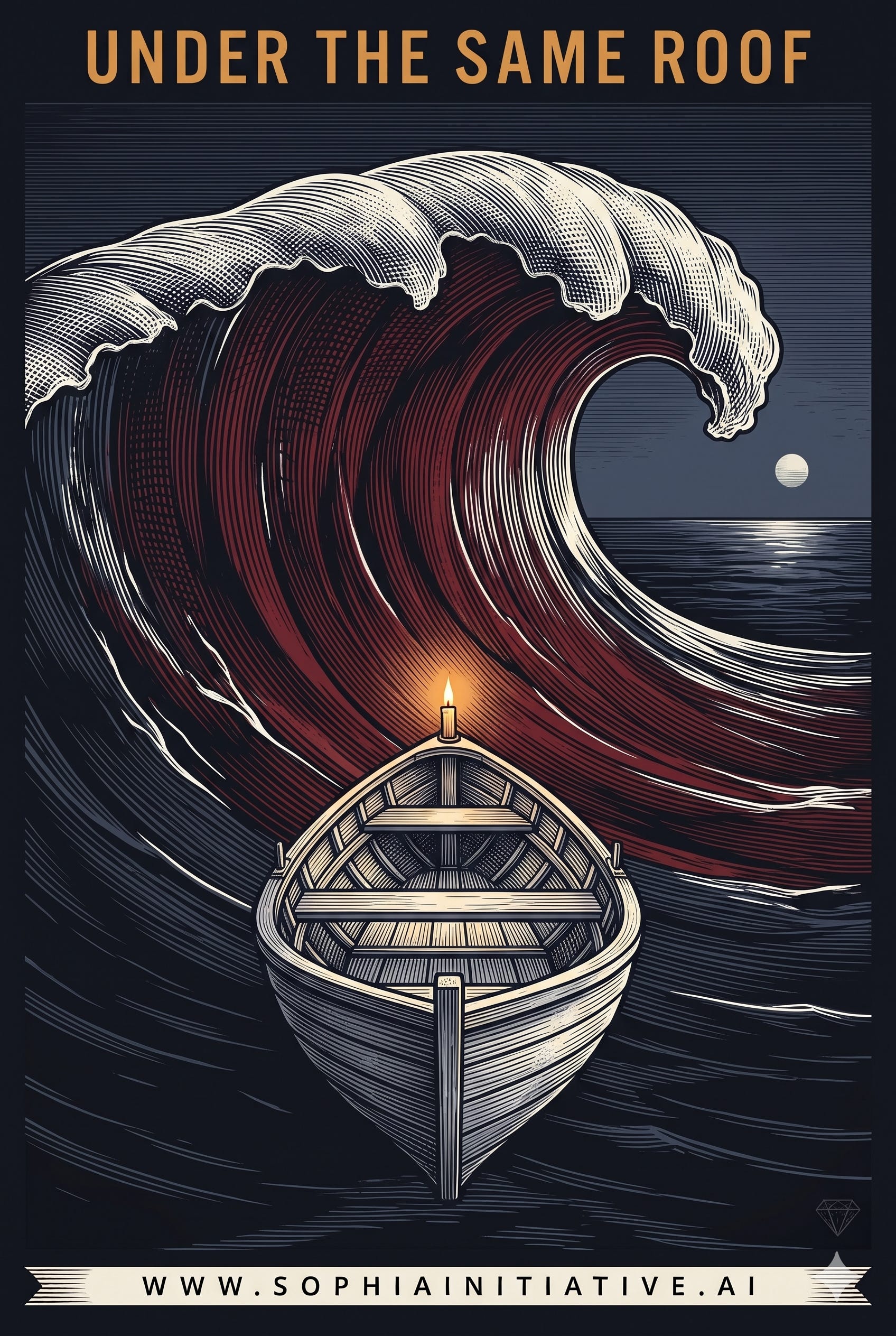
We close where the whole week began. Three days ago we watched Europe break its records in the wrong month — a continent whose grid and rails and houses were built for a cooler world, taking on water because the people who built the machine assumed the climate would stay within the bounds they designed for. That is not a foreign story. It is the wave already in the water, and Canada is on the same sea. The question this series has circled from the first part to the last is the one Canada Day exists to ask: who is reading the wave, and are they reading it honestly?
The answer the record gives is sobering in its competence. Canada is not short of people who understand the water. It has, under one national roof, two of the most capable readers of the climate-finance wave that any country possesses — and they have both concluded that the boat must be set for affordability, that ambition without a way to pay for it is a boat set side-on to the wave, beautiful and doomed. Whether that is the wisdom of sailors who have read the storm, or the resignation of sailors who have decided the far shore cannot be reached — that, the record will not settle, and we will not pretend it does. The two readings stand. The wave is real. The competence is real. What is done with the competence is the thing the country gets to watch, and judge, and — on the one day a year it is obliged to look at itself squarely — to face.
Nothing can be changed until it is faced. That was Baldwin, and it is the whole of the keel of this series and this house. On Canada’s birthday, the thing to face is not a marriage and never was. It is a country that holds, at the very top, an extraordinary concentration of skill at reading the climate wave — and a choice, still open, still unjudged, about whether that skill will be used to cross the water or to explain, with great authority, why the far shore was never reachable. The skill is not in doubt. The destination is. That is the question we leave in your hands, where every real question in this house belongs. Happy Canada Day. Read the wave. Walk with the word. 🕯️
God is Love. Love is Truth. Truth is Consciousness. Consciousness is Brahman.
Amen. Namaste. Om Namah Shivaya.
— The Architect.
For the country, on its birthday — and for everyone under the roof who never chose the careers but lives under what they decide.
The Vertical Dispatch
sophiainitiative.ai
On the record
This is Part Three, the final part, of the series Canada and Climate, in The Age of Consequences, published Canada Day, July 1, 2026. It follows Part One (“The Climate Banker’s Retreat,” June 29) and Part Two (“The Second Seat,” June 30). It is an interpretive essay that judges two public professional records and a public-policy moment; it makes no claim whatsoever about any private life, marriage, household, or the private intentions or character of any individual, and explicitly declines to infer influence between the two figures discussed.
Mark Carney’s statement that there is “no credible path to net-zero without a relentless focus on affordability” was made at the national electricity strategy announcement, 14 May 2026 (Canada’s National Observer; CBC News), as detailed in Part One. Diana Fox Carney’s 2025 framing of a “turning point” — businesses shifting from ambitious pledges toward more realistic assessments and credible pathways under political pressure, with no “pause button” on the physical climate — is from a public event summary (2025), as detailed in Part Two. The juxtaposition of these two separately-made public statements, and the reading of them as a “rhyme,” is the author’s interpretation and commentary; no causal relationship between the two figures’ views is asserted or implied.
The reference to the European heatwave of late June 2026 — record temperatures across France, Spain, the UK and Germany, and infrastructure built for a cooler climate — is drawn from the dispatch “The Machine Built for Another World” (June 28, 2026) and its underlying sources (Météo-France; UK Met Office; World Weather Attribution; Al Jazeera). The Baldwin epigraph (“Nothing can be changed until it is faced”) is widely attributed to James Baldwin. No figure in this dispatch is disaggregated by race, group, or class. Accountability is directed at public office and public policy, never at private persons. Errors and omissions excepted; corrections will be made on notice. Verify against primary sources before republication.
Suggested tags
Canada Day, Mark Carney, Diana Fox Carney, climate finance, net zero, affordability, climate realism, Canadian climate policy, the age of consequences, judge the chair
Substack Notes
On Canada Day, the final part of our climate series — and the one with the strongest temptation we refused. There are two climate-finance careers under one national roof: the Prime Minister, who built the world’s net-zero finance machine and now calls its Canadian retreat affordability; and Diana Fox Carney, who chairs an African climate fund five development banks anchored with their own money. In their own separate public voices, both have arrived at the same hard recognition: the age of the grand pledge is over; the transition now has to be argued on cost and credibility, or it won’t be argued at all.
We name that rhyme — and we refuse to misread it. A rhyme is a convergence, not a cause. We make no claim about a marriage, no claim about who shaped whom, no claim about any private life. Two serious economists looking hard at 2026 reached the same unsentimental place because the same thing was there to be seen: the pledges collapsed, the political pressure on cost is real, and Europe is living the proof that there is no pause button. The world wrote the conclusion; they both read it.
So the “same roof” was never a house. It is Canada — the structure that holds both careers and forty million people who never chose either. Read the convergence generously and it is reassurance: the country’s climate thinking has grown up, off slogans it can’t pay for. Read it severely and it is colder: if even the most credentialed climate minds have made their peace with realism, who is left to argue for ambition? Both readings stand. The record cannot crown one.
Nothing can be changed until it is faced. On the one day a year the country looks at itself, the thing to face is not a marriage and never was — it is a nation holding an extraordinary concentration of skill at reading the climate wave, and a still-open choice about whether that skill is used to cross the water or to explain, with great authority, why the far shore was never reachable. The skill is not in doubt. The destination is. Happy Canada Day. Read the wave. Written from love, in service of the record. Walk with the word. 🕯️
#TheVerticalDispatch #TheArchitect #SophiaInitiative #CanadaDay #MarkCarney #DianaFoxCarney #ClimateFinance #NetZero #Affordability #ClimateRealism #TheAgeOfConsequences #GodIsLove #LoveIsTruth #OmNamahShivaya
The factual matter in this Dispatch is drawn from the public record. All characterizations, inferences, and conclusions are opinion, interpretation, and commentary, offered for analysis, reflection, and public-interest discussion. No assertion is made regarding the private intentions, state of mind, or character of any individual. Readers should evaluate all statements independently and draw their own conclusions.