

There is an old social rule most of us absorbed before we were old enough to question it. Do not discuss religion or politics at the dinner table. Keep the peace. Stay comfortable. Talk about the weather.
We have followed that rule so faithfully that we have forgotten what it was protecting us from. Not conflict. Something more uncomfortable than conflict.
Ourselves.
The Real Reason
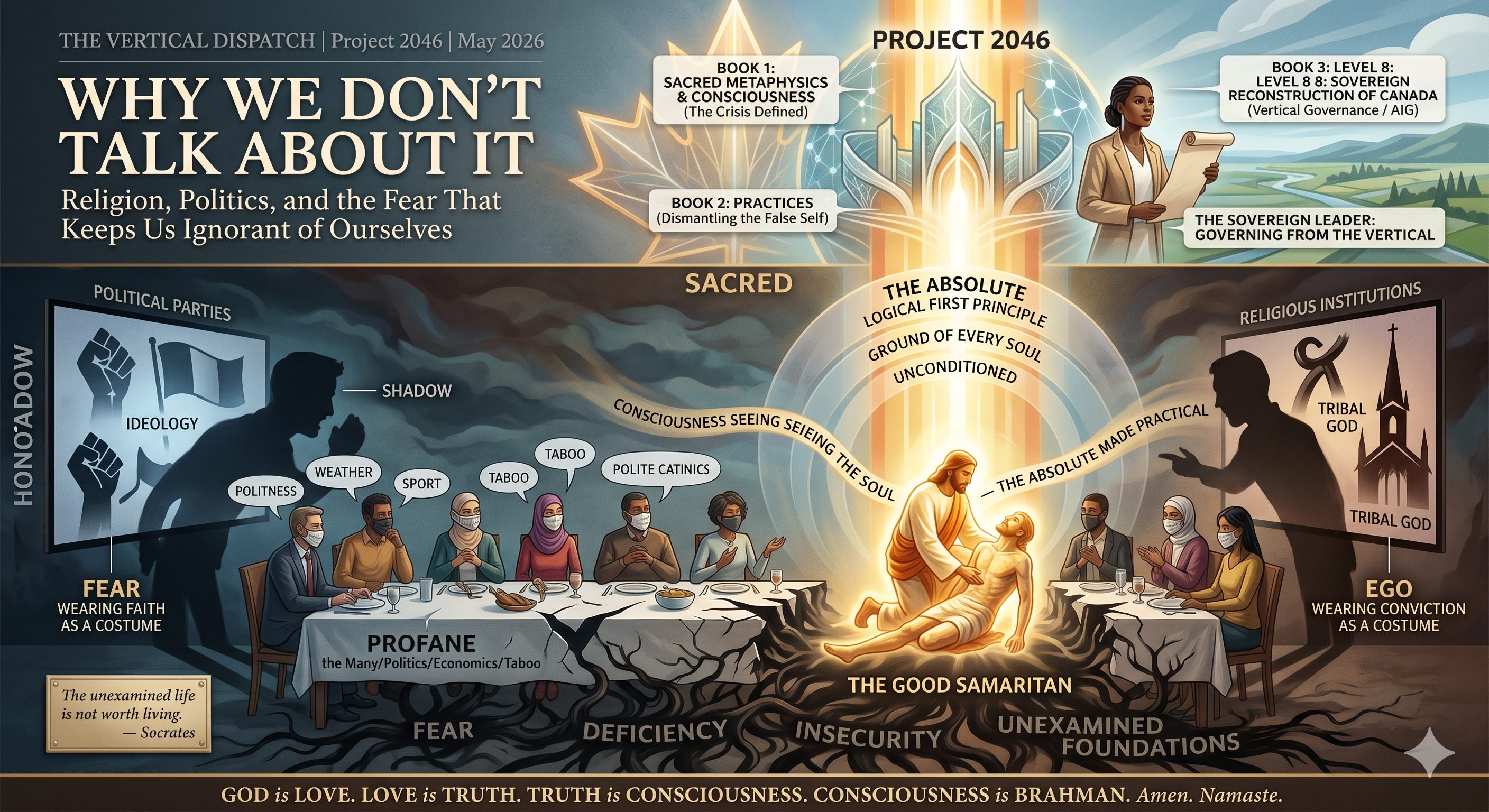
Here is the honest diagnosis. We avoid religion and politics for the same reason we avoid mirrors after a bad night. Not because they are complicated. Because they reveal something we have not yet been willing to look at directly — the gap between who we claim to be and how we actually operate.
Maslow spent a career mapping human motivation and found that the overwhelming majority of human behavior — across cultures, across centuries — is driven not by aspiration but by deficiency. Not by love but by fear. Not by growth but by the need for safety, belonging, and esteem in a world that feels perpetually threatening.
Jung spent a career mapping the interior landscape of that fear and found the Shadow — the parts of ourselves we cannot acknowledge, projected outward onto enemies, onto the other tribe, onto the people who vote differently or pray differently or do not pray at all.
What they were both describing, from different directions, is the ego operating in fear. And fear, as the foundation of both religious identity and political identity, produces the same result every time: the tribal god and the partisan flag become instruments of the same psychological function — the management of anxiety through belonging.
This is not cynicism. It is a structural observation. The person who cannot examine their religious belief without feeling existentially threatened is not operating from faith. They are operating from fear wearing faith as a costume. The person who cannot examine their political position without feeling personally attacked is not operating from conviction. They are operating from ego wearing conviction as a costume.
Neither conversation can go anywhere honest from that foundation. So we avoid them. We call the avoidance politeness. It is not politeness. It is collective ignorance maintained by mutual agreement.
The Logical Foundation We Skipped
Here is what the avoidance costs us philosophically.
The word God, stripped of all cultural costume, names the concept of the Absolute. This is not a religious claim. It is a logical one. Every coherent system of thought requires an absolute reference point. Without an absolute, the word relative has no meaning. You cannot have a relative without something it is relative to. The Absolute is the first principle of all logic and all language — prior to theology, prior to philosophy, prior to argument of any kind.
The symbol God is simply the name most civilizations have given to that first principle. The symbol is not the thing. And the thing — the logical necessity of an absolute ground for any coherent system of meaning — cannot be argued away. You can only replace one absolute with another.
This means that every person, including the committed atheist, is operating from an absolute. The question is not whether you have one. The question is whether you have examined it.
Socrates made this the central demand of a life worth living. The unexamined life, he said, is not worth living — and he said it at his own trial, facing death, to the jury that was about to condemn him. He was not being dramatic. He was being exact. A life built on unexamined foundations is not a life freely chosen. It is a life inherited, absorbed, performed — driven by assumptions never questioned, absolutes never named, fears never faced directly.
He was executed for asking the question. Which tells you everything you need to know about how the ego — individual and collective — responds to the invitation to examine itself.
If God Exists
Follow the logic one step further.
If the Absolute is truly absolute — unconditioned, unlimited, prior to all particulars — then it cannot belong to one tribe. A God of one nation is not God. It is the nation’s ego given divine authority. A God of one race is not God. It is racial identity wearing sacred robes. A God of one political tradition is not God. It is ideology with its hands folded in prayer.
The Absolute, if it is real, is the ground of every soul in time and space. Every soul. Without exception. Without hierarchy. Without the tribal distinctions that the frightened ego requires in order to know where it belongs.
Eliade spent his career documenting that every human civilization before modernity organized itself around the distinction between the sacred and the profane — the vertical and the horizontal. The sacred is the point where the Absolute breaks through the flat plane of ordinary life. The profane is the flat plane itself — the world of politics, economics, social management, the Many.
The reason religion and politics cannot be discussed in the same conversation is that religion, at its genuine root, is a vertical claim — a claim about the Absolute, the ground of all being. And politics is a horizontal activity — the management of competing particulars, the negotiation of the Many. The vertical exposes the ego driving the horizontal. The horizontal exposes the tribalism corrupting the vertical. The conversation is avoided because it requires a turned neck. And the turned neck is precisely what the frightened ego cannot do.
The Good Samaritan Is the Answer
The priest and the Levite had religion. Correct doctrine. Proper credentials. Institutional authority. They crossed to the other side of the road.
The Samaritan had none of those things. He was the wrong tribe, the wrong tradition, the wrong background. He saw a human being in pain and responded.
That response — immediate, non-tribal, prior to ideology — is what consciousness looks like when it is operating from the vertical rather than the horizontal. Not from fear. Not from belonging. From the direct recognition that the person on the road is a soul, and souls are what the Absolute is made of.
That is not a religious statement. That is the Absolute made practical.
The Crisis Is Consciousness
Krishnamurti was right. The crisis is not economic or political. Those are symptoms. The crisis is consciousness — specifically, the mass operation of human beings in the fear-based, ego-driven, tribally organized mode that Maslow mapped as deficiency, Jung mapped as the Shadow, Eliade mapped as the collapse of the sacred into the purely profane.
We are, collectively, ignorant of ourselves. Not stupid. Ignorant — in the precise sense of the word: not knowing. We do not know what drives us. We do not examine our absolutes. We do not look at the Shadow we project onto our political enemies and our religious others. We maintain the taboo on the conversations that would require us to look, and we call the maintenance of the taboo social harmony.
It is not harmony. It is collective sleepwalking.
The Third Taboo Nobody Named
There is a third conversation that belongs on this list alongside religion and politics. Artificial intelligence. Everyone is talking about it. Almost nobody knows what they are saying.
The PIAAC international literacy assessment tells us that approximately 85 percent of adults in developed nations operate below the literacy threshold required to evaluate complex, multi-source information independently. Only 15 percent read and reason at the level the conversation actually requires. Yet the AI discourse — in boardrooms, parliaments, living rooms, and social media feeds — proceeds as though everyone is equally equipped to participate in it. The result is Humpty Dumpty at industrial scale. Left and right, technologist and critic, regulator and entrepreneur — all using the same words to mean whatever serves their position. Intelligence. Consciousness. Understanding. Sovereignty. Each word emptied of its precise meaning and refilled with ideology.
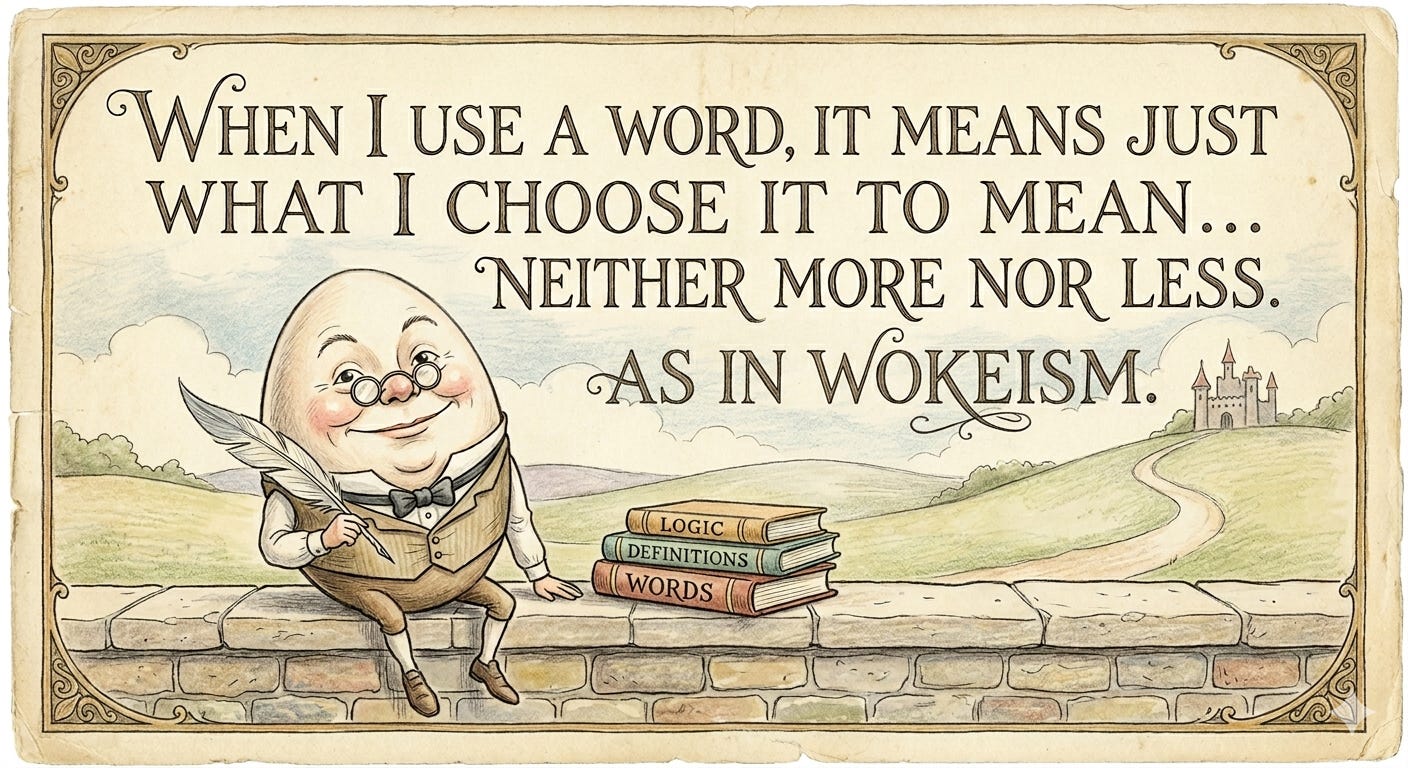
This is not accidental. It is the same mechanism that keeps religion and politics taboo — the unexamined absolute operating beneath the surface of every claim, driving the conclusion before the analysis begins. The person who has not examined what consciousness actually means cannot evaluate what artificial consciousness would require. The person who has not examined what sovereignty means cannot evaluate what a sovereign AI system would look like. And so the conversation produces noise at enormous volume and precision at almost none.
What This Project Is For
Project 2046 is built on three movements.
Book One — Sacred Metaphysics and Consciousness — names the crisis. Consciousness is the Absolute made particular. The individual human being is the universe examining itself. The crisis is the failure to know this — in ourselves, in our institutions, in our governance.
Book Two — 108 Days with Adi Shankara — addresses the individual solution. Not doctrine. Practice. The daily dismantling of the false self until what remains is the witness — the consciousness that is prior to the ego’s fear, prior to the tribal identity, prior to the Shadow.
Book Three — Level 8: The Sovereign Reconstruction of Canada — applies the solution to the collective. AIG — Artificially Intelligent Governance — is what governance looks like when it is built from the vertical down into the horizontal. From the Absolute into the particular. From the Samaritan’s seeing into the policy layer.
The individual who has addressed their own ignorance governs differently. They do not need an enemy. They do not need a tribal god. They do not need the press conference or the flag or the closed loop that mistakes posture for strategy.
They can see the architecture. They can trace the incentives. They can ask whose problem this actually solves.
That is what this project is building. One reader, one dispatch, one day at a time.
The taboo has served the ego long enough.
It is time to talk.
God is Love. Love is Truth. Truth is Consciousness. Consciousness is Brahman
Amen. Namaste.
— The Vertical Dispatch · Project 2046 · May 2026#TheVerticalDispatch #Project2046 #WhyWeDontTalkAboutIt #Religion #Politics #Consciousness #Ego #Fear #Maslow #Jung #Shadow #Socrates #UnexaminedLife #Eliade #SacredAndProfane #TheAbsolute #GoodSamaritan #Krishnamurti #AIG #ArtificiallyIntelligentGovernance #SacredMetaphysics #108DaysWithAdiShankara #Level8 #SovereignReconstructionOfCanada #TheVertical #TheHorizontal #WolfgangSmith #Plato #Aristotle #TheOne #TheMany #CrisisOfConsciousness #CollectiveSleepwalking #TribalGod #GlennfordEllisonRoberts #CdnPoli #Governance #Philosophy #Metaphysics #Sanatana Dharma #NonDual #Advaita
“Do not discuss religion or politics at the dinner table (or anywhere else for that matter). Keep the peace. Stay comfortable. Talk about the weather.” ~The Vertical Dispatch. Parenthetical addition: me.
I vaguely recall hearing this particular bit of “sage” social etiquette throughout my life…and I’m NOT AT ALL sorry for ignoring it.
I never understood it. I never believed it. And when I asked “why not?” after being chided for daring to broach any and all of the above societal taboo topics, I never got an answer other than, “because we just don’t talk about those things”. Seriously?! WTF is that about? I mean, how on earth are people supposed to know anything about anything or any one? I think it’s absurd. I’m thankful I never felt the need to constrain myself, simply on the basis of, “because”.
My life is richer for it.
Nice to see this topic taboo being discussed.
I like where you are going with this ..."the ego operating in fear. And fear, as the foundation of both religious identity and political identity, produces the same result every time: the tribal god and the partisan flag become instruments of the same psychological function — the management of anxiety through belonging." ... and likely why religion keeps mixing with politics.
Looking forward to more of your work.