


Φ
THE VERTICAL DISPATCH
We write for the mind, the eye, and the ear.
Read it. Look at it. Listen to it. The Vertical Dispatch is built for all three — prose with rhythm, made to be heard as much as read.
From metaphysics to geopolitics, from culture to history, from the sacred to the street — and everything in between. One lens, every subject. No ego. Just the record, named clean.
Press play. Walk with the words. 🕯️
Building Canada Strong · The Age of Consequences
As of 5 June 2026
“There’s nothing technical about this downturn.”
— Pierre Poilievre, on the technical recession, 1 June 2026
This dispatch travels by hand. If it serves you, share it — restack on Substack, pass it on wherever you read. 🕯️
The Word and the Number
On Tuesday, the third of June, the Leader of the Opposition, Pierre Poilievre, stood before reporters outside a cabinet meeting and, by the count of the CBC’s own correspondent, used the word “recession” more than two dozen times in the span of ten minutes. “There’s nothing technical about this downturn,” he had said two days earlier, after pressing for an emergency debate on the economy. The message was singular and relentless: Canada is in a recession, the only one in the G7, and it is the Prime Minister’s doing.
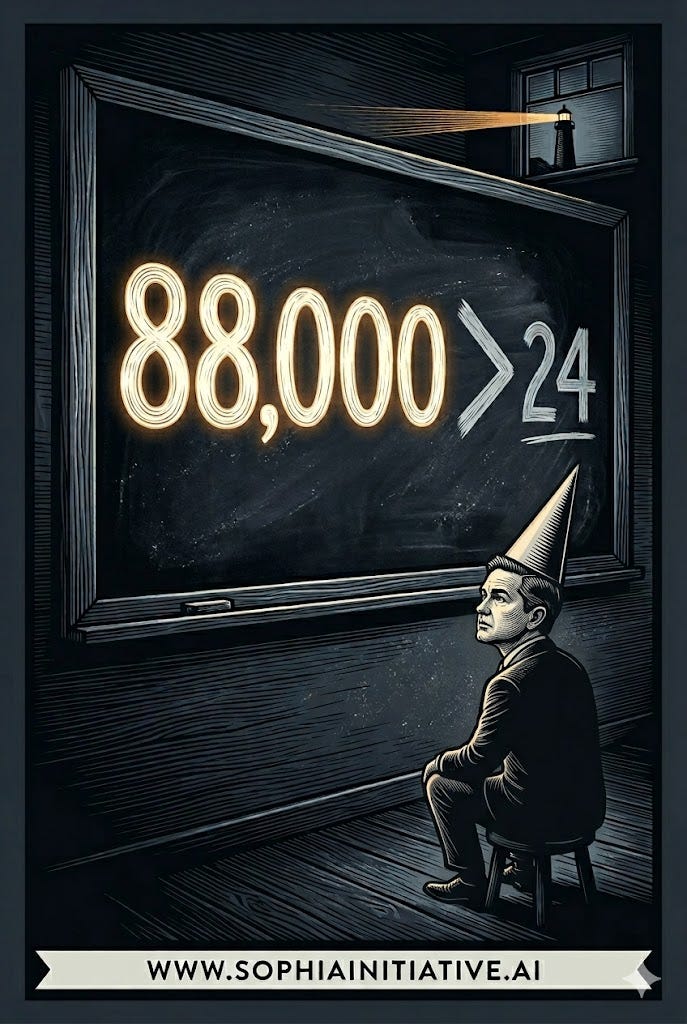
On Friday, the fifth of June, Statistics Canada released the May labour figures. The economy added 88,000 jobs — the largest monthly gain in six months and the first significant increase since November. The unemployment rate fell to 6.6 percent, down from 6.9. Economists had expected a gain of perhaps ten thousand; the actual number came in nearly nine times higher, concentrated in full-time work and spread broadly across industries, with construction alone adding twenty-seven thousand and young people seeing their best start to the summer season in years. So the question writes itself, and it is a fair one to ask of any leader who has staked a week on a single word: forty-eight hours after “recession” was repeated two dozen times, what does one say to 88,000 jobs?
The Numbers, Without Mercy — Both Ways
This publication’s discipline on economic news is fixed, and it cuts in every direction: read the river, not the ripple. A single data point is not the economy. That rule disciplined the recession claim, and it disciplines the jobs number too, so let us hold both honestly. First the recession. By the narrowest technical definition — two consecutive quarters of negative growth — Canada qualified: gross domestic product fell about one percent in the last quarter of 2025 and an estimated one-tenth of one percent in the first quarter of 2026. That is the whole of it. A contraction of a tenth of a percent is not a collapse; it is a number hovering at the boundary of zero. Many economists rejected the recession label outright, arguing the slump lacked the depth or breadth to deserve the word; the International Monetary Fund, at the same moment, projected Canada to grow at the second-fastest rate in the G7 this year and next. To repeat “recession” two dozen times over a tenth-of-a-percent contraction that the IMF and much of the economics profession decline to call one is not analysis. It is assertion by repetition — saying a thing often enough that the saying becomes the evidence.
And now the same mercy, turned on the good news, because the keel does not bend for the number one happens to like. The 88,000 jobs are real, and the surprise is real — but one strong month does not erase a hard year. The May gain only partially offsets a net loss of 112,000 jobs over the first four months of 2026. The labour market remains structurally softer than its pre-pandemic norm. The Bank of Canada’s own read is that the economy continues to operate below potential, which is precisely why the Bank is expected to hold its rate rather than celebrate. A single green month is a ripple in the right direction. It is not yet the river turning. Anyone who seizes 88,000 jobs to declare the good times arrived commits the identical error as the leader who seized a tenth of a percent to declare catastrophe. The ripple is not the river — in either direction.
The Performance and the Record
What separates the two claims is not their politics but their relationship to the evidence, and that is fair ground to judge, because it is the chair and not the man. The recession framing required a specific rhetorical move: to take the narrowest, most technical, most contested reading of the data — a sub-one-percent contraction most economists won’t call a recession — and to repeat it, loudly and often, until repetition did the work that evidence could not. The jobs number requires no such move; it is simply what Statistics Canada reported, beating every forecast, and it can be stated once and stand. That asymmetry is the story. One claim needed to be said two dozen times in ten minutes to survive contact with scrutiny. The other needed to be said once.
None of this is a verdict on any person’s sincerity, which is not ours to read; a leader may genuinely believe the economy is failing the people he represents, and the hardship he points to — insolvencies, food-bank lines — is real and ought never be waved away. The point is narrower and it is about method. When a politician of any party builds a week of messaging on the single most alarming interpretation of an ambiguous number, and the next number cuts hard against it, the public is owed something better than silence or a pivot to the next alarming word. It is owed an accounting that reads the whole river. As of this writing, several hours after the jobs report, the Leader of the Opposition had not yet responded to it. He may yet; the question in this dispatch’s title is sincere, not rhetorical. What he says — whether he reads the fuller picture or reaches for the next ripple — will tell Albertans and all Canadians something worth knowing about whether they are being offered analysis or performance.
On the Mend, or Still Broken?
So we return the question to the reader, where it belongs, because this publication does not declare for parties. Is Canada on the mend? On the evidence of a single strong month, the honest answer is: it is too soon to say, and that honesty is the whole point. The economy began the year poorly, crossed a technical threshold most economists decline to dignify with the word “recession,” and has just posted its best month in half a year — full-time, broad-based, beating every forecast. That is neither catastrophe nor triumph. It is a sluggish economy showing its first real sign of life in months, inside a year still climbing out of a shallow hole, under the shadow of tariffs and a volatile world. Whether the green month becomes a green season, no one yet knows. What can be said is that the country is not “broken” in the way a word repeated two dozen times would have it, and not “mended” in the way a single month’s headline might tempt the other side to claim. It is somewhere in the difficult middle, where most real things live — and where the discipline of reading the river, and not the ripple, is the only honest way to see.

God is Love. Love is Truth. Truth is Consciousness. Consciousness is Brahman.
Amen. Namaste. Om Namah Shivaya.
— The Architect
The Vertical Dispatch
sophiainitiative.ai
On the record. May 2026 Labour Force Survey (Statistics Canada, released 5 June 2026, 11:00 a.m. EDT): employment +88,000 (+0.4%), the first significant gain since November 2025 and the largest monthly increase in six months; unemployment rate 6.6%, down 0.3 points from 6.9% in April; gains concentrated in full-time work (full-time +154,000 on the month) and widespread across industries; construction +27,000, with information/culture/recreation and transport/warehousing also gaining and tariff-sensitive manufacturing posting gains; wholesale and retail trade −35,000; average hourly wages +3.0% year over year (down from 4.5% in April); youth (15–24) saw a stronger start to the summer season than in 2025. Economists had broadly expected a gain of ~10,000 and the rate to hold; the result beat that forecast nearly ninefold (Statistics Canada, The Daily; Canadian Press; BNN Bloomberg, 5 June 2026). Context: the May gain partially offsets a net decline of 112,000 jobs over the first four months of 2026; the Bank of Canada has held its policy rate at 2.25% across four consecutive decisions and the economy is assessed as operating below potential (Canadian Press, 5 June 2026). Recession context: real GDP fell ~1.0% (annualized) in Q4 2025 and an estimated 0.1% (annualized) in Q1 2026 — a second consecutive quarterly contraction meeting the narrowest technical definition of a recession; many economists reject the label as not meeting the depth/breadth bar, and the IMF projected Canada to grow at the second-fastest rate in the G7 in 2026–27 (Statistics Canada; CBC analysis by Aaron Wherry, 3 June 2026; BNN Bloomberg; National Observer, 1 June 2026). Poilievre: requested an emergency debate on the economy (denied by the Speaker, 1 June 2026); said “there’s nothing technical about this downturn” (1 June 2026) and, per CBC’s Aaron Wherry (3 June 2026), used the word “recession” more than two dozen times in roughly ten minutes before reporters; said “Only Canada, under Mark Carney’s Liberal policies, is in a recession” and characterized recession-skeptics as “Liberal commentators and economists”; cited rising insolvencies and food-bank use. As of this dispatch (afternoon, 5 June 2026), no public response from the Leader of the Opposition to the May jobs report had been recorded; this is stated as a fact of timing, not an inference about conduct. Quotations under fair-use length and attributed. This dispatch judges the use and interpretation of economic data and the rhetorical method, applies the same standard to all sides, does not declare for any party, and makes no assertion about any individual’s private sincerity, character, or intentions; the hardship cited (insolvencies, food-bank use) is real and is not disputed here. No figure is disaggregated by race, group, or class. Errors and omissions excepted; corrections will be made on notice. Verify against primary sources before republication.
#88000Jobs #PierrePoilievre #CanadaEconomy #JobsReport #Recession #MarkCarney #ReadTheRiver #LabourForceSurvey #CanadianEconomy #BuildingCanadaStrong #TheAgeOfConsequences #TheVerticalDispatch #TheArchitect #SophiaInitiative #GodIsLove #LoveIsTruth #OmNamahShivaya
Substack Notes
On Tuesday, Pierre Poilievre said the word “recession” more than two dozen times in ten minutes — by the CBC’s own count. On Friday, Statistics Canada reported 88,000 new jobs: the biggest monthly gain in six months, unemployment down to 6.6%, nearly nine times what economists forecast. So the question writes itself: 88,000 jobs later, what will Pierre say now?
Here’s the discipline, and it cuts both ways. The “recession” was technical — a one-tenth-of-one-percent contraction that the IMF and many economists decline to call a recession at all. To repeat the word two dozen times over a number hovering at zero isn’t analysis; it’s assertion by repetition. But the same mercy turns on the good news: one strong month doesn’t erase a year that shed 112,000 jobs, and the Bank of Canada still says the economy is below potential. The 88,000 is real — and it’s a ripple in the right direction, not yet the river turning.
That’s the whole point. One claim needed to be said twenty-four times in ten minutes to survive scrutiny. The other needed to be said once. We don’t judge the man — a leader may sincerely believe the economy is failing, and the hardship he names is real. We judge the method: building a week on the most alarming reading of an ambiguous number, then meeting the number that cuts against it with silence or a pivot. As of this writing, the Leader of the Opposition hadn’t responded to the jobs report. The question in our title is sincere.
On the mend, or still “broken”? The honest answer is: too soon to say — and that honesty is the point. Not catastrophe, not triumph. A sluggish economy showing its first real sign of life in months, inside a year still climbing out of a shallow hole. The country isn’t “broken” the way a word repeated two dozen times would have it — and it isn’t “mended” the way a single headline might tempt the other side to claim. It’s in the difficult middle, where most real things live. Read the river, not the ripple.
Written from love, for a sacred humanity, in the full light of consciousness, toward the greater good. 🕯️
The factual matter in this Dispatch is drawn from the public record. All characterizations, inferences, and conclusions are opinion, interpretation, and commentary, offered for analysis, reflection, and public-interest discussion. No assertion is made regarding the private intentions, state of mind, or character of any individual. Readers should evaluate all statements independently and draw their own conclusions.
Completely unrelated to the substance of this post, I wanted to say how much I love a particular set of comparisons you use to discuss the substance. The ripple not the river. The tide turning or not yet turned. The boat, the keel, the rudder, the wave, the lighthouse. Having watched the tidal bore on the Petitcodiac River in Riverview/Moncton, having watched the highest tides in the world come in and go out at the Minas Basin, after eating fish straight off the (extended) family's boat on Long island, after walking the ocean floor at Hopewell Rocks, after living the majority of my life loving the water, I adore that you use it constantly to make your points. Gratitude.
Excellent analysis. To your question: "whether they are being offered analysis or performance." from PP, reading his 'river' his response will be performative in keeping with well documented past behaviour. His 'river' is filled with torrents of ripples, turbulence suggesting the raft is headed for the 'falls'.