

THE VERTICAL DISPATCH
We write for the mind, the eye, and the ear.
Read it. Look at it. Listen to it. The Vertical Dispatch is built for all three — prose with rhythm, made to be heard as much as read.
From metaphysics to geopolitics, from culture to history, from the sacred to the street — and everything in between. One lens, every subject. No ego. Just the record, named clean.
Press play. Walk with the words. 🕯️
Building Canada Strong · The Age of Consequences
May 2026
“The pressure was meant to diminish Canada. It did the opposite.”
When Washington imposed tariffs on Canadian aluminium, steel, and critical minerals, the intent was leverage — the assumption that Canada, economically intertwined with its southern neighbour for generations, would have no choice but to comply. What followed instead was a sovereign reorientation that strategists will study for decades. Canada did not fold. Canada opened.
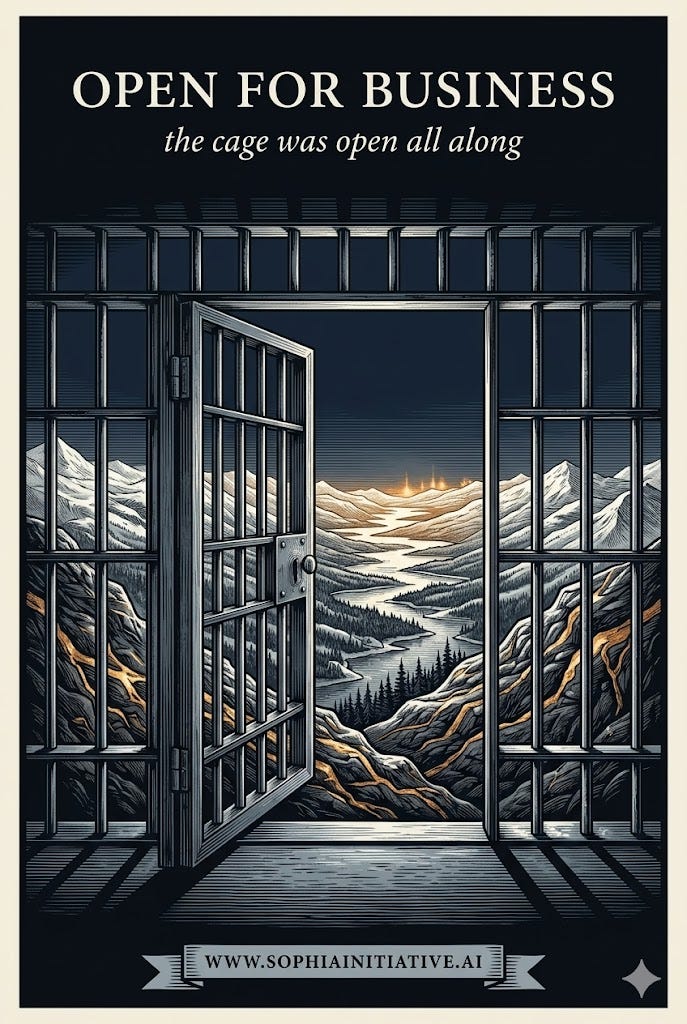
In the space of a few months, the world’s investment community arrived at a conclusion Canadians are only beginning to absorb: this country sits on one of the most extraordinary concentrations of natural wealth on earth, it has the clean energy to process that wealth responsibly, it has the institutional stability to be trusted, and it is no longer organizing its resource economy around a single buyer. The signal went out. The world responded. The tariff was meant to be a cage. Canada walked through it and discovered a larger world waiting on the other side.
I. The Resource Reality
Canada produces more than sixty minerals and metals from over two hundred operating mines across its territory. The breadth is staggering and largely invisible to the domestic public. Aluminium. Graphite. Lithium. Magnesium. Molybdenum. Niobium. Platinum-group metals. Scandium. Uranium. Between 2022 and 2024, domestic production of critical minerals rose by more than ten percent across nine categories at once — not because of a single lucky strike, but because a systematic strategy was being executed beneath the noise of the daily news cycle.
These are not peripheral commodities. They are the skeleton of the modern economy. Electric vehicles need lithium. Semiconductors need rare-earth elements. Defence systems need niobium and scandium. The clean-energy transition needs aluminium produced without carbon. Canada has all of it. And Canada has something else no amount of money can manufacture: hydroelectric power so abundant that it makes Canadian aluminium among the cleanest produced anywhere on earth.
This is not a resource story. It is a civilization story. The nations that control clean critical-mineral supply chains in the 2030s will shape the terms of the global economy for a generation. Canada is positioned at the center of that map — and not merely as a holder of what the world needs, but as a producer of what the world needs made the way the world increasingly demands it be made.
II. The Aluminium Signal
On May 29, 2026, Rio Tinto — Anglo-Australian, not American — announced it had begun commissioning a US$1.5 billion expansion of its AP60 smelter at Complexe Arvida in Saguenay, Quebec. The start-up began in March; all ninety-six new pots are expected online by the end of 2026. The expansion adds roughly 160,000 metric tonnes of primary aluminium capacity a year, bringing total AP60 output at the site to about 220,000 tonnes. The construction phase mobilized more than fifteen hundred workers at peak and generated over a billion dollars in regional economic value; roughly one hundred permanent positions remain. But the economic significance exceeds the job count by an order of magnitude.
This is the first major primary-aluminium expansion of its kind in the Western hemisphere in more than a decade. It was built in Quebec. It was built now. AP60 is among the lowest-carbon smelting technologies operating at commercial scale: combined with Quebec’s hydroelectric grid, it produces roughly one-sixth of the greenhouse-gas emissions per tonne of the global industry average. And it is being built alongside an ELYSIS demonstration plant — a breakthrough technology that emits oxygen rather than carbon, and that aims to eliminate direct greenhouse-gas emissions from smelting entirely when deployed at scale. The expansion is the low-carbon present; ELYSIS is the carbon-free future, being built in the same valley.
The distinction matters commercially. The European carbon-border adjustment mechanism means low-carbon aluminium commands a premium that American buyers are not yet paying. Quebec is positioning itself to sell into that premium. The tariff pressure meant to punish Canada has accelerated the very diversification that makes Canada less vulnerable to American leverage. Washington pushed. Quebec pivoted. The world placed a US$1.5 billion bet on the pivot.
III. The Critical-Minerals Alliance
Rio Tinto is not alone. On March 2, 2026, at the Prospectors and Developers Association of Canada convention in Toronto, the federal government announced a second round of thirty partnerships and investments under the Critical Minerals Production Alliance — the body Prime Minister Carney launched during Canada’s 2025 G7 presidency — unlocking $12.1 billion in mining-project capital with twelve allied partners. Combined with the first round in October 2025, the Alliance has now helped mobilize some $18.5 billion in Canadian critical-minerals projects. The announcement was delivered by the minister of energy and natural resources; the architecture behind it was Carney’s.
The International Energy Agency has assessed Canada as set to play a leading role in supplying the world with responsibly produced critical minerals, noting that at a time of rising concentration risk from dominant suppliers, Canada offers the stability, sustainability, and transparency markets are actively seeking. That is diplomatic language for a specific geopolitical reality: China controls the dominant share of critical-mineral processing globally, and Russia controls significant portions of the platinum-group-metals chain. The Western alliance needs an alternative. Canada is that alternative — and unlike many alternatives, it is not theoretical. The mines are operating. The partnerships are signed. The capital is flowing.
Canada has also moved to stockpile critical and dual-use minerals, including through the Defence Production Act, to guarantee supply to Canadian and allied defence industries. The resource economy and the defence economy are being integrated at the strategic level for the first time. None of this makes Canada a resource colony offering raw materials to the highest bidder. It makes Canada a sovereign resource power setting the terms of its own engagement with the world.
Honesty requires the counter-note. Not everyone is convinced the scale matches the rhetoric: serious analysts have asked whether $18.5 billion, spread across many projects and many partners, is sufficient against the size of the processing dominance it aims to counter, and whether announcement and execution will stay aligned. The skepticism is fair, and worth holding. A direction of travel is not yet a destination. But a direction of travel is exactly what the investment community reads first — and what it is reading in Canada right now is unmistakable.
IV. The Consequence
The investment community reads direction of travel before it reads balance sheets. What the world’s capital is reading in Canada is a country that spent generations organizing its economy around American proximity and American appetite — and has, in the span of a single political moment, begun to reorient toward a global posture. Submarines being chosen from Germany or Korea rather than America. Aluminium capacity built by Anglo-Australian capital, aimed at European premium markets. Critical-minerals partnerships spanning a dozen allied nations. A prime minister who spent his career at the Bank of England and the Bank of Canada, who understands capital markets at the architecture of global finance, executing a sovereign pivot most politicians would not have the formation to conceive.
This is not anti-American. Canada has not turned against its neighbour. Canada has simply stopped organizing its entire future around a single relationship that has shown, in the past two years, that it cannot be taken for granted. The tariff was an insult. The response is a reorientation. And the world, watching a middle power discover its own leverage in real time, is arriving with capital, partnerships, and long-term commitments that will outlast any single administration in Washington.
Canada has what the world wants. Canada is now willing to supply it on Canadian terms. That is the consequence no tariff could have produced on its own. The pressure revealed the ground. The ground turned out to be extraordinary.

The tariff was meant to be a cage. The ground beneath it turned out to be extraordinary.
God is Love. Love is Truth. Truth is Consciousness. Consciousness is Brahman.
Amen. Namaste. Om Namah Shivaya.
— The Architect
The Vertical Dispatch
sophiainitiative.ai
On the record: Rio Tinto announced the commissioning of its US$1.5 billion AP60 expansion at Complexe Arvida, Saguenay, on May 29, 2026 (Rio Tinto / Business Wire); start-up began in March, with completion expected by end of 2026, adding ~160,000 tonnes for ~220,000 total, ~100 permanent jobs, 1,500+ at peak construction. AP60 produces roughly one-sixth of the industry-average emissions when paired with hydropower; ELYSIS is a separate, carbon-free technology at the demonstration stage. The Critical Minerals Production Alliance figures (30 partnerships, $12.1 billion unlocked, ~$18.5 billion mobilized since October 2025) are from Natural Resources Canada, announced at PDAC on March 2, 2026; the Alliance was launched by Prime Minister Carney during Canada’s 2025 G7 presidency and the March announcement was delivered by the Minister of Energy and Natural Resources. The IEA assessment and the China/Russia processing-concentration figures reflect published analysis. The provincial-support figure for the Arvida project and the precise critical-minerals production percentages should be verified against primary sources before republication.
#BuildingCanadaStrong #OpenForBusiness #Canada #CriticalMinerals #Aluminium #RioTinto #AP60 #ELYSIS #CleanEnergy #Sovereignty #Carney #TradeDiversification #CriticalMineralsProductionAlliance #Quebec #G7 #DefenceProductionAct #TheVerticalDispatch #TheArchitect #SophiaInitiative #AgeOfConsequences #GodIsLove #LoveIsTruth #OmNamahShivaya
Substack Notes
Washington imposed the tariffs to make Canada fold. Canada did the opposite. It opened.
In late May, Rio Tinto — Anglo-Australian, not American — began commissioning a US$1.5 billion low-carbon aluminium expansion in Quebec, aimed at European premium markets. In March, Canada unlocked $12.1 billion in critical-minerals partnerships with allied nations, part of some $18.5 billion mobilized through the alliance Carney built during the G7 presidency. The submarines are being chosen from Germany or Korea. The pattern is unmistakable.
This is not anti-American. It is a country that has simply stopped organizing its entire future around a single relationship that has shown it cannot be taken for granted. The tariff was meant to be a cage. Canada walked through it and found a larger world on the other side.
The pressure revealed the ground. The ground turned out to be extraordinary. 🕯️
This dispatch opens Building Canada Strong — the publication’s running record of what the country is building, even as the Canadian Shadow Series names what it must still face. The two arcs answer each other: nothing can be changed until it is faced, and the building is the changing.
The factual matter in this Dispatch is drawn from the public record. All characterizations, inferences, and conclusions are opinion, interpretation, and commentary, offered for analysis, reflection, and public-interest discussion. No assertion is made regarding the private intentions, state of mind, or character of any individual. Readers should evaluate all statements independently and draw their own conclusions.