

THE VERTICAL DISPATCH
We write for the mind, the eye, and the ear.
Read it. Look at it. Listen to it. The Vertical Dispatch is built for all three — prose with rhythm, made to be heard as much as read.
From metaphysics to geopolitics, from culture to history, from the sacred to the street — and everything in between. One lens, every subject. No ego. Just the record, named clean.
Press play. Walk with the words. 🕯️
Sovereign Analysis · The Age of Consequences
May 27, 2026
“The great enemy of the truth is very often not the lie — deliberate, contrived and dishonest — but the myth: persistent, persuasive, and unrealistic.”
— John F. Kennedy, Yale Commencement, June 11, 1962
The correction — please note: this copy contains an error. David McGuinty is one of ten children (six sons and four daughters), not “the seventh of twelve” as stated below. The figure of twelve counts the ten children plus their parents. Please read the piece with that correction in mind.
And if you find an error in any copy, please let us know in the comments. The record is the whole point of this work — help us keep it clean.
I. The Family of Twelve
David Joseph McGuinty was born in Ottawa on February 25, 1960, the seventh of twelve children born to Dalton McGuinty Sr. and Elizabeth Pexton McGuinty. Six sons and four daughters, by the canonical accounting. The father was an English literature lecturer at the University of Ottawa who would become a Full Professor by 1980. The mother was a francophone nurse who put her career on hold to raise the twelve. The family was Irish-Catholic, rooted in the Ottawa Valley, politically active, and operationally serious about both faith and public service. The eldest son, Dalton James Patrick McGuinty Junior, was born five years before David and would become, four decades later, the twenty-fourth Premier of Ontario. The youngest son, Brendan, would enter the federal civil service. The middle son, David, would enter the House of Commons. Three of the four sons would spend their adult lives inside Canadian public institutions, each through a different door.
The father died on March 16, 1990, at the age of sixty-three, of a heart attack while shovelling snow in his own driveway. He had been a Member of the Ontario Legislative Assembly for less than three years, representing Ottawa South for the Ontario Liberal Party since the 1987 provincial election. The death was as ordinary as it was abrupt. It was also the formative trauma of the McGuinty family’s political life. The seat the father had won at age sixty-one, after thirteen years as a school board trustee, fell open on the spot. The eldest son ran for and won it later the same year. The McGuinty provincial dynasty in Ottawa South was born inside the grief of a Sunday morning in March.
The Ottawa Valley Irish-Catholic political tradition the family inherited has its own genealogy. John Sandfield Macdonald, the first Premier of Ontario from 1867 to 1871, was a Catholic from Glengarry County. The political register that Macdonald inaugurated and that the Valley sustained for a century afterward was distinctive: social conservatism mixed with Liberal partisanship, the Catholic Church and the Liberal Party as overlapping institutions of community life, education as the primary vehicle of social mobility, and public service understood not as a career but as a duty. Dalton McGuinty Junior would, in the early years of the twenty-first century, become only the second Catholic premier of Ontario. The family’s Catholicism was not incidental to the politics. It was the foundation the politics rested on.
David grew up inside that household with nine older and younger siblings. He was bilingual through his francophone mother and his anglophone father, a political asset that would matter for a career in federal Ottawa. He attended Catholic schools. He absorbed the values the father transmitted by example more than by speech — hard work, discipline, faith, and the family as the basic unit of political loyalty. By the time he reached his late teens, the McGuinty name in Ontario politics already carried the brand it would carry for the next four decades: competence, centrism, managerial seriousness, and a certain unflashy Catholic rectitude that the press would alternately admire and dismiss.
II. The Three-Generation Seat
Ottawa South is the geographic anchor that the McGuinty family has held across three generations and four decades. The federal riding is suburban, generally middle-class, demographically diverse, and notable for having the highest Arab population of any federal riding in Ontario at between six and eight per cent of its 125,090 residents. Thirty per cent of the population is immigrant. The median household income sits in the upper-middle range for Ottawa ridings. The riding contains the Macdonald-Cartier International Airport, the communities of Alta Vista, Elmvale Acres, Heron Gate, and South Keys, and the parishes and schools that constitute the Catholic infrastructure the McGuinty family was formed inside. The riding is not a safe Liberal seat by demographic inevitability. It is a competitive seat that the McGuinty family has cultivated into a personal fiefdom.
The provincial seat fell to Dalton McGuinty Senior in 1987 and stayed in the family until 2013. The father held it from 1987 to 1990. The eldest son held it from 1990 to 2013, serving as Premier of Ontario from 2003 to 2013 while continuing to hold the seat. The federal seat fell to David McGuinty in 2004, the year after his older brother became Premier. From 2004 to 2013, David and Dalton Junior held the federal and provincial representations of the same geographic constituency concurrently. The Ottawa Citizen noted at the time that the McGuintys had become the first siblings in Canadian history to hold elected office both provincially and federally in the same riding at the same time. The fact is the single most concrete expression of the family’s political mechanics and the single clearest signal of what the Ottawa South seat had become.
The seat had been held federally before the McGuinty era by John Manley, the Liberal who represented Ottawa South from 1988 to 2004 and served as Industry Minister, Foreign Affairs Minister, and Deputy Prime Minister under Jean Chretien. Manley retired from federal politics after Paul Martin became Liberal leader in 2003. His departure opened the seat the next year. The handover from Manley to David McGuinty was clean. The public record does not document a personal recruitment, but the timing of Manley’s retirement, the simultaneous ascension of Dalton Junior to the Ontario premiership, and the Liberal Party’s organizational confidence in the family name produced a transition that worked exactly as a party transition is supposed to work.
The 2004 Liberal nomination contest was not a coronation. David McGuinty defeated Alan Riddell, a longtime city councillor and labour-relations lawyer, to win the nomination. The contest was hard enough that Riddell subsequently ran as the Conservative candidate in the 2004 general election, losing to McGuinty. McGuinty won the seat on June 28, 2004 with 25,956 votes, 43.82 per cent, defeating Riddell at 34.82 per cent. He has been re-elected continuously in every general election since: 2006, 2008, 2011, 2015, 2019, 2021, and 2025. Eight consecutive elections. Twenty-one years of continuous parliamentary service. The Ottawa South seat is no longer the family seat. It is his seat.
III. The Long Apprenticeship
The pre-political life that David McGuinty brought to the House of Commons in 2004 was already a full professional career. He had earned a Diploma in Agriculture from Kemptville College, a Bachelor of Arts in English Literature from the University of Ottawa, civil and comparative law diplomas from the Universite de Sherbrooke, a Bachelor of Laws from the University of Ottawa, and a Master of Laws from the London School of Economics. He had been called to the Ontario Bar. He had completed a Harvard mediation and negotiation certification. The credentials were unusually broad for a Canadian federal politician, mixing the practical (agriculture, common law) with the international (LSE, Harvard) and the bilingual (Sherbrooke civil law).
His professional life before politics matched the breadth of his credentials. He had practiced environmental and natural resources law. He had served as President and Chief Executive Officer of the Prime Minister’s National Round Table on the Environment and the Economy from 1994 through 2001, more than seven years at the head of a federal advisory body whose mandate spanned the Mulroney and Chretien governments. He had served with the United Nations in West Africa. He had practiced international law in London. He had worked with the International Development Law Organization in Rome. He had mentored future leaders in Africa, Latin America, Asia, and the United States through the LEAD programme. He had advised the Rockefeller Foundation. The Liberal Party candidate profile from 2004 summarized the international work as helping emerging economies and developing countries in Africa, Asia, the former Soviet Union, and Eastern Europe.
In his maiden speech in the House of Commons on October 26, 2004, McGuinty offered a pledge that read, in retrospect, as the operating principle he would actually follow across the next two decades: I will work as hard as I can to serve the needs of the people of Ottawa South in order to ensure that our community continues to flourish. He then delivered a substantive policy speech on Bill C-8, the Public Service Modernization Act, the kind of technical bill a former senior public servant would be expected to engage with seriously. A month later, on November 25, 2004, he asked his first oral question in the House, directed to Finance Minister Ralph Goodale on the subject of national environmental and sustainable development indicators. Goodale’s response on the floor of the Commons publicly acknowledged the credential: I want to congratulate the honourable member for the work he did on this very issue when he was with the National Round Table on the Environment and the Economy.
That recognition from the floor of the Commons in the first weeks of his parliamentary career was the operational signature of his apprenticeship. He had arrived in the House with documented expertise that a minister of the Crown was prepared to acknowledge in front of the cameras. He had not arrived as a backbench unknown. He had arrived as a recognized policy specialist with a brand name and a portfolio of competencies. What he did with that arrival across the next twenty years is the question the apprenticeship raises. The answer is that he did not rise quickly. He served as a government backbencher through the Paul Martin years from 2004 to 2006. He served as a critic during the Stephen Harper decade in opposition from 2006 to 2015. He served as a government backbencher again through the Justin Trudeau years from 2015 to 2024. He held the chair of the Liberal Party of Canada national caucus under Trudeau. He held no cabinet seat until age sixty-four. The apprenticeship was twenty years long.
Two decades in the House before a first cabinet appointment is unusual for an MP with McGuinty’s credentials. The question is whether the long apprenticeship made him institutionally wise or institutionally passive, and the public record across those twenty years does not resolve it. He carried critic portfolios on Science and Technology, on regional economic development, on Transport, Infrastructure, and Communities, and on Energy and the Environment. He took the technical files and did the technical work. He did not produce a major private member’s bill that reshaped a policy field, nor become a national figure whose name surfaced in cabinet shuffles as a contender. The credential the resume documented stayed inside the resume for two decades. The apprenticeship was long — and its own duration was, in the end, the answer to whether the apprentice was ever going to become the master.
IV. The Seven Years at NSICOP
The National Security and Intelligence Committee of Parliamentarians was established by statute on June 22, 2017. The committee was created by the Trudeau government as a multi-party, bicameral parliamentary oversight body for the Canadian national security and intelligence community, modeled on similar bodies in the United Kingdom and Australia. The committee reviews the activities of the Canadian Security Intelligence Service, the Communications Security Establishment, the Royal Canadian Mounted Police, the Canada Border Services Agency, and other federal agencies operating under national security mandates. The committee operates under the highest level of security clearance, meets in private, is permanently bound by the Security of Information Act, and produces annual reports to the Prime Minister, redacted versions of which are tabled in Parliament.
David McGuinty was appointed the inaugural Chair of NSICOP on November 6, 2017. He would hold the chair for seven years, until his appointment to the Trudeau cabinet in December 2024 ended the role. He was succeeded as chair in early 2025. For the entirety of the seven-year period, McGuinty held the highest level of Canadian security clearance and sat on the only parliamentary body that sees the full classified picture of Canadian intelligence activities. He sat across the table from CSIS, CSE, the RCMP, CBSA, the Department of National Defence, and the Canadian Armed Forces. He read what they read. He saw what they saw. He asked them the questions that nobody else in Parliament had the clearance to ask.
Over the seven years, NSICOP completed numerous substantive reviews. The first special report, submitted to the Prime Minister on May 31, 2018, addressed the security concerns arising from Justin Trudeau’s February 2018 official visit to India. The report contained findings and recommendations on foreign interference in Canadian political affairs, risks to the security of the Prime Minister, and the appropriate use of intelligence. McGuinty framed the work in his own published statement at the time: All Committee members were in agreement that the key issues fell within our mandate, merited independent and non-partisan review, and could only be properly examined with access to classified information.
Subsequent reviews announced further substantive examinations. One looked at how the Government of Canada establishes national intelligence priorities. Another was an early independent external review of defence intelligence activities. McGuinty’s framing was characteristic: Intelligence activities are critical for the effectiveness of government activities. They also have the potential to affect the rights and privacy of Canadians. The review of the collection, use, retention, and dissemination of information on Canadians by the Department of National Defence and the Canadian Armed Forces was a direct foreshadowing of the portfolio McGuinty would hold years later as Minister of National Defence. He authored that report as Chair. The classified version sat in the Prime Minister’s Office. The redacted version was tabled in Parliament.
The most consequential single document of his pre-ministerial career was the NSICOP Special Report on Foreign Interference in Canada’s Democratic Processes and Institutions. The report was submitted to the Prime Minister on March 22, 2024 and tabled in Parliament in redacted form on June 3, 2024. It was classified at the highest level the Canadian system permits. The substantive finding was the one that triggered the political firestorm: some unnamed Members of Parliament had wittingly participated in efforts by other countries to interfere in Canadian politics.
The June 2024 release of the redacted report was the moment the seven years at NSICOP became visible to the Canadian public. The Hill Times described the report as an explosive document alleging that some elected officials began wittingly assisting foreign state actors soon after their election. The Toronto Star asked whether the unredacted version might be a way to publicly name them. Conservative Leader Pierre Poilievre declined to seek the security clearance necessary to read the unredacted version, the only major party leader who did not. McGuinty’s public response was disciplined and characteristic: What I would encourage people to do is read the report, cover to cover. Pressed on naming names, he said: The question of whether or not this issue is followed up on is a question rightly put to the RCMP.
In the iPolitics interview of June 12, 2024, McGuinty made the request that defined his public posture on the file: If you’re going to have a serious and adult conversation, like we try to do at our committee, you need to park the partisanship at the door. He added, with a pointedness that the Canadian press did not entirely register at the time: We have been saying this as a committee since 2018. I can ask you in the media, where were you?
The seven years at NSICOP are the credential that explains everything that followed. The architect of the oversight is the man who knows where the bodies are buried in the Canadian security apparatus — which agencies resist civilian oversight, which files have been mishandled and which managed correctly. He cannot say what he knows; he is permanently bound by the Security of Information Act. The knowledge sits inside him as the operational training for a chair nobody else in the Carney cabinet was prepared to occupy. The seven years are the apprenticeship the twenty backbench years did not produce. Everything before was preparation.
V. The Carney Choice
The documentary record of any personal relationship between Mark Carney and David McGuinty before January 2025 is essentially blank. No joint photographs. No co-authored policy papers. No mutual board memberships. The two men moved in different professional worlds for three decades. Carney was in central banking and international finance from his Goldman Sachs years through his Bank of Canada appointment through his Bank of England governorship. McGuinty was in environmental law and federal advisory work through his Round Table leadership, then in the backbench Liberal caucus from 2004, then in the classified national security oversight world from 2017. There is a chronological overlap at the National Round Table on the Environment and the Economy during the 1990s when McGuinty led the body and Carney was at Goldman Sachs, but the public record contains no evidence of a relational overlap. The two men shared a city and a country and a political party. They did not, on the available record, share an ongoing personal or professional working relationship.
The inference the absence of relationship permits is the most important the dispatch will make about the appointment. Carney did not select McGuinty for Defence out of personal affinity, nor as a reward for loyalty, nor as a placeholder for a preferred candidate. He selected him because of an institutional credential no other member of his cabinet possessed. McGuinty had spent seven years as the inaugural chair of NSICOP. He held the highest level of security clearance. He already knew the Department of National Defence and the Canadian Armed Forces from the oversight side, already knew the cyber-security file, the foreign-interference file, and the working culture of the agencies he would now command. The choice was institutional, not personal; about competence, not loyalty. It was, in the register of the Stratum VII mind this publication has been auditing across the spring, exactly the choice a Stratum VII mind would make.
The Liberal leadership endorsement of February 9, 2025 confirmed the operational alignment. McGuinty, then Minister of Public Safety, endorsed Carney at the Riverview Park Winter Carnival in Ottawa South. iPolitics reported the moment: As Liberal leadership candidate Mark Carney shook hands, roasted marshmallows and talked to young hockey players at a South Ottawa community event Sunday afternoon, he received the ringing endorsement of Public Safety Minister David McGuinty. The endorsement was strategically significant in a way the press did not entirely register. McGuinty was, at that moment, the senior national security minister in the Trudeau cabinet who held the highest classified clearance and could see the full picture of the Canadian intelligence community. His endorsement was, in effect, the security community’s most clearance-holding parliamentarian signalling that Carney was the candidate the community could work with — and caucus members, Conservative leaders, and foreign intelligence services would all have read it that way.
The portfolio transition from Public Safety to Defence on May 13, 2025 was a lateral reassignment inside the national security silo, not a promotion from outside it. Bill Blair, Trudeau’s final Defence Minister, was dropped from cabinet entirely. McGuinty replaced him. The Public Safety portfolio that McGuinty had held went to Gary Anandasangaree. The reassignment placed the NSICOP architect directly over the military and intelligence apparatus he had spent seven years scrutinizing.
The signals the appointment sent were multiple and deliberate. To the Canadian Armed Forces: the new minister has spent seven years reviewing your intelligence activities, and you cannot hide from him. To NATO: Canada is placing a security professional, not a patronage appointee, in the Defence chair. To Washington: the man who chaired the oversight committee behind the foreign-interference report now commands Canada’s military and intelligence apparatus. Each message was clean, and each was the right one. This was not the appointment a Prime Minister makes to reward a friend. It was the appointment he makes when building a Stratum VII cabinet whose architecture has to hold against a second Trump administration, a Russian war in Europe, an unresolved Indo-Pacific, and an internal Canadian environment of unusual strain.
VI. The Defence Chair: First Year
McGuinty was sworn in as Minister of National Defence on May 13, 2025. The first year that followed is the public record the dispatch must now audit. The record is dense, operationally consequential, and uneven in its visibility. The minister has been less publicly active than several of his Sovereign Core colleagues. The portfolio has nonetheless produced documented deliverables across the full range of Defence files.
The North Atlantic Treaty Organization two per cent of GDP defence spending commitment was the most high-profile file of the first year. On June 10, 2025, Prime Minister Carney announced that Canada would achieve the NATO two per cent target in 2025, years ahead of the previous schedule. The announcement was a direct response to the operational pressure from the Trump administration on alliance burden-sharing. In March 2026, NATO confirmed that Canada had met the two per cent target. McGuinty’s public framing was characteristic of his measured register: It is an important moment, one shaped by an ever-changing and complex world. Politico’s more skeptical assessment ran under the headline: Carney claims win on NATO defense spending, but Canada still ranks last. McGuinty’s response was operational rather than defensive: We are inside the club. The Budget 2025 defence allocation was the underlying fiscal architecture that made the two per cent commitment possible.
The F-35 procurement file is the largest defence procurement in Canadian history. Canada and the United States signed a deal in 2023 for eighty-eight F-35 fighter aircraft. Following the Carney appointment and the renewed tensions with the Trump administration over trade, McGuinty initiated a review of the program. In early 2026, he stated that an initial tranche of F-35 jets had been acquired and that further acquisition of the remaining aircraft was under review. He told the press the government would take its lead on the F-35 decision from the military. In November 2025, he indicated that Canada was not ruling out diversifying fighter-jet purchases from more than one supplier, a posture that signalled potential European procurement alternatives to the American platform. The review remains open as the dispatch is filed.
The Arctic defence file was the second high-profile portfolio focus. In February 2026, McGuinty signed a defence cooperation agreement with Denmark covering Greenland and the Faroe Islands. His public statement was declarative: Canada is an Arctic nation, and we will defend the North. In March 2026, he accompanied Carney to Norway to strengthen Arctic sovereignty cooperation with the Nordic partners. On May 22, 2026, four days before the filing of this dispatch, he announced new multi-year funding for Canadian Coast Guard maritime security capabilities, intended to strengthen the Coast Guard from the high Arctic to the country’s southern coastlines. The Arctic file is the one Defence file in which McGuinty’s public voice has been most consistently visible across the first year.
The Ukrainian aid file produced the most consequential single document of the year. On August 24, 2025, Ukraine’s Independence Day, McGuinty was in Kyiv at the Defense Forum. Ukraine’s Defence Minister and McGuinty signed a joint defence production agreement in the presence of Ukrainian President Volodymyr Zelenskyy and Prime Minister Mark Carney. The agreement covered joint defence production between Canadian and Ukrainian industry. On October 16, 2025, McGuinty announced additional Canadian contributions at the NATO Defence Ministers Meeting in Brussels. On December 3, 2025, McGuinty and Foreign Minister Anita Anand jointly announced a further package of support for Ukraine, including military assistance and a contribution to NATO’s Comprehensive Assistance Package for Ukraine. The Anand-McGuinty announcement was the clearest documented example of cross-portfolio coordination between the Hard Power Chair and the Foreign Affairs chair across the first year.
The cyber-security file is the portfolio responsibility that sits closest to the NSICOP credential. The Communications Security Establishment, Canada’s signals intelligence agency, reports through the Defence portfolio. On November 26, 2025, McGuinty and Public Safety Minister Gary Anandasangaree issued a joint statement on malicious cyber activity targeting Canadian critical infrastructure. McGuinty was also the seconder of Bill C-8, the Cyber Security Act, moved by Anandasangaree. The cyber-security coordination between Defence and Public Safety has been documented in public. The cyber-security coordination between Defence and the AI portfolio held by Evan Solomon has not been documented in public, a gap the dispatch will return to.
The Defence Investment Agency was the signature institutional innovation of the first year. The agency was created to accelerate and streamline defence procurement, a chronic Canadian failure across multiple decades. Global News reported in April 2026 that the creation of the defence industrial strategy and the Defence Investment Agency proved Canada was moving on procurement. The agency’s operational record is too early to assess. The institutional architecture is consistent with the NSICOP-trained mind that knows the procurement failures of the system from the oversight side.
The first year also produced documented failures. The cancelled armoured vehicle contract for Ukraine, announced by McGuinty on October 22, 2025, drew sustained criticism. McGuinty told the House Defence Committee: There is a decision that has been taken to nullify the contract with that company presently. The cancellation, after lengthy delay, raised questions about Canadian procurement reliability as a NATO defence partner. The Windsor Star reported in May 2025 that at the ReArm Europe announcement McGuinty refused to answer questions from reporters and left through a back door, leaving the spotlight entirely to Carney. The defensive media posture has been a consistent feature of the first year. Whether the relative invisibility is the discipline of a security professional accustomed to operating in classified registers, or whether it is the political timidity of a long-apprenticed backbench MP who has not yet adjusted to the demands of cabinet-rank public communication, is the open question the dispatch will press in the elenchi.
VII. The Cross-Portfolio Architecture
The Sovereign Core of the Carney government consists of nine seats. The Prime Minister at the apex. The strategic primary triad of Anand at Foreign Affairs, Champagne at Finance, and Hodgson at Energy and Natural Resources. The specialist seats of Joly at Industry and LeBlanc at the composite federation chair. The closing tier of McGuinty at Defence, Anandasangaree at Public Safety, and Solomon at AI and Digital Innovation. The Hard Power Chair at Defence is the operational machinery of state military force. The Hard Power Chair is also, by the architecture of the Sovereign Core, the integration node where the security file meets the foreign-affairs file at Anand, the procurement file at Champagne, the critical-infrastructure file at Hodgson, the cyber-security file at Anandasangaree, and the AI-enabled defence applications file at Solomon. The integration is the work the chair is structurally required to perform. The integration is what the dispatch must now audit.
With Anita Anand at Foreign Affairs, the documented coordination has been operationally consistent. The December 3, 2025 joint announcement of the Ukraine support package is the clearest single example. The Anand-McGuinty axis on the Ukraine file is functional. The two ministers appear together. The two ministries coordinate at the staff level. The cross-portfolio architecture works on this file.
With Francois-Philippe Champagne at Finance, the defence procurement and spending coordination has been documented through the Budget 2025 process and the Defence Investment Agency creation. The defence allocation in Budget 2025 was the product of negotiation between Defence and Finance. The Major Projects Office under Hodgson’s portfolio includes defence-related infrastructure that crosses the Defence and Energy files. The Champagne-McGuinty coordination has not produced public joint announcements but has produced documented fiscal outcomes. The cross-portfolio architecture works at the operational level.
With Gary Anandasangaree at Public Safety, the documented coordination on the cyber-security file has been visible: the November 26, 2025 joint statement on malicious cyber activity, and the seconding of Bill C-8, the Cyber Security Act. The two ministers have worked together on the file that sits between their portfolios. The coordination is functional on the cyber file. The coordination on the foreign-interference file, where McGuinty’s seven years of NSICOP work would have made him the most credentialed cabinet voice, has not produced visible joint output from Defence. That relative silence is one of the open questions of the first year.
With Tim Hodgson at Energy and Natural Resources, no documented public coordination on the critical infrastructure protection file has appeared in the public record. The pipeline and grid architecture being built under Hodgson’s portfolio is among the most operationally consequential critical infrastructure Canada has commissioned in two generations. The protection of that architecture against state and non-state actors is a core function of the Hard Power Chair. The absence of documented coordination is consequential. Either the coordination is happening at classified levels that the public record cannot see, or the coordination is not happening, or the coordination is being routed through the Public Safety portfolio rather than directly through Defence. The dispatch cannot resolve which of the three is the case. The dispatch can note the gap.
With Evan Solomon at AI and Digital Innovation, no documented coordination between McGuinty and Solomon on AI-enabled defence applications has appeared in the public record. The convergence of large-language-model capability with foreign-state influence operations is the defining cyber-security threat of the next decade. The convergence of AI with battlefield decision-making is the defining military technology question of the next decade. The absence of any visible coordination between the Defence chair and the AI chair is its own data point.
The pattern the cross-portfolio audit produces is mixed. The Hard Power Chair has been operationally engaged with Foreign Affairs on Ukraine, with Public Safety on cyber, and with Finance on procurement. The Hard Power Chair has not been visibly engaged with Energy on critical infrastructure or with AI on the technological convergence file. The chair has been in the room on the files where the operational pressure required its presence. The chair has not been in the room on the strategic files where the framework most rewards its presence. The operational pressure is producing the coordination it requires; the strategic architecture is not yet producing the integration the Sovereign Core most needs.
VIII. The Three Elenchi
The dispatch owes the chair three Socratic questions, in the discipline of the cunning man’s reading. The questions are pressed without flattery and without malice. The questions are pressed on the chair, not on the minister.
The first is the procurement question. The Defence portfolio’s largest operational responsibility is procurement. The F-35 program is the largest defence procurement in Canadian history. The Canadian Surface Combatant frigate program is the largest shipbuilding project in Canadian history. The Arctic patrol capacity expansion. The defence cooperation with Denmark on Greenland. The cancelled armoured vehicle contract for Ukraine. The Defence Investment Agency. The chair is structurally required to manage procurement at a scale and complexity that Canadian defence ministers have routinely failed to manage across multiple decades. The NSICOP credential prepared McGuinty to see the procurement failures from the oversight side. The credential did not prepare him to manage procurement from the inside. The October 2025 cancellation of the Ukraine armoured vehicle contract is the visible early failure. The F-35 review remains open. The procurement question is whether the architect of the oversight can become the operator of the operation. The answer the first year provides is partial. The answer the second year will provide is consequential.
The second is the political-communication question. The chair must defend the defence budget in the House against sustained opposition pressure, explain procurement decisions to the public in a register the ordinary voter can absorb, and manage the relationship with a Canadian Armed Forces that has its own institutional culture and its own expectations of ministerial communication. McGuinty’s public posture across the first year has been defensive. The Windsor Star moment at the ReArm Europe announcement, where he refused questions and left through a back door, is the caricature version of the pattern. The credential trained him for the classified register, where the language is precise and the audience small. It did not train him for the public register, where the language is approximate and the audience large. The question is whether the architect of the oversight can become the public voice of the operation. The first year shows him underperforming on it. The second year is the test.
The third is the strategic question. The chair must articulate a sovereign Canadian defence doctrine for an era in which the United States is unreliable, NATO is under pressure, the Indo-Pacific is contested, the Arctic is becoming central, and the cyber-AI convergence is reshaping every military assumption the postwar order rested on. The chair is the Hard Power Chair of a Sovereign Core whose ambition is to govern Canada through this hinge moment at the Stratum VII horizon. The doctrine it requires must be coherent, communicated, and operationally implementable. The first year has produced a budget, a procurement review, an Arctic agreement with Denmark, a Ukraine production agreement, and a Defence Investment Agency. It has not produced a doctrine. The seven years at NSICOP gave McGuinty an empirical foundation for one that no other Canadian politician possesses. Whether that foundation will produce the doctrine, or whether it will sit inside the minister as accumulated knowledge the classified register will not permit him to speak, is the open question of the chair.
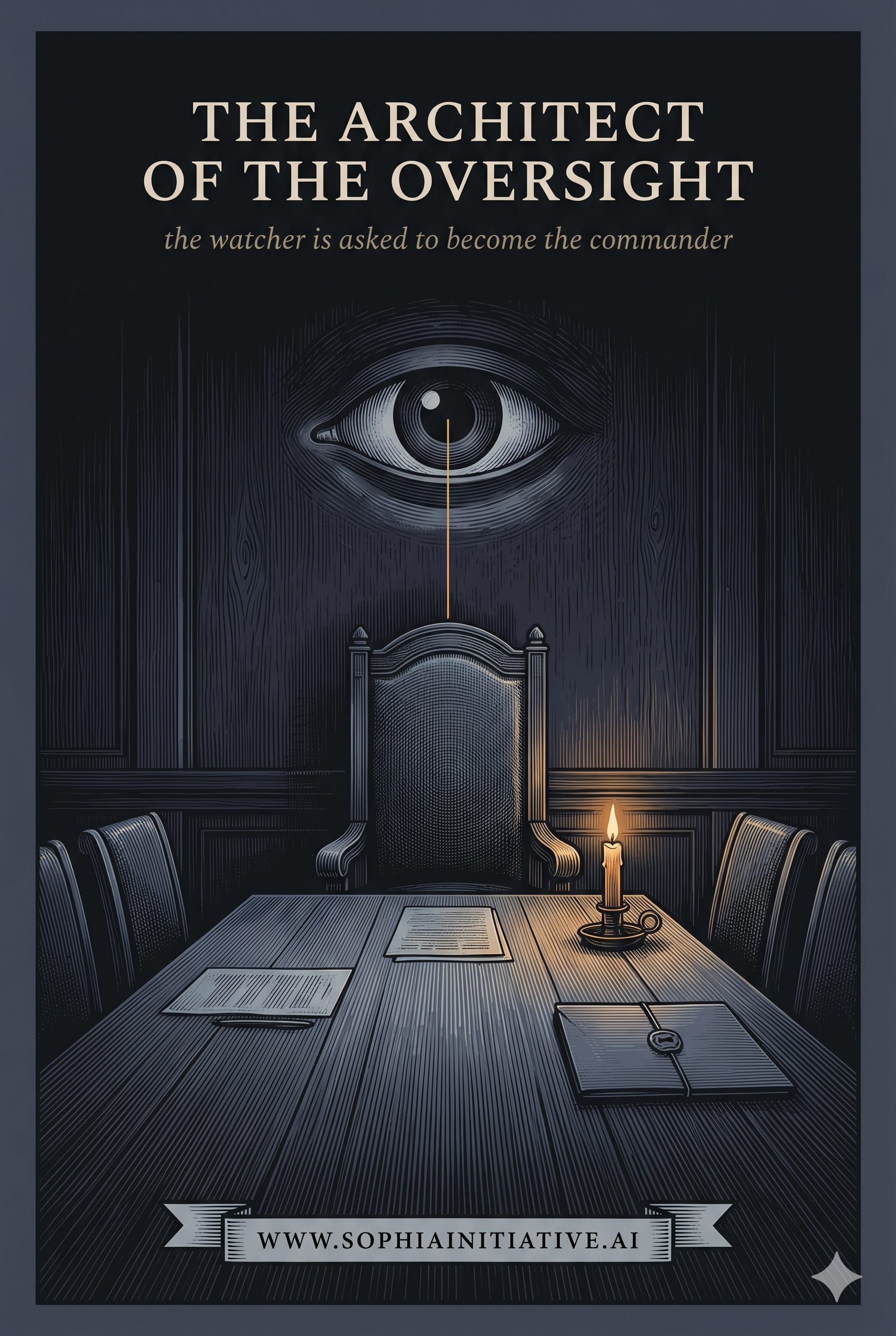
Coda: The Architect of the Oversight Becomes the Architect of the Operation
Return to Ottawa, November 6, 2017. The National Security and Intelligence Committee of Parliamentarians convenes for the first time. The Members of Parliament and Senators take the oath of permanent secrecy under the Security of Information Act. David McGuinty, then a fifty-seven-year-old backbencher with a long resume and no cabinet seat, sits at the head of the table. He has been chosen by the Prime Minister to chair the first parliamentary oversight body in Canadian history with full access to the classified operational details of the national security and intelligence community. He does not know on that November morning that he will hold the chair for seven years. He does not know that the chair will, in 2024, produce the most consequential single document of his pre-ministerial career, the special report on foreign interference that will find that unnamed Members of Parliament had wittingly assisted hostile foreign state actors. He does not know that the Conservative Leader will decline to read the unredacted version, and that the refusal will become an organizing fact of the final months of the Trudeau government.
He does know, that November morning in 2017, what the chair is for. The chair is for the parliamentary oversight of the operational machinery of state coercion in a country that wishes to remain a constitutional democracy. The chair is the civilian-political instrument that watches the agencies that hold the state’s power to surveil, detain, coerce, and compel. The chair is the moral architecture of state power made visible to the multi-party representatives of the population the state is constituted to serve. The chair is the architecture of the oversight.
Seven years later, in May 2025, the chair of the oversight is asked by a new Prime Minister to become the chair of the operation. The minister who watched the apparatus for seven years from the oversight side is asked to command it from the operational side. The transition is the ultimate test of the credential. The oversight chair knows what the apparatus is supposed to be. The operational chair must make the apparatus be that thing. The two chairs are not the same chair. They require the same knowledge but the opposite temperament. The oversight chair is the watcher. The operational chair is the commander. The oversight chair is the observer of the operation. The operational chair is the operation.
As of the filing of this dispatch on May 27, 2026, twelve months and fourteen days into the appointment, the transition is not yet complete. The architect of the oversight has worked the oversight credential into the chair with discipline and care. He has produced the NATO commitment, the Ukraine production agreement, the Arctic agreements, the Defence Investment Agency, the budget allocation. He has not yet produced the sovereign defence doctrine the chair structurally requires. He has not yet appeared as the public voice of the chair at the scale the chair demands. He has not yet integrated the chair with the AI portfolio and the critical-infrastructure portfolio at the strategic level the framework most rewards. The oversight credential is visible. The operational credential is still forming.
The dispatch will leave the verdict where the public record leaves it. As an interim trustee, David McGuinty passes. As the Hard Power Chair in the framework this publication has been building across the spring, he has not yet fully appeared. The architect of the oversight has stepped through the door. The architect of the operation is the figure the second year will or will not produce.
The seven years at NSICOP gave him the credential no other minister possesses. The twelve months at Defence have given him the portfolio no other minister has held. The second year is the test of whether the credential becomes the performance. The Vertical Dispatch will continue to file.

Sovereignty is not declared. It is chosen — one irreversible decision at a time.
God is Love. Love is Truth. Truth is Consciousness. Consciousness is Brahman.
Amen. Namaste. Om Namah Shivaya.
— The Architect
The Vertical Dispatch
sophiainitiative.ai
On the record: This dispatch makes no claim regarding Minister McGuinty’s psychology, motives, or character. All assessments draw from the public record alone — ministerial statements, departmental outputs, the Government of Canada’s published cabinet announcements, the NSICOP annual and special reports, parliamentary committee transcripts, and contemporaneous reporting from May 2025 through May 2026. The Stratum framing follows Elliott Jaques’s requisite organization theory. The standing editorial standard of this publication applies without exception: assessments are advanced from the documented record only, without malice and without flattery.
#DavidMcGuinty #DefenceMinister #HardPowerChair #SovereignCore #NSICOP #TheArchitectOfTheOversight #OttawaSouth #McGuintyDynasty #NATO2Percent #UkraineDefence #ArcticSovereignty #Carney #Geopolitics #TheVerticalDispatch #TheArchitect #SophiaInitiative #AgeOfConsequences #GodIsLove #LoveIsTruth #OmNamahShivaya
Substack Note Copy
For seven years, one man in Ottawa had a job almost no one understands — and it’s one of the most important jobs in a democracy.
David McGuinty chaired the committee that watches the watchers. Spies, military intelligence, the agencies that can surveil, detain, and act in secret — someone has to keep an eye on them on the public’s behalf, or “national security” becomes a place where power hides. That someone was him. He held the highest clearance in the country. He saw the whole secret picture. And he reported back, as much as the law allows, to us.
That’s not a small thing. In a democracy, the agencies with the most power operate in the most darkness. The only thing standing between “secret for good reason” and “secret because no one’s allowed to look” is oversight — a real person, accountable to Parliament, asking the hard questions in the rooms the rest of us can’t enter.
Here’s the turn: the man who watched the apparatus for seven years now runs it. He’s Minister of National Defence. The watcher became the commander.
So the question worth asking isn’t about him personally. It’s about all of us. When the one who used to hold power accountable becomes the one holding the power — does he bring the watcher’s conscience with him? Or does the chair change the man?
That’s not a Canada question. That’s the oldest question in self-government. 🕯️
#Democracy #Oversight #Accountability #NSICOP #NationalSecurity #WhoWatchesTheWatchers #TheVerticalDispatch #OmNamahShivaya
Nit-picking:
'the seventh of twelve children born to Dalton McGuinty Sr. and Elizabeth Pexton McGuinty. Six sons and four daughters, by the canonical accounting.'
Your math doesn't math.