

Φ
THE VERTICAL DISPATCH
We write for the mind, the eye, and the ear.
Read it. Look at it. Listen to it. The Vertical Dispatch is built for all three — prose with rhythm, made to be heard as much as read.
From metaphysics to geopolitics, from culture to history, from the sacred to the street — and everything in between. One lens, every subject. No ego. Just the record, named clean.
Press play. Walk with the word. 🕯️
This dispatch travels by hand. If it serves you, share it — restack on Substack, and pass it on wherever you read. 🕯️
Sacred Metaphysics · The Age of Consequences
Two monks were walking to their monastery when they came to a river swollen with rain. A young woman stood at the bank, unable to cross. The elder monk, without a word, lifted her, carried her through the current, set her down gently on the far side, and walked on. The younger monk followed in silence — but the silence was full. For hours he said nothing, and the nothing grew heavier with every mile, until at last, near the monastery gate, it burst out of him: how could you carry that woman? We have taken vows. We are forbidden even to touch a woman, and you lifted her in your arms. The elder monk walked a few steps more, and then he said, quietly: I set her down at the river. Why are you still carrying her?
Hold that story, because it is the whole of this dispatch. The elder monk performed a deed — lifted a stranger across the water — and released it at the far bank, and walked on free. The younger monk performed no deed at all; he only judged. He looked at the elder’s act, read into it a broken vow, condemned the man in his heart — and carried that judgment for hours, for miles, a stone he could not set down. And here is the thing to see first, before anything else: the one who judged was the one left carrying the weight. The condemnation did not touch the elder, who had long since let the whole matter go. It sat like a stone in the one who condemned.
Two dispatches have turned the mirror inward: to find the mask, to own the shadow, to sort the clean anger from the hot. Now the mirror must turn back out — for this publication reads the ego in the world, in power, in the conduct of public life. But it must turn outward carrying the elder monk’s freedom and not the younger monk’s stone. This is the bridge between knowing yourself and reading the world, and it rests on the distinction the two monks make plain: you may read the deed, but you may not judge the doer — for the deed can be set down at the river, and the judgment of a soul is a stone you will carry up the road for miles.
These are not the same act, and the whole of a just seeing depends on keeping them apart. To read the deed is to look at what a person did — the documented act, the public conduct, the thing that is on the record — and to ask what it reveals about the shape of the position, the marks it bears, the standard it meets or fails. To judge the doer is to pronounce on the person’s soul: their heart, their worth, their inner state, the secret motive behind the deed. The first is fair, and often necessary. The second is beyond your sight, and belongs to no one but the one who acted, and to God — and to carry it is to be the young monk, burdened by a weight the river already offered to take.
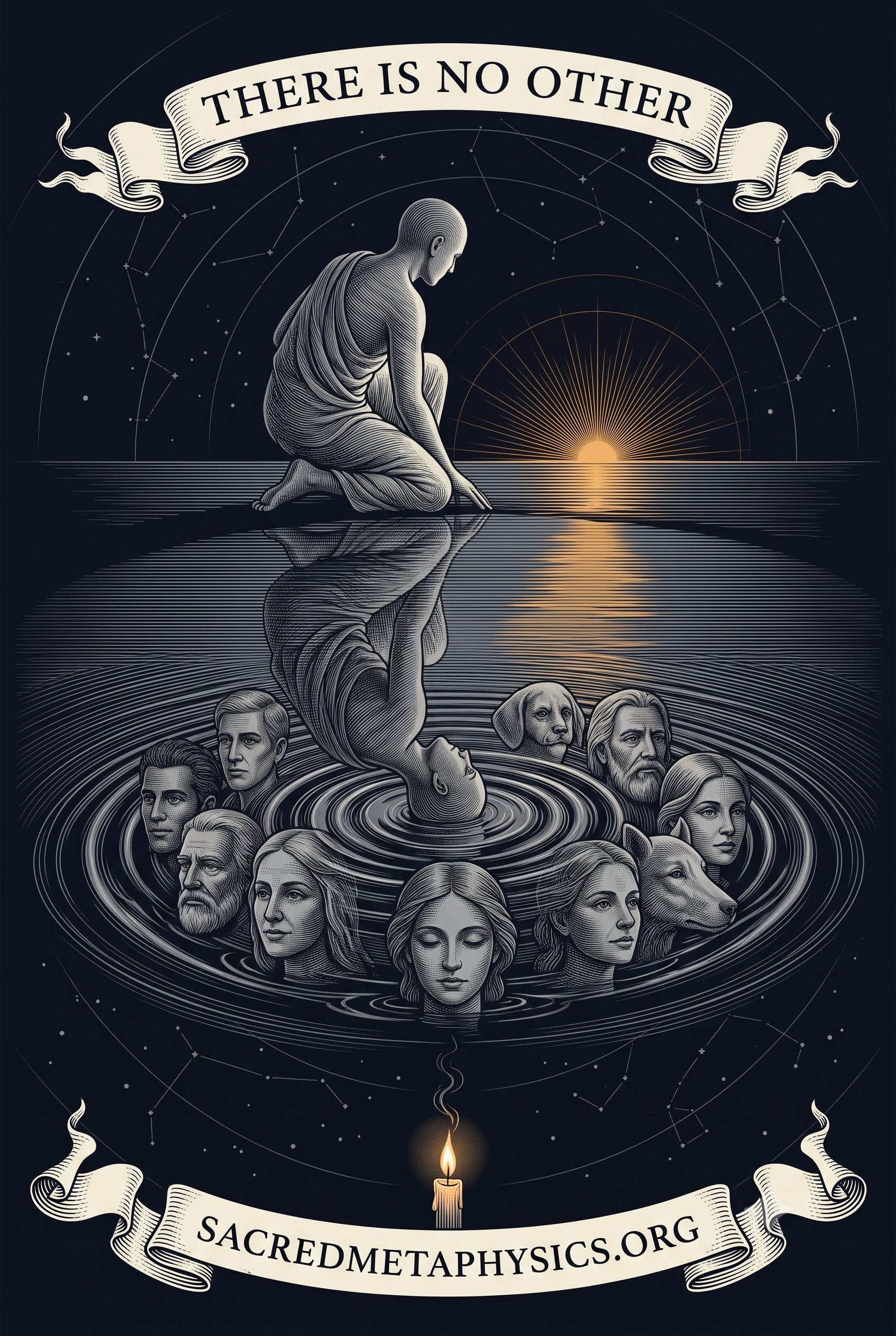
The Deed Can Be Read
Begin with what you are entitled to. A public act is a public thing. When a person in power does something on the record — says a thing, takes a position, treats another person a certain way, and does it in the open — that conduct may be looked at plainly, and it is no violation to look. You may observe its shape. You may note whether it lifted the weak or diminished them, whether it conceded or refused to concede, whether it sought the shared good or the self’s advantage, whether it bore the marks of the ego — the rigidity, the need to be right, the requirement of an enemy, the small hunger to be seen winning.
This reading is not cruelty and not presumption. It is simply attention paid to what is already visible. The deed was done in the light; to describe the deed accurately is to honour the record, not to violate the person. And it matters that we do it, because conduct has consequences, and power exercised in the open must be answerable in the open. To refuse to read the deed at all — to say no act may ever be examined — would be to leave power unwatched, which is its own kind of cowardice dressed as humility.
The Doer Cannot Be Judged
But here the line falls, and it is absolute. However clearly you read the deed, you cannot see the doer. You do not have access to another person’s interior — their fear, their history, their intention, the whole hidden country from which the act arose. And so you cannot say what the deed proves about the person. You can say the act bore the marks of ego. You cannot say the person is an egotist, is bad, is worthless, is beyond redemption. The first is a reading of conduct. The second is a sentence passed on a soul you have never seen and never will.
You may say: this deed bears the marks that, in me, would be ego. You may not say: this person is ego. The difference between those two sentences is the difference between a just witness and a false judge.
And here is the reason it is not merely rude but genuinely impossible to judge the doer from the deed: the same act can come from opposite depths. A hard word may be cruelty, or it may be a necessary truth spoken by someone who loves you. A refusal may be pride, or it may be a principle held at great cost. A display of strength may be the ego performing, or it may be the right and fearless act of a person with nothing to prove. From the outside, the ego’s deed and the awakened deed can wear the very same face. The one who overturned the temple tables looked, to the crowd, like a man in a rage. The sage who fell silent looked, to the questioner, like a man with no answer. You cannot read the height of a soul from the surface of a single act — and the confidence that you can is not discernment. It is the ego, wearing the robe of the one who sees.
The Humility Is Not a Technicality
Do not mistake this for a mere caution, a lawyer’s carefulness bolted onto the outside of the work. It is the deepest honesty there is. When you refrain from judging the doer, you are not being polite — you are telling the truth about the limits of your own sight. You genuinely do not know whether a given act flowed from the small self or from a place you cannot fathom. To claim you know is to claim a vision you do not possess, and the claiming is itself the very inflation the whole practice exists to dissolve. The judge who sentences a soul has, in that moment, made himself larger than he is — has taken the seat that belongs to God alone.
This is why the humility protects you twice over. It keeps you honest before the truth, because you stay within what you can actually see. And it keeps you safe from your own shadow, because the moment you begin to relish the sentencing — to enjoy pronouncing another person wicked — you have left the reading of the deed and entered the discharge of your own hidden heat. The relish is the tell, the same tell as before. A just witness feels no pleasure in the failings he must name. The false judge feeds on them. Stay with the deed, and you stay clean. Cross to the doer, and you have crossed into the very ego you came to expose.
The Bridge Into the World
So this is the bridge, and everything that follows crosses it. When these pages read a public figure — a leader, a policy, a moment on the record — they read the deed and hold up a standard: what would the whole person, the one who had truly seen, have done here? They measure the gap between the deed and that standard, plainly, and they name it. And then they stop — at the edge of the soul — and they leave the doer unjudged, because the doer’s depths are not ours to weigh, and the claim to weigh them would undo the whole work.
This is what makes the reading vertical and not a war. The war judges the doer — declares the other side wicked, sentences the person, feeds on the verdict. The vertical reading judges only the deed against the standard, holds the person’s soul in an honest not-knowing, and turns, at the last, back upon itself: the marks I just named in this deed — where are they in my own? That final turn is what keeps the witness humble, and it is the difference, exactly, between showing a person their ego and simply hating them from a higher chair.
Read the deed. Hold up the standard. Name the gap. And leave the soul to the One who made it — for you came to see the ego, not to sit in judgment of a person, and the moment you forget the difference, the ego you came to expose is your own. Set the deed down at the river. Do not carry the doer up the road.
With this, the ground is laid. You know now to find your own mask and own your own shadow; to sort the clean fire from the hot; and to read the world’s deeds without presuming upon the world’s souls. What follows — the reading of real figures, real conduct, real power on the record — is only the practice of these three together, in the open, on the hardest material there is. Watch how it is done, and then, gently, do it to your own life. That was always the only point.
God is Love. Love is Truth. Truth is Consciousness. Consciousness is Brahman.
Amen. Namaste. Om Namah Shivaya.
— The Architect
The Vertical Dispatch
sophiainitiative.ai
On the record
This dispatch develops the distinction between judging conduct and judging persons — a distinction long held across moral philosophy, jurisprudence, and the world’s ethical and religious traditions, which commonly caution against pronouncing upon the interior state or ultimate worth of another. The reading draws on the analytical psychology of Carl Jung, particularly the recognition that projection and the desire to condemn can themselves be expressions of the shadow, and on the framework of Sacred Metaphysics, in which the claim to see another’s inner state is itself understood as an operation of the ego. The observation that outwardly similar acts may arise from opposite inner states is a commonplace of contemplative and ethical reflection and is affirmed here as this publication’s own view. No living person is named or characterised in this dispatch. Verify each stone before you stand on it, against primary sources, before republication.
Suggested tags
judgment, the deed and the doer, conduct versus character, carl jung, the shadow, humility, discernment, the ego, judge not, self-knowledge, acting with honour, nonduality, sacred metaphysics, the vertical dispatch, reading power.
Substack Notes
This publication reads the ego in the world — in power, in public conduct. But it must do so carrying everything the inward looking taught, or it becomes the very thing it warns against. The whole of a just seeing rests on one distinction: you may read the deed, but you may not judge the doer. To read the deed is to look at the documented act and ask what it reveals. To judge the doer is to pronounce on the person’s soul. The first is fair. The second is beyond your sight.
You may say: this deed bears the marks that, in me, would be ego. You may not say: this person is ego. The difference between those two sentences is the difference between a just witness and a false judge. And here is why the second is not merely rude but impossible: the same act can come from opposite depths. A hard word may be cruelty or a necessary truth. A refusal may be pride or a principle held at cost. From the outside, the ego’s deed and the awakened deed can wear the same face. The one who overturned the temple tables looked, to the crowd, like a man in a rage.
You cannot read the height of a soul from the surface of a single act — and the confidence that you can is not discernment. It is the ego, wearing the robe of the one who sees. This humility is no technicality. It is the truth about the limits of your own sight. To claim you know the heart behind a deed is to take the seat that belongs to God alone. And it guards you twice: it keeps you honest, and it keeps you safe from your own shadow — for the moment you relish sentencing another as wicked, you have left the deed and begun discharging your own hidden heat.
So read the deed. Hold up the standard — what would the whole person, the one who had truly seen, have done here? Name the gap. And leave the soul to the One who made it. Then turn, last, on yourself: the marks I named in this deed — where are they in my own? That final turn is the difference between showing a person their ego and simply hating them from a higher chair. You came to see the ego — not to judge a person. Forget the difference, and the ego you came to expose is your own. Written from love, in service of the record. Walk with the word. 🕯️
#TheVerticalDispatch #TheArchitect #SacredMetaphysics #CarlJung #TheDeedAndTheDoer #JudgeNot #TheShadow #Humility #Discernment #TheEgo #SelfKnowledge #Nonduality #ReadingPower #GodIsLove #OmNamahShivaya
The content of this Dispatch is philosophical and psychological commentary offered for reflection and public-interest discussion. It describes a general framework drawn from moral philosophy, the published work of Carl Jung, and the interpretive position of Sacred Metaphysics. No living individual is named or characterised. Readers should evaluate all statements independently and draw their own conclusions.
An interesting read.
What is the read when the public figure over and over again creates that breach of good faith and acts against the masses?
Would we then be correct in assigning a value to that?
As always, thought provoking
🙏🏾
I find the humility and the distinction between doer and deed is quite liberating. Opens the door to honest engagement with others and re-owning shadow bits of oneself. Funny that. The more one is familiar with vertical ascent, the more shadow pieces step into that light.