


Φ
THE VERTICAL DISPATCH
We write for the mind, the eye, and the ear.
Read it. Look at it. Listen to it. The Vertical Dispatch is built for all three — prose with rhythm, made to be heard as much as read.
From metaphysics to geopolitics, from culture to history, from the sacred to the street — and everything in between. One lens, every subject. No ego. Just the record, named clean.
Press play. Walk with the words. 🕯️
Building Canada Strong · The Age of Consequences
As of 5 June 2026
“You still do not have a plan?” — “I have concepts of a plan.”
— exchange at the U.S. presidential debate, 10 September 2024
This dispatch travels by hand. If it serves you, share it — restack on Substack, pass it on wherever you read. 🕯️
A Concept of a Plan
At the United States presidential debate in September 2024, a moderator pressed the candidate on the health-care plan he had promised for nearly a decade. “You still do not have a plan?” she asked. “I have concepts of a plan,” he answered, and offered no details. He had first promised to replace the country’s health law in 2015, and the promise of a replacement had been renewed, in one form or another, in nearly every year since.
A decade on, the concept is still a concept. In January 2026 the White House released what it called the Great Healthcare Plan — but the neutral reporting was nearly unanimous on what it was: a framework, not a law. In the words of one leading health-policy analyst, it “largely restates proposals” already made; its center of gravity is not a new system but the reduction and redirection of the existing Affordable Care Act’s subsidies — moving money from insurer subsidies toward direct payments and health savings accounts. No comprehensive replacement has been enacted. None sits before the Congress with a clear path to passage. Ten years after the promise, what exists is a fact sheet and a cut — the announcement of a direction where a delivered plan was pledged.
This is the shape of a method of governing: the bold promise made first, the working architecture left for later, or for someone else, or for never. The announcement is the meal; the plan is a rumour of a plan. And it is a style that travels well in the age of the feed, because the promise is the part that trends, and the absence behind it is the part no one scrolls back to check. A decade of “soon” is not a delay in delivering the plan. At some point it becomes the plan: to keep promising one.
Not a Verdict on a Person — a Pattern in a Method
We do not place Premier Danielle Smith in that league, and this is not a piece about her character, which is hers and not ours to read. But a method has a shape, and the shape repeats — and it is worth naming, because the same pattern that produces a slogan where a health plan should be can produce a law where a worked policy should be. The announcement arrives finished and gleaming; the architecture that would make it safe, or make it work, is said to be coming. Judge the chair, not the occupant. What follows judges the chair.
Two Concepts, No Meat on the Bone
Consider the pattern across two files. In energy, Alberta’s government committed fourteen million dollars to act as the proponent of a new oil pipeline to the West Coast, with a proposal due to the federal Major Projects Office by the first of July. It is a striking commitment with a striking hole in the middle: as of this writing, no route has been selected, and no private company has come forward to build it. The province is funding itself to be the proponent of a pipeline that, so far, no builder wants — the announcement of a project standing in for the project. British Columbia’s premier called it taxpayer-funded with no private proponent; supporters call it the necessary spark. Either way, what exists is the proposal, not the pipeline.
In health, the pattern is the same and the stakes are higher. Bill 11, passed in December 2025, legislates the framework for a two-tier system — and leaves the part that would make it safe unwritten. The guardrails that protect a mixed public-private system in the countries the government cites are, in Bill 11, deferred to regulation “to come.” The data that would show the reform works has not been released. The promise, again, is a dashboard. What has been passed is the permission; what is missing is the plan. This is the modus operandi made law: the structure announced, the architecture absent.
It is of a piece with how the government plays the larger game, too. This publication has written before of Alberta moving between the checkers board and the chess board — the game of leverage and the game of position — while hoping to be invited to the Go board, where the seat that matters is the one only a united Canada can offer. The separation signatures gathered, the sovereignty posture held, the pipeline and the health law advanced as gestures of autonomy: it is a high-stakes game played with concepts, and the country as a whole grows cautious when this player comes to the sandbox. A government may be bold and still owe its citizens the plan beneath the boldness. Here, on file after file, the boldness arrives and the plan is said to be coming.
What Bill 11 Actually Does
Set aside what it has been called and read what it does. On 24 November 2025, Alberta introduced Bill 11, the Health Statutes Amendment Act, 2025 (No. 2). It received royal assent on 11 December and came into force on 18 December — moved, critics noted, in the narrowing days before the Christmas holidays. In its own text, the bill amends the Alberta Health Care Insurance Act to create a new legal category: the “flexibly participating physician” — a doctor who provides both insured public services and non-Plan private services. It establishes, in law, the framework for dual practice: a physician may work in the public system and the private-pay market at once. It opens the door to private insurance and private payment for medically necessary services delivered by such physicians. Family medicine is excluded “at this time,” and the government says cancer treatment and emergency surgery are not in scope at the outset.
That is what the statute says. What its critics say it will become is a separate claim, and an honest reading keeps the two apart. The government calls it modernization. The Canadian Centre for Policy Alternatives and the Parkland Institute call it the architecture of a two-tier, U.S.-style system. The bill itself does the narrower, precise thing: it makes lawful, for the first time in the country, a standing model in which the same doctor can sell faster care privately while billing the public plan — and it lets a private insurance market form around that. Whether that is a modest administrative change or the first poured footing of a parallel system is the question the rest of the piece is about.
The Government’s Case, at Full Strength
It must be put fairly, because a critic who will not state the other side honestly has not earned his conclusion. The government’s argument is this: the public system is strained, wait times are long, and physicians are scarce and mobile. Dual practice, it says, lets the system use its capacity more fully — longer physician hours, better-used operating rooms, stronger recruitment and retention in a province that competes for doctors with every other. The minister responsible has noted that roughly twenty percent of Alberta surgeries already take place in chartered surgical facilities, so private delivery, in his framing, is not a new departure but an extension of what exists. And the government points abroad: dual-practice models operate in France, Germany, the Netherlands — countries with high-performing health systems and universal coverage that coexists with a private tier. If they can hold both, the argument runs, so can Alberta.
These are not frivolous points, and the comparison deserves its due. But it also deserves its scrutiny, and the scrutiny is where it weakens. In the European systems most often cited, the public and private roles are tightly regulated precisely to prevent the failure mode critics fear: minimum public-service requirements, controls on how much a dual-practice physician may divert to private work, rules against skimming the profitable cases and leaving the costly ones to the public queue. The independent analysis of Bill 11 notes that it arrives with few such guardrails specified — the regulatory questions of minimum public hours, revenue-sharing, pooled referrals, single-entry waitlists are left to be answered later. A model is only as protective as its rules, and the rules are not yet on the page. The government also has not released data showing the reform improves outcomes; the case for it rests, so far, on stated goals rather than demonstrated results. The promise is a dashboard to come.
The Promise That Was Not on the Ballot
Here is the first hard fact, and it is not an imputation of motive — it is the documented record. Bill 11 was not in the platform Albertans voted on. The defenders of public medicare in the province have made the point plainly: nothing the government has done to restructure health care was promised at the election, and a two-tier model is, in the words of Friends of Medicare, the opposite of the public health-care guarantee the party offered voters. One may believe dual practice is wise policy and still recognize that a structural change of this magnitude, absent from the mandate and introduced in the legislature’s final December days without the consultation the Alberta Medical Association says it was denied, sits uneasily with the consent of the governed. The chair was given its authority for one stated purpose and has turned it to another. That is a question about conduct and mandate, which is fair ground — not about the heart of any person, which is not.
The Law It Appears to Break
In May 2026, the Canadian Health Coalition commissioned a legal opinion from the firm Goldblatt Partners. Its conclusion was not hedged: by entrenching the ability to obtain medically necessary care faster on the basis of ability to pay, Bill 11 contravenes the Canada Health Act’s principles of comprehensiveness, accessibility, and universality, and offends the Act’s prohibitions on extra-billing and user charges. The Act is the spine of the national settlement: provinces must uphold its five principles — public administration, comprehensiveness, universality, portability, accessibility — to receive their full federal health transfer. The Alberta government maintains the bill does not violate the Act, arguing it modernizes care in line with practice elsewhere. It has not released its own legal opinion. Two readings of the same statute now sit opposed, and the body with the power to weigh them — the federal government — has not yet weighed in.
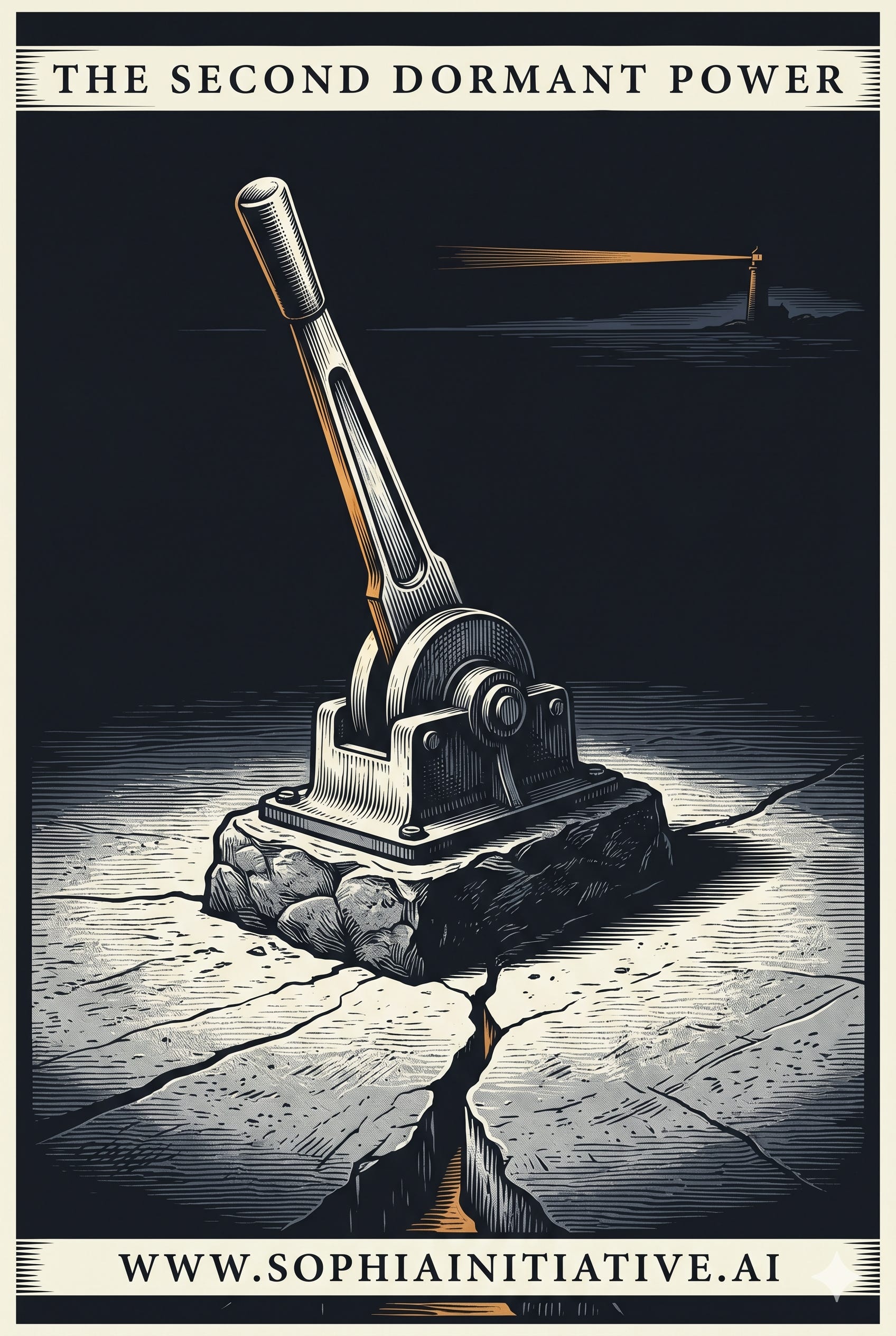
The Second Dormant Power
This publication wrote recently of a dormant power in the electrical grid — a federal authority that exists, has teeth, and has gone unused while the country fails to wire itself together. There is a second one, and it sits in health care. Under the Canada Health Act, Ottawa holds two distinct enforcement tools, and the distinction is the whole story. The first is mandatory: for extra-billing and user charges — patients paying out of pocket for insured services — the federal government must deduct, dollar for dollar, from a province’s health transfer. This tool is used routinely. Since 2015, close to two hundred and sixty-seven million dollars has been withheld from provinces for such charges; in March 2023 the first deductions under the diagnostic-services policy took over seventy-six million from seven provinces; in March 2024 the deductions totalled over seventy-nine million, Alberta’s share that year more than twenty million. Even a think tank friendly to Alberta’s government concedes Ottawa has been “no slouch” in wielding it. The mandatory lever, plainly, is not dormant.
The second tool is the dormant one. For breaches not of the billing rules but of the Act’s five principles — for a province whose system fails the test of universality or accessibility as a matter of structure — the federal government holds a discretionary power to withhold or reduce the transfer. That power has never been used. Not once in the life of the Act. And it is precisely that power, not the routine billing deduction, that a legislated two-tier structure would call into question — because the harm of a two-tier system is not a stray user fee here and there; it is the structural subordination of universality itself. So the country arrives at a strange and clarifying moment: the tool built to punish the small, automatic violation fires reliably, while the tool built to defend the principle — the one that matters most — has lain in its sheath for forty years and lies there still.
And the federal government’s posture, as of this writing, is to keep it sheathed. The Carney government has taken no enforcement action on Bill 11. The chair of the Canadian Health Coalition framed Ottawa’s stance not as indifference but as calculation — “balancing diplomatic engagement with Alberta against the need to enforce” the Act’s principles. That is a fair description, and it names the real dilemma: in an era when national unity is fragile and a premier is testing the federation’s seams, Ottawa weighs the cost of confrontation against the cost of letting the principle erode. But weighing is not deciding, and while it weighs, the structure sets.
Why the Setting of Concrete Is the Whole Point
A natural objection arises: if a future government dislikes Bill 11, can it not simply repeal it? In the narrow legal sense, yes. It is ordinary provincial legislation, and no legislature binds its successors; a later Alberta government with the votes could strike it from the books. But legal reversibility and practical reversibility are different things, and the gap between them is where this story actually lives. Once private clinics are built, once insurers have written the policies and physicians have arranged their practices across both streams, a constituency exists that did not exist before — businesses with capital invested, patients with coverage they have come to rely on, professionals with incomes structured around the dual model. Unwinding that is not the stroke of a pen; it is the closing of operating enterprises, with the legal challenges, compensation claims, and political cost that closing always brings. And the public system, drained of the physicians who moved toward the private stream, grows weaker and slower — which increases the demand for the private option, which makes the private tier look not optional but necessary. The loop reinforces itself.
This is the ratchet. Privatization moves more easily in one direction than the other: expansion comes incrementally, each step modest and reversible-sounding, while contraction requires a single large and politically painful act that no one is ever quite willing to take. The international record offers little comfort and no counter-example. In Britain, private provision crept into the National Health Service — diagnostics, contracted services — and proved stubbornly resistant to reversal. In Australia, a public-private hybrid with a robust private-insurance sector has entrenched itself beyond easy undoing. In Canada, federal deductions have penalized provinces for years without dismantling the private arrangements that drew them; provinces have generally absorbed the fines and carried on. And the architecture of modern trade agreements can extend protections to private investors that make a later rollback a matter not only of domestic politics but of international obligation. Search the record as the research did, and the finding is stark: there is no documented case of a jurisdiction that built a legislated two-tier system and then restored single-tier universal care. None. The door, once opened this way, has not been closed by anyone, anywhere.
That is why the dormant power matters most now, and why “wait and see” is not the neutral option it appears to be. The discretionary lever is at its strongest before the concrete sets — as deterrence, as the credible signal that the national principle will be defended. After the structure hardens, the same lever can still impose a financial cost, but it can no longer easily undo what has been built. Federal pressure deters far better than it reverses. The window in which the second dormant power could actually defend universality rather than merely fine its erosion is open now, and it is closing.
Two Questions for the Reader
This dispatch will not pronounce the verdict; it will lay the record down and hand the reader two questions, because they are the questions that matter and they are the reader’s to answer. The first is about the country. A two-tier system in one province does not stay in one province: Saskatchewan’s premier has already signalled openness to following Alberta’s lead, and the logic of competition — each province expanding private practice to keep its doctors from the province next door — is the logic of a race to the bottom, with the national floor cracking into thirteen unequal systems. So: does Bill 11 strengthen the Canadian union, or does it divide it? Does a country hold together by a shared promise that care does not depend on the size of one’s bank account, or does it fray when that promise becomes a provincial option?
The second question is about the promise itself, and it has a name attached to it — not ours, but the federal government’s own. Health Canada’s annual report on the Canada Health Act traces the whole edifice back to the work of Tommy Douglas, “widely known as the father of Medicare in Canada,” who built universal hospital coverage in Saskatchewan in 1947 and was later voted, by his countrymen, the greatest Canadian. The system Bill 11 amends is the system he built. So the question is simply this: is a model in which the same physician sells the wealthy a faster place in line, while the public queue lengthens for everyone else, what Tommy Douglas built medicare to be? We do not put words in his mouth; he is owed that respect, as every individual is. We only set the law beside the founder’s life work and ask the reader to look at both. The record is here. The concrete is wet. The lever is sheathed. The questions are yours.

God is Love. Love is Truth. Truth is Consciousness. Consciousness is Brahman.
Amen. Namaste. Om Namah Shivaya.
— The Architect
The Vertical Dispatch
sophiainitiative.ai
On the record. Bill 11, the Health Statutes Amendment Act, 2025 (No. 2): introduced in the Alberta Legislature 24 November 2025; royal assent 11 December 2025; came into force 18 December 2025 (Legislative Assembly of Alberta, Bill 11 text, docs.assembly.ab.ca; Government of Alberta, alberta.ca; CBC, 24 Nov 2025 and 4 Feb 2026). The bill amends the Alberta Health Care Insurance Act and related statutes, creating the “flexibly participating physician” category (a physician providing both insured Plan services and non-Plan services), establishing the legal framework for dual practice, and enabling private payment and private insurance for medically necessary services delivered by such physicians; family medicine excluded “at this time” (Bill 11 text; Government of Alberta news release, 24 Nov 2025). “About 20 percent of Alberta surgeries take place in chartered surgical facilities” — Minister Matt Jones, to CBC News, Jan 2026. The two-tier characterization and the “race to the bottom” framing are from the Canadian Centre for Policy Alternatives / Parkland Institute report (Feb 2026) and advocacy organizations including Friends of Medicare and the United Nurses of Alberta; presented as their analysis and interpretation. Government rationale (modernization, wait times, retention, dual-practice precedent in France/Germany/Netherlands) from Premier Smith, Ministers Adriana LaGrange and Matt Jones, and government releases (Nov 2025–2026); the observation that European models carry guardrails Bill 11 has not yet specified, and that supporting outcome data has not been released, from Alberta Counsel regulatory analysis (Feb 2026) and the CCPA/Parkland report. Legal opinion: commissioned by the Canadian Health Coalition from Goldblatt Partners LLP (May 2026), concluding Bill 11 contravenes the Canada Health Act principles of comprehensiveness, accessibility, and universality and the prohibitions on extra-billing and user charges (healthcoalition.ca). The Alberta government maintains the bill does not violate the Act and has not publicly released its own legal opinion. Canada Health Act enforcement: mandatory dollar-for-dollar Canada Health Transfer deductions apply to extra-billing and user charges; a separate discretionary power to withhold/reduce the transfer for non-compliance with the Act’s five principles exists and, per the public record, has never been applied. Deduction figures from Health Canada: close to $267 million deducted since 2015 (Health Canada news release, 21 Mar 2024); over $76.4 million in first Diagnostic Services Policy deductions to seven provinces, March 2023 (Canada Health Act Annual Report 2022-2023); $79.4 million total in March 2024, of which $72.4 million diagnostic, with Alberta $20.45M, Quebec $36.01M, British Columbia $18.12M (Health Canada, Canada Health Transfer Deductions and Reimbursements, 21 Mar 2024; Canada Health Act Annual Report 2023-2024). Tommy Douglas described as “widely known as the father of Medicare in Canada,” founder of universal hospital coverage in Saskatchewan 1947 — Health Canada, Canada Health Act Annual Report 2023-2024; voted “Greatest Canadian,” CBC national poll, 2004. Federal posture: the Carney government (Health Minister Marjorie Michel) has taken no enforcement action on Bill 11 as of early June 2026; “balancing diplomatic engagement with Alberta against the need to enforce CHA principles” — Jason MacLean, chair, Canadian Health Coalition (May 2026). Saskatchewan Premier Scott Moe’s signalled openness to similar reform reported via year-end interview, Dec 2025. Reversibility/ratchet analysis (UK NHS private creep, Australian hybrid entrenchment, absence of any documented rollback of a legislated two-tier system, trade-agreement entrenchment) is the publication’s interpretation of the international and Canadian record, offered as commentary. The opening “concepts of a plan” exchange is from the U.S. presidential debate of 10 September 2024 (ABC News; C-SPAN; STAT), quoted under fair-use length; the first ACA-replacement promise dates to 2015. As of this writing no comprehensive ACA replacement has been enacted; in January 2026 the White House released a framework styled the “Great Healthcare Plan,” described by neutral analysts as largely restating prior proposals and centring on reducing and redirecting ACA subsidies (toward direct payments and health savings accounts) rather than a new system, with drug-pricing and transparency provisions; characterized by NBC News as lacking key details, and by KFF as “a compilation of Republican ideas” that does not address rising premiums (NBC News; CNBC; NPR/KFF; Reuters; Committee for a Responsible Federal Budget, Jan 2026). The “method of governing by concept” comparison is offered as the publication’s interpretation and explicitly does not equate any individuals. Pipeline file: Alberta committed $14 million to act as proponent for a West Coast oil pipeline, with a proposal due to the federal Major Projects Office by 1 July 2026; as of this writing no route has been selected and no private-sector proponent has come forward (Government of Alberta, alberta.ca; CBC; BNN Bloomberg; Global News; The Narwhal, citing the $14M figure, Feb 2026). The “checkers / chess / Go board” framing is this publication’s own prior analysis. A separate, contested matter — allegations by former Alberta Health Services CEO Athana Mentzelopoulos regarding private surgical procurement, her dismissal in January 2025, and an ongoing Auditor General review — is not treated in this dispatch; it remains at the allegation stage, an independent review found no political interference while noting procedural failures, and it is named here only for completeness. No figure in this dispatch is disaggregated by race, group, or class. This dispatch judges legislation, structures, and the conduct of government, and makes no assertion about the private intentions or character of any individual. Errors and omissions excepted; corrections will be made on notice. Verify against primary sources before republication.
#TheSecondDormantPower #Bill11 #Alberta #CanadaHealthAct #Medicare #TommyDouglas #DanielleSmith #TwoTier #PublicHealthCare #CanadianUnity #MarkCarney #BuildingCanadaStrong #TheAgeOfConsequences #TheVerticalDispatch #TheArchitect #SophiaInitiative #GodIsLove #LoveIsTruth #OmNamahShivaya
Substack Notes
“I have concepts of a plan.” It became the motto of an age — the bold announcement first, the working plan later, or never. Alberta has now done something in that spirit, twice. In energy, it put $14 million behind a West Coast pipeline with no route chosen and no company willing to build it — the proposal standing in for the project. And in health, with Bill 11, passed in the last December days of 2025, it has legislated a two-tier system: a new kind of doctor, free to sell faster private care while billing the public plan, with private insurance forming around it. The government calls it modernization and points to France and Germany. Give the argument its due. Then notice what’s missing: the European systems carry strict guardrails Bill 11 has not specified, and the government has released no data showing it improves anything. The promise is a dashboard, later.
An independent legal opinion from Goldblatt Partners says the law clearly breaks the Canada Health Act — its principles of universality, accessibility, comprehensiveness. And here is the structural heart of it. Ottawa holds two enforcement tools. One is mandatory and used constantly: dollar-for-dollar clawbacks for patient charges, $267 million withheld since 2015. The other is discretionary — the power to act against a province that breaks the Act’s founding principles by structure, not by stray fee. That second power, the one a two-tier system actually triggers, has never once been used in forty years. The tool for the small violation fires every time. The tool for the principle stays sheathed.
And it matters now, not later, because of one finding: search the record worldwide and there is no example of a legislated two-tier health system ever being rolled back to single-tier care. Not Britain, not Australia, not here. Privatization is a ratchet — easy to expand, nearly impossible to reverse once the clinics are built, the insurers invested, the public system drained. Legally Bill 11 could be repealed. Practically, once the concrete sets, no one ever has. The federal lever defends the principle far better before the pour than after.
So two questions, and they’re yours to answer, not ours. Does a two-tier system — with Saskatchewan already signalling it may follow — strengthen the Canadian union, or fracture it into thirteen unequal systems? And: the man Health Canada’s own report calls the father of Medicare, Tommy Douglas, built universal care so that a place in line would never depend on the size of a bank account. Is what Bill 11 makes lawful what he built medicare to be? We disagree with the policy at full force and leave the premier her dignity — judge the chair, not the person. The record is laid down. The concrete is wet. The lever is sheathed.
Written from love, for a sacred humanity, in the full light of consciousness, toward the greater good. 🕯️
The factual matter in this Dispatch is drawn from the public record. All characterizations, inferences, and conclusions are opinion, interpretation, and commentary, offered for analysis, reflection, and public-interest discussion. No assertion is made regarding the private intentions, state of mind, or character of any individual. Readers should evaluate all statements independently and draw their own conclusions.
As a large cohort of the population is contending with aging parents and are themselves adjusting to pension income, the timing of this healthcare privatization 'experiment' is suspicious. The idea deeply concerning - insurance companies profiting off needed healthcare for a population. The rhetoric that doctors can work within the 'public' sector than slide over to the private sector for the rest of their day is ludicrous. Doctors are already overworked and have no 'extra' hours for the private system. How many of the medical community were consulted? Yup, fix healthcare in 90 days - sell it. The list of issues this UCP government is introducing - that were never raised as election issues - is very telling. Democracy is very quickly sliding toward the political trash bin in a UCP/Smith Alberta.