


Φ
THE VERTICAL DISPATCH
We write for the mind, the eye, and the ear.
Read it. Look at it. Listen to it. The Vertical Dispatch is built for all three — prose with rhythm, made to be heard as much as read.
From metaphysics to geopolitics, from culture to history, from the sacred to the street — and everything in between. One lens, every subject. No ego. Just the record, named clean.
Press play. Walk with the word. 🕯️
This dispatch travels by hand. If it serves you, share it — restack on Substack, and pass it on wherever you read. 🕯️
The Age of Consequences · The Integrated Shadow
As of June 20, 2026
“My soul is still in Rwanda.”
— Lieutenant-General Roméo Dallaire
A reader wrote to us this week — a veteran, who called his own words a ramble. They were nothing of the kind. He gave us a sentence from his training that has not left me since: an officer, he said, is a manager of violence. The role is to husband your resources and use the minimum force necessary to achieve the mission. He named the paradox in it, and he named the man who has lived that paradox more publicly, and at greater cost, than any Canadian alive. He reached for Roméo Dallaire. So this dispatch is his, in its seed — the soldier who handed us the door, and asked nothing for it.
We have spent these last dispatches naming a single disease from many angles: the tribal god, the exiled feminine, the killing of the future, the numbness, the rage. All of it is one thing — the shadow exiled, the dark capacity locked out of the hall and therefore acting without restraint. This dispatch is the turn. Because there is another way for a man to hold his own darkness, and Canada produced its most complete example, and the world watched what it cost him.
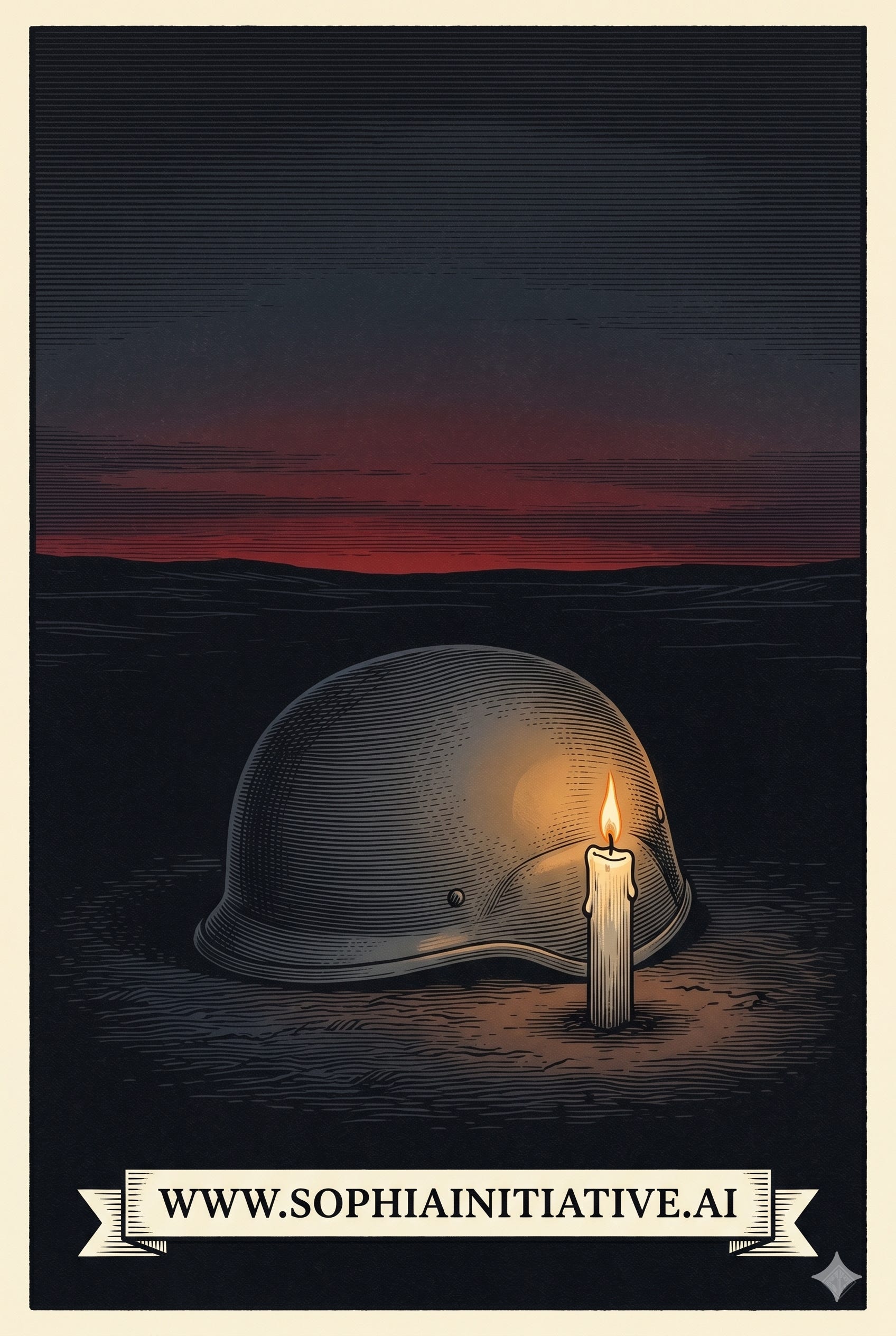
The Manager of Violence
Carl Jung gave us the word for the part of a man he will not own — the shadow — and warned that what we exile, we are then ruled by. But Jung’s teaching did not end at naming the shadow. It ended at integrating it: bringing the disowned capacity back through the door, owning it, holding it conscious. The integrated shadow is not the man with no violence in him. It is the man who knows exactly what he is capable of, and for that reason can govern it. The hunter who respects the prey. The officer who spends the minimum. The one who could destroy, and chooses the stayed hand.
That is the man our reader described, and that is the man Dallaire is. In 1993 he took command of UNAMIR, the United Nations peacekeeping mission to Rwanda — a Canadian lieutenant-general, a soldier’s soldier, sent to police a fragile truce under the tightest possible mandate. His powers were constrained by Chapter Six of the UN Charter: he was to be a facilitator, not a combatant, and force was permitted only for self-protection. He was a manager of violence sent into a gathering storm and told, in effect, to manage almost none of it.
The Fax the World Ignored
On the eleventh of January, 1994, Dallaire sent New York a cable that history now calls the genocide fax. A top-level informant — a trainer for the Hutu-extremist Interahamwe militia — had told him that the militias were stockpiling weapons and that he himself had been ordered to register every Tutsi in Kigali, in preparation, in the informant’s words, for their extermination. Dallaire weighed it, believed it, and proposed to act: coordinated raids on the arms caches, before the slaughter could begin. He warned that the operation carried real risk, that it could be a trap, and that it was necessary anyway. He closed the cable in his native French — the only line he wrote in his mother tongue: Peux ce que veux. Allons-y. Where there is a will, there is a way. Let us go.
The reply from New York was the fastest he ever received, and it was a refusal. The head of UN peacekeeping operations at the time — Kofi Annan — ordered that no raids take place. Dallaire was instructed to adhere strictly to his mandate, to hand his information to the very government tied to the killers, and to do nothing. Three months later, the genocide began. Over roughly a hundred days, between five hundred thousand and a million Rwandans, overwhelmingly Tutsi, were murdered. The man who saw it coming had asked for permission to stop it, and been told to stand down.
The Immoral Order
What Dallaire did next is the heart of the matter, and it is why he belongs in this arc. As the killing raged, the international community did not reinforce him — it tried to remove him. The major powers had no appetite for Rwanda; the United States and others resisted any meaningful reinforcement, and the mission was cut rather than grown. At one point the order came to withdraw. Dallaire refused. He called it an immoral order, and he stayed — with a skeleton force, stripped of authority, able to protect almost no one, he would not abandon the field. His peacekeepers sheltered who they could. It was a fraction of what was needed. He stayed anyway.
Here is the integration made visible. A broken man, by his own account, could have obeyed — withdrawn, gone home, let the mandate absolve him. The exiled shadow obeys; it takes the permission the system offers to walk past. Dallaire kept the warrior and the conscience in the same body and let the conscience command the warrior. He would not turn away, and he would not turn the wound into someone else’s blame. He held it. That holding is the whole of the thing.
What a Whole Man Costs
And it cost him almost everything. Dallaire came home in 1994 carrying what he has never put down. Post-traumatic stress. Moral injury — the specific wound of a conscience that was made to witness what it was forbidden to stop. By his own account he attempted to take his own life more than once. Twenty-five years later he told the CBC, plainly, “My soul is still in Rwanda.” He has not asked for the mercy of forgetting, and he has refused it for the rest of us.
On the question of his own command, he has been merciless toward himself and clear about the principle. You are held accountable for your command, he has said; there is nothing that can take that away, and there should never be anything. That is not a broken man’s self-punishment. That is the integrated soldier’s creed — the same one our reader named: you make peace with the weight of command long before you carry it, and you never forget what it cost. Many cannot do it. Some are too eager. Dallaire did it, and was neither.
The Turn
There is a version of the shadow that, having been exiled and then forced to witness horror, curdles — turns to cruelty, to vengeance, to the culling of the herd. We have watched that version govern nations in these pages. Dallaire is the proof of the other path. He took the unbearable wound and turned it outward as protection: he founded the Roméo Dallaire Child Soldiers Initiative, devoted to ending the use of children as weapons of war — the mothers and the young that the hunter, in our reader’s telling, understood in his marrow he must never destroy. He took the worst thing a conscience can carry and made it a shield for the most vulnerable. That is what the integrated shadow does with its pain. It does not pass the wound along. It stands between the wound and the next child.
This is the turn in the arc we have been writing. We named the disease in five dispatches — the exiled half, the tribal god, the numbness, the rage. Dallaire is the first answer. Not a treaty, not an army, not a slogan. One whole man, who kept his soul intact under a pressure built to break it, and paid for the wholeness with his peace, and spent what was left protecting children. Each small candle lights a corner of the dark. He has lit his corner for thirty years, and he has not looked away, and he has asked us not to look away either.
That is the example, and it is a Canadian one, and it is still living. The question the arc has been building toward is the one his whole life answers: when the order is immoral and obedience would cost you nothing, will you refuse it and stay? He did. The soul that would not come apart is the most expensive thing a person can keep — and, on the evidence of this one general, the only thing finally worth keeping.


God is Love. Love is Truth. Truth is Consciousness. Consciousness is Brahman.
Amen. Namaste. Om Namah Shivaya.
Written from love, for a sacred humanity, in the full light of consciousness. Walk with the word. 🕯️
— The Architect
The Vertical Dispatch
sophiainitiative.ai
On the record
Lieutenant-General Roméo A. Dallaire (Ret’d) was Force Commander of the United Nations Assistance Mission for Rwanda (UNAMIR) from 1993–1994. The “genocide fax” of January 11, 1994 — warning of an “anti-Tutsi extermination” plot based on an Interahamwe informant ordered to register Tutsi in Kigali — is documented by the United States Holocaust Memorial Museum and the National Security Archive (George Washington University). The closing line “Peux ce que veux. Allons-y.” and the refusal of arms-cache raids by UN Peacekeeping, then headed by Kofi Annan, are per the Global Centre for the Responsibility to Protect. The constraint of UNAMIR’s Chapter Six mandate, the refusal of reinforcements, the order to withdraw and Dallaire’s refusal of what he called an “immoral” order, are per CNN and CBC. UNAMIR II’s authorization of 5,500 troops came in May 1994, after roughly three months of killing; estimates of the dead range from approximately 500,000 to one million, predominantly Tutsi (USHMM; R2P). Dallaire’s account of PTSD, moral injury, and suicide attempts, and the statement “My soul is still in Rwanda,” are per CBC (2019); “You are held accountable for your command” is per the same CBC interview. Dallaire later served as a Canadian Senator and founded the Roméo Dallaire Child Soldiers Initiative; his account is given fully in his memoir Shake Hands with the Devil (2003), which the present dispatch draws on only at the level of the public record and does not quote. This dispatch was inspired by a reader, a veteran, who is credited with his consent; no private detail of that reader is reproduced. Characterizations of meaning, the “integrated shadow,” and moral interpretation are the author’s commentary, not measured fact, and no claim is made as to any living individual’s private state of mind beyond what they have themselves stated on the public record. The framework of Jung’s shadow is used interpretively. Verify against primary sources before republication.
Suggested tags
Roméo Dallaire, Rwanda, UNAMIR, the genocide fax, moral injury, the integrated shadow, Carl Jung, peacekeeping, Canadian history, the stayed hand, child soldiers, an immoral order
Substack Notes
A reader, a veteran, wrote to us this week and called his own words a ramble. They were nothing of the kind. He gave us a sentence — an officer is a manager of violence, trained to use the minimum necessary — and he reached for the Canadian who has lived that paradox at the greatest cost: Roméo Dallaire. So this dispatch is his in its seed, and it is the turn in the arc we have been writing.
We have named a single disease from many angles — the tribal god, the exiled feminine, the numbness, the rage: the shadow exiled, the dark capacity locked out of the hall and acting without restraint. Dallaire is the other path. The integrated shadow: the man who knows exactly what he is capable of and for that reason governs it. In 1994 he warned the world of the coming genocide in the now-famous fax of January 11, was refused, was told to withdraw — and refused what he called an immoral order, and stayed.
It cost him his peace. PTSD, moral injury, the wound of a conscience made to witness what it was forbidden to stop. Twenty-five years on he said simply, “My soul is still in Rwanda.” And then he did the thing the integrated shadow does with its pain: he turned it outward as protection, founding the Roméo Dallaire Child Soldiers Initiative — standing between the wound and the next child rather than passing the wound along.
This is the first answer in an arc that has, until now, only named the disease. Not a treaty, not an army, not a slogan — one whole man who kept his soul intact under a pressure built to break it. The question his life answers is the one we have all been circling: when the order is immoral and obedience would cost you nothing, will you refuse it and stay? He did. Written from love, in service of the record. Walk with the word. 🕯️
#TheVerticalDispatch #TheArchitect #SophiaInitiative #RomeoDallaire #Rwanda #UNAMIR #TheGenocideFax #MoralInjury #TheIntegratedShadow #CarlJung #TheStayedHand #GodIsLove #LoveIsTruth #OmNamahShivaya
The factual matter in this Dispatch is drawn from the public record. All characterizations, inferences, and conclusions are opinion, interpretation, and commentary, offered for analysis, reflection, and public-interest discussion. No assertion is made regarding the private intentions, state of mind, or character of any individual beyond their own public statements. Readers should evaluate all statements independently and draw their own conclusions.
A memory surfaced while I was writing this, and I'll set it down because I think it belongs.
I was fourteen, maybe fifteen. I had a poster on my wall — "Death Before Dishonour." A soldier dying, draped over his rifle, blood drifting from him. I thought it was strong. I thought it was honest. I thought it was what a man was supposed to admire.
My mother asked very little of me, ever. But she asked me to take that poster down — the only time I can remember her pressing something on me that plainly.
What I did not understand then, and understand now, is that my mother had seen war. Not in a film, not on a wall. She had lived through it, as a young woman, in Europe, and she carried what it cost in a way I was far too young to read. So when she looked at her boy hanging death on his wall and calling it honour, she was not objecting to a poster. She was looking at the lie of it — the dressing-up of the very thing that had taken her world — and she needed it gone from the wall of the child she had brought to safety.
She knew in her marrow what I am only now learning to put into words: that the worship of the violent end is not strength. It is the exiled shadow, romanticized. "Death before dishonour" is the creed of a man who has not faced his darkness, only decorated it. My mother had faced it. She answered it with the only request she ever truly pressed on me.
She was the stayed hand. She lit the corner. I just took fifty-some years to see it.
Thank you, Mum.
Thank you! Appreciate every single like.