

Φ
THE VERTICAL DISPATCH
We write for the mind, the eye, and the ear.
Read it. Look at it. Listen to it. The Vertical Dispatch is built for all three — prose with rhythm, made to be heard as much as read.
From metaphysics to geopolitics, from culture to history, from the sacred to the street — and everything in between. One lens, every subject. No ego. Just the record, named clean.
Press play. Walk with the words. 🕯️
This dispatch travels by hand. If it serves you, share it — restack on Substack, and pass it on wherever you read. 🕯️
The Age of Consequences
June 10, 2026
“A whole civilization will die tonight, never to be brought back again.”
— The President of the United States, Truth Social, April 7, 2026
Why We Are Here
Regular readers of this publication know what we are not. We are not a Washington bureau. We are not a Trump monitor. We do not cover the daily convulsions of American political life — not because they are unimportant, but because the gravitational pull of that story has already consumed most of the Canadian media landscape, leaving the structural, sovereign, and civilizational questions on this side of the border systematically undercovered. That is the gap The Vertical Dispatch exists to fill.
We did not want to be here today.
We are here because what occurred between February and April of 2026 crossed a threshold that cannot be observed from a professional distance and still claim the name of serious analysis. On the morning of April 7 — hours before a deadline he had set for himself — a sitting President of the United States, holding nuclear command authority, posted the eleven words above as a negotiating position for the reopening of a shipping lane. In the days before, he had threatened to demolish every bridge and every power plant in a country of ninety million people, and possibly its desalination plants besides, and said on camera that he was “not at all” concerned about war crimes. When his press secretary was pressed at the podium on why the President was threatening what experts said could amount to a war crime, she answered by warning that the United States possesses capabilities “beyond Iran’s wildest imagination.” Asked days later about the post itself, the President told an interviewer, “I’m fine with it.”
The scholars of the law were not. Oona Hathaway of Yale Law School, director of its Center for Global Legal Challenges, said the President’s statements, taken in their totality, “constitute threats to destroy civilians and civil objects” — the precise conduct international humanitarian law exists to prohibit. Mathias Risse, faculty director of Harvard’s Carr-Ryan Center for Human Rights, called the April 7 post “the clearest case of declared genocidal intent in modern international criminal law.” Amnesty International characterized it as a potential threat of genocide demanding urgent global action to prevent atrocity crimes. Iran’s representative at the United Nations called it incitement. These are not anonymous voices. They are the people whose profession is the naming of such things.
His partner in this enterprise, Benjamin Netanyahu, arrived at the Iran war already under indictment. The International Criminal Court issued a warrant for his arrest in November 2024, on charges including the war crime of starvation as a method of warfare and crimes against humanity including murder and persecution. In April of this year, on the day of the President’s deadline, Israeli warplanes struck bridges and railways inside Iran — attacks on the objects civilian life depends upon, the same category of conduct for which the ICC has indicted Russia’s former defence minister and its chief of the general staff over the winter campaign against Ukraine’s power grid.
Two men. One already indicted. One whose declared intent the scholars of the law have called the clearest in the modern record. No congressional war authorization — the House was out of session, and its Democratic leadership demanded it be recalled to end the war. No United Nations Charter basis — a point Canada’s own Prime Minister would eventually half-concede. No proportionality doctrine that distinguishes warfare from massacre.
We name this because it has a name. We will not name it again in this publication unless the record demands it.
What This Means for Canada — and Why Carney’s Silence Is the Story We Are Actually Covering
The Vertical Dispatch does not report on Washington. It reports on Canada. And the Canadian dimension of this war is a story of institutional failure that has received a fraction of the scrutiny it deserves.
On February 28 — the day the strikes began, hours after the first explosions were reported — Prime Minister Mark Carney issued a statement from Mumbai containing six words that did the work of the whole: “Canada supports the United States acting.” The full sentence endorsed American action to prevent Iran from obtaining a nuclear weapon and to prevent its regime from further threatening international peace and security. It was issued before his caucus was consulted, before any parliamentary debate, before any independent legal assessment, and before the full architecture of American war aims was visible to the Canadian public. Liberal MPs later told The Hill Times the statement caught them off guard; one asked, in print, “what the hell” it was.
Lloyd Axworthy, the former Liberal foreign affairs minister who helped build the International Criminal Court, compared the moment unfavourably to 2003, when Canada declined to join the invasion of Iraq because it could not be justified under the United Nations Charter. Iran, he wrote, is “the seventh country against which President Trump has ordered unilateral use of force” while in office — a blaring alarm, he argued, for a middle power like Canada.
To be fair to the record — and this publication is fair to the record even when the record is inconvenient to its thesis — the Prime Minister moved. By March 4, in Sydney, he said he supported the strikes with some regret, and noted that the United States and Israel had acted without engaging the United Nations or consulting allies, including Canada. Days later he went further still: the strikes, he said, appear “inconsistent with international law.” And then, in the same breath, the retreat: it was for others more expert than he, he said, to make that determination. The Prime Minister of Canada — a man who has governed two G7 central banks and lectured the world at Davos on the rules-based order — declared himself insufficiently expert to finish his own sentence.
Then April came, and with it the post threatening a civilization. The Prime Minister did not call it what it was. Asked directly about the President’s words, he said leaders must choose their words and act prudently, and then: “we urge all parties in this war to follow those responsibilities” — the responsibility not to target civilians or civilian infrastructure — without naming the President or the United States. All parties. As though the asymmetry between a nuclear-armed superpower threatening civilizational destruction and the country beneath its deadline were a matter requiring diplomatic evenhandedness.
Why? His own caucus has answered, on the record. In May, Liberal MPs described the Prime Minister to The Hill Times as “risk-averse” on this file — avoiding a stronger stance, in their account, over fears of Trump backlash and CUSMA fallout, with the agreement’s review falling due on July 1 and more than $3.6-billion in goods crossing the border every day. We make no claim about what is in the Prime Minister’s mind; we cannot see it, and we do not pretend to. But his own members’ explanation, offered to a newspaper of record, is trade arithmetic. Whatever the intent, the record has the shape of a moral response modulated by a negotiating calendar.
This is the Go board, and Canada is playing checkers.
The energy consequences are not abstract. Iran closed the Strait of Hormuz on the war’s first day, and global energy prices went into historic shock; the closure was paused in mid-April for the duration of the Lebanon truce, and an American naval blockade of Iranian ports — in force since April 13 — took its place at the chokepoint. Canada’s own energy pricing, export capacity, and the economic assumptions beneath every fiscal projection the Carney government has made are downstream of a war our Prime Minister endorsed on its first day and has named, at most, halfway since.
Canada is not a bystander to this war. It is a first-day endorser whose language never again matched the clarity of its endorsement — except once, in the other direction. We come to that now.
As of June 10, 2026 — The Record Under Construction
The ceasefire is not a peace. It is a pause between men who have demonstrated they will not be restrained.
This past weekend — the war’s hundredth day — Iran and Israel exchanged their worst strikes since the April ceasefire: Iranian ballistic missiles toward Israel, Israeli retaliation by air, after the IDF struck southern Beirut days into the latest Lebanon truce. A senior Iranian official, Ebrahim Azizi, told CNN that Tehran sees no serious American will to reach a workable framework, and claimed the United States had agreed at the outset of negotiations to release Iran’s frozen overseas assets and has since shown no willingness to do so; a military adviser to the Supreme Leader put the figure at twenty-four billion dollars and called it the hinge of any deal. The President, for his part, said on June 8 that the American naval blockade will remain in place until a final peace agreement is reached.
So the architecture of the situation, stripped of diplomatic language, is this: two men who threatened — and, in the matter of bridges and railways, executed — the demolition of infrastructure on which civilian life depends are now negotiating from positions of maximum coercive pressure, with the nuclear question unresolved, a blockade in place, Lebanon actively bleeding, and a ceasefire neither party has committed to honouring.
The legal scholars have mapped the accountability pathways, and they are not naive about the obstacles. The United States is not party to the Rome Statute; the Security Council cannot act against a permanent member holding a veto; the American Supreme Court’s immunity ruling forecloses much at home. But Risse, writing at Harvard, names what the obstacles do not change: the prosecution of potential crimes affecting ninety million civilians is not made less urgent by the fact that other actors — Iran’s own regime among them — also warrant accountability. And the surrender of a former leader for international trial is not as remote as it might seem. It is, after all, what happened to Slobodan Milošević. It is what happened, more recently still, to Rodrigo Duterte.
And here the story bends back to Canada, because for one of the two men the question is no longer theoretical, and the answer was given by our own Prime Minister. Asked on Bloomberg television last October whether Canada would honour the ICC warrant against Benjamin Netanyahu, Mr. Carney answered with one word — yes — and then completed the thought: “If he enters Canada, he will be arrested.” That is not this publication’s characterization. That is the Prime Minister of Canada, on the record, describing his country’s obligation under the Rome Statute. In February of this year, Mr. Netanyahu’s aircraft crossed Newfoundland, Prince Edward Island, and New Brunswick on its way to Washington, and the government was publicly scrutinized for letting the warrant pass overhead. The other man holds no warrant at all — and attended the G7 at Kananaskis as Canada’s guest last June, before the war. Hold the geometry of that for a moment: of the two men who made this war, one cannot set foot in this country without triggering an arrest our Prime Minister has personally promised — and the war they made together is the war Canada endorsed on its first day.
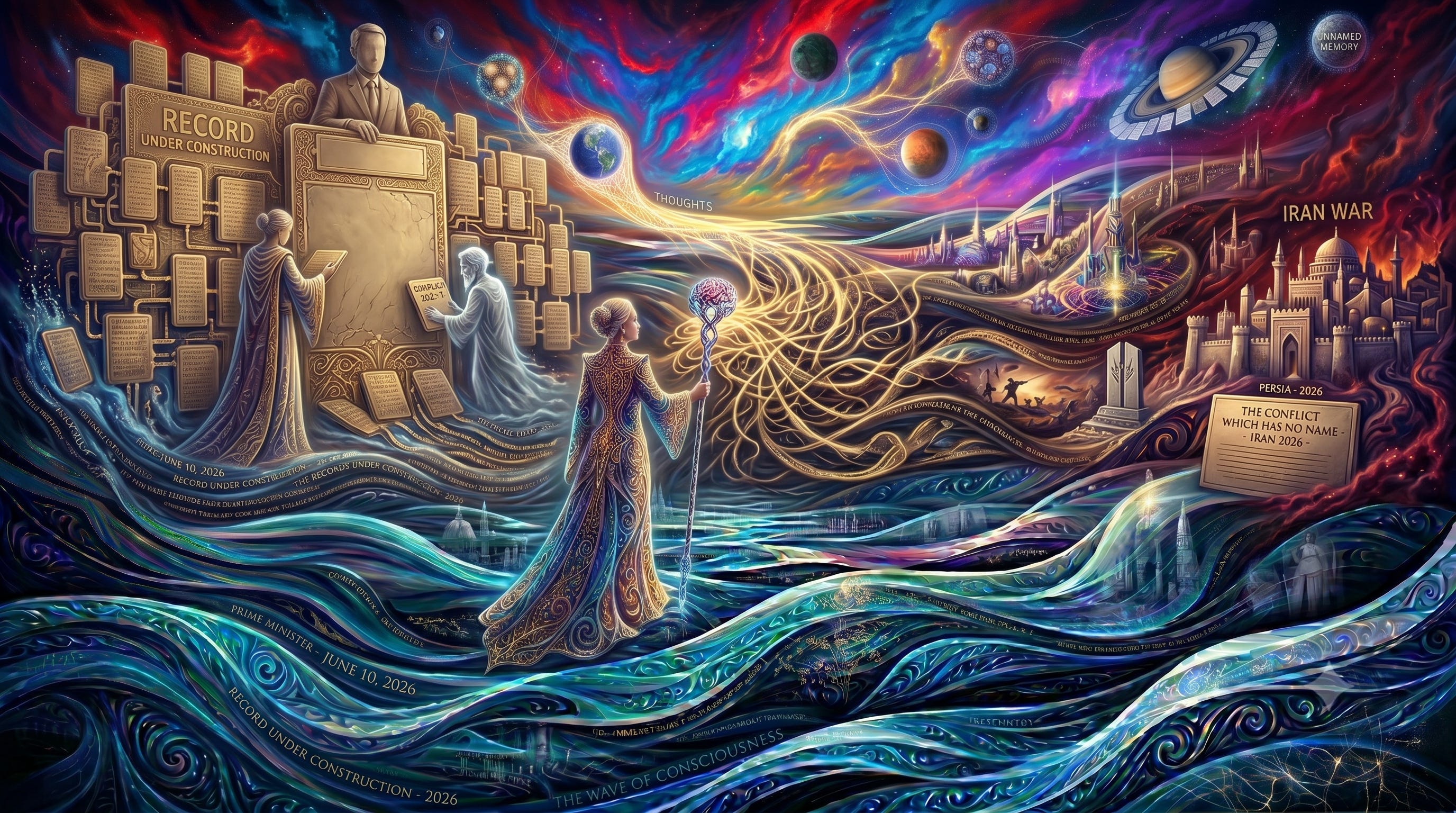
What we are watching, in real time, is the construction of a record. Every threat logged. Every infrastructure strike documented. Every “all parties” evasion entered into evidence alongside the first-day endorsement that preceded it. The International Criminal Court already has one of the two files open. The Rome Statute has a memory longer than a news cycle.
Trump and Netanyahu are not yet indicted for what has happened in Iran. The operative word — the scholars insist, and the precedents of Milošević and Duterte attest — is yet. Whether it proves so belongs to courts not yet convened and to a record still under construction. History does not always move at the speed of justice. But it moves. And it remembers who said what, who stayed silent, and who called the annihilation of a civilization a negotiating position.
We will not be here again on this subject unless the record demands it. The record already demands more than the world has given it.
The Case for the Prime Minister’s Caution
Evenhandedness is the discipline of this publication, so here is the strongest case for the Prime Minister’s conduct, made as its defenders would make it. Canada had no role in the attack, was not notified in advance, and was not asked to participate; its capacity to influence American or Israeli action is close to nil, and Liberal MPs themselves told The Hill Times that no one expects big things from Canada here — that quiet calls for international law to be respected are the realistic ceiling of Canadian influence. The CUSMA review falls due on July 1; more than a trillion dollars in annual trade and millions of jobs on both sides of the border ride on it; a prime minister who set fire to that relationship over a war he cannot stop would have purchased moral clarity at his own citizens’ expense — vanity dressed as virtue. There is also a serious legal argument on the other side: Irwin Cotler and others contend that the UN Charter framework is outdated and ill-equipped for a nuclear-threshold case, that the Security Council is permanently paralyzed by veto, and that the Iranian regime — with one of the world’s worst human rights records, as Canada’s own February statement detailed at length — could never be allowed the bomb. On this reading, the Prime Minister’s position is not cowardice but triage: support the narrow counter-proliferation objective, urge restraint on civilians, keep the trade lifeline intact, and say quietly what cannot safely be said loudly. Reasonable citizens hold that view in good faith. The reader now has both cases, and the verdict belongs where it always belongs in this publication: with the reader.
That is what The Vertical Dispatch needed to say. We return now to the work of covering Canada — the sovereignty questions, the institutional capacity, the governance architecture that decides whether this country can navigate what is coming. That is our beat. That work continues.
God is Love. Love is Truth. Truth is Consciousness. Consciousness is Brahman.
Amen. Namaste. Om Namah Shivaya.
— The Architect
The Vertical Dispatch
sophiainitiative.ai
On the record: The war began February 28, 2026, with United States and Israeli strikes on Iran; Iran closed the Strait of Hormuz the same day (closure paused mid-April for the Lebanon truce; United States naval blockade of Iranian ports in force since April 13). The President’s Truth Social post of April 7, 2026 is quoted verbatim (Associated Press, NBC News, PBS, and the post itself); his infrastructure threats of late March and early April, and his on-camera remark that he is “not at all” concerned about war crimes, are per AP reporting and video. Press secretary Karoline Leavitt’s briefing-room remarks are per NBC News and contemporaneous reports of the March 30 briefing. Prof. Oona Hathaway is quoted per The Christian Science Monitor (April 7, 2026); Prof. Mathias Risse per his Carr-Ryan Center commentary, Harvard Kennedy School (April 8, 2026), which carries the Center’s standard author’s-views disclaimer; Amnesty International per its April 2026 release. ICC warrants: Netanyahu and Gallant, November 21, 2024 (charges including the war crime of starvation as a method of warfare and crimes against humanity including murder and persecution; the Court rejected Israel’s suspension appeal in October 2025); Shoigu and Gerasimov, June 25, 2024 (missile strikes against Ukrainian electric infrastructure, October 2022–March 2023). Correction made in preparation: an earlier research draft attributed the infrastructure indictments to Vladimir Putin; Mr. Putin’s own ICC warrant (March 2023) concerns the unlawful deportation of Ukrainian children. Prime Minister Carney’s February 28 statement is quoted from the Prime Minister’s Office text issued in Mumbai (the operative sentence reads “further threatening,” restored here from the primary source); his early-March remarks per CBC, Reuters, AFP, and Fortune reporting from Sydney; his April 7 remarks per The Canadian Press (Brampton, Ont.); his October 19, 2025 remarks on the Netanyahu warrant per Bloomberg television and contemporaneous reporting; the February 2026 overflight of Newfoundland, Prince Edward Island, and New Brunswick per public flight-tracking and subsequent academic commentary. Hill Times reporting of March 9 and May 4, 2026. Lloyd Axworthy: Toronto Star op-ed, as reported by CBC News. Developments of June 5–8, 2026 (the Azizi and Rezaei interviews, the $24-billion frozen-assets figure, the blockade statement, the June 7–8 exchange of strikes on the war’s hundredth day) per CNN and Encyclopædia Britannica’s running account. All political and military facts in this dispatch are volatile and date-stamped as of June 10, 2026. Errors and omissions excepted; verify against primary sources before republication.
#IranWar #Canada #MarkCarney #InternationalLaw #ICC #RomeStatute #GenevaConventions #CUSMA #StraitOfHormuz #TheAgeOfConsequences #CanadianPolitics #ForeignPolicy #TheVerticalDispatch #TheArchitect #SophiaInitiative #GodIsLove #LoveIsTruth #OmNamahShivaya
Substack Notes
On the morning of April 7, 2026, the President of the United States posted eleven words about a country of ninety million people — and Yale’s leading scholar of international law said the threats, taken in their totality, are the precise conduct the Geneva Conventions exist to prohibit. Harvard’s human-rights faculty director called it the clearest declared intent in the modern criminal record. One of the two men who made this war was already under ICC indictment before it began. The other has none — and the scholars who built the field say the operative word is yet.
But this dispatch is not about Washington. It is about Ottawa. It is about a Prime Minister who endorsed the war in six words on its first day, half-named its illegality a week later, then retreated to “all parties” when a civilization was threatened by name — while his own MPs told The Hill Times the caution was about trade. And it is about a geometry almost no one has put on one page: of the two men who made this war, one cannot set foot in Canada without triggering an arrest Mark Carney personally promised on camera — and the other was our guest at Kananaskis.
As of June 10, the ceasefire is fraying on the war’s hundredth day, the blockade holds, twenty-four billion dollars in frozen assets sit at the hinge of the talks, and the record — every threat, every strike, every evasion — is being constructed in real time. The Rome Statute has a memory longer than a news cycle.
One war, three threads — the law, the silence, and the record — named clean, dated, sourced to the primary documents, and closed with the strongest case for the other side. Read it once and you will hold the whole board. 🕯️
Written from love, in service of the record. 🕯️
Suggested tags: Iran war, Canada, Mark Carney, international law, ICC, Rome Statute, CUSMA, geopolitics, The Age of Consequences, The Vertical Dispatch.
The factual matter in this Dispatch is drawn from the public record. All characterizations, inferences, and conclusions are opinion, interpretation, and commentary, offered for analysis, reflection, and public-interest discussion. No assertion is made regarding the private intentions, state of mind, or character of any individual. Readers should evaluate all statements independently and draw their own conclusions.
I was very disappointed in the Prime Minister's milquetoast original support of the attack. I understand with sadness, that we are already in a war with the administration of the United States and do not wish to make that worse, but I do think that there could have been a better initial response.
On the other hand, we have just appointed a former Supreme Court Justice and former Chief Prosecutor of the International Criminal Tribunal for the former Yugoslavia who brought charges against Slobodan Milošević, as the Governor-General of Canada, so if that is not a flip of the bird to Donald Trump who famously despises the International Criminal Court, I don't know what is.
I congratulate you on another very good piece of writing on covering the facts and fairly giving each side of the question its due. I admire and appreciate that very much.
Since this is an opinion based from my perspective only, I fall on the side of the Prime Minister. My opinion of his first response was that he was agreeing on the premise of Iran not having access to nuclear weapon capabilities -- not necessarily that he agreed with the "implements" (Trump and Netanyahu) of delivery to forbid that opportunity to Iran.
He also, in my opinion, had to pay a toll morally and ethically, when taking on the responsibility of millions of Canadian lives, and livelihoods being put in danger of collapse if Trump took offense at him. He said as little as he could, unfortunately, when clarity would probably have been better. But when you have an unknown volatile element that reacts without thought and for cruelty, you have to weigh your options carefully. I think he chose the lesser of two evils. He took the hit personally politically to avoid a possible calamitous reaction on the people of Canada. A choice he owns, for whatever reason he had in his head at the time.
I give him a mulligan this time, with an asterisk for the facts on record.
(Reader's judgement, this time...)